
A maintenance welder finishes cutting steel brackets with an oxy-acetylene torch near cardboard packaging in a warehouse. Under OSHA's general industry welding standard, how long must a fire watch remain in the area after cutting stops?
Select an answer to reveal the explanation.
Short Explanation
Hot slag loves to hide in cardboard seams and smolder long after you pack up your torch, turning a quiet aisle into a fire scene. The trap is walking away as soon as the metal looks cool or stopping after a quick 15-minute glance.
Full Explanation
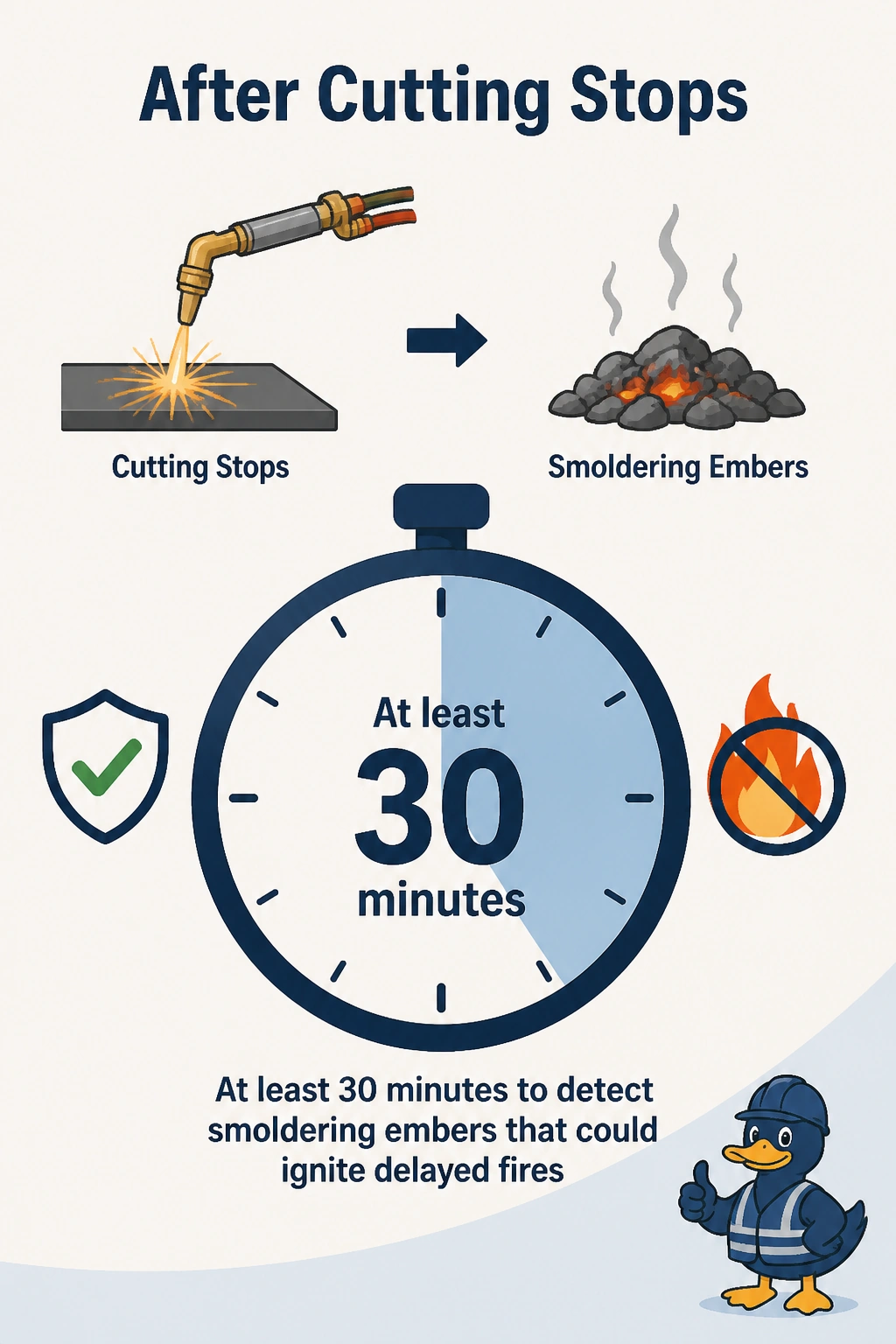
Under OSHA 29 CFR 1910.252, sparks and molten slag from welding or cutting can lodge in combustible materials and smolder before bursting into flame. Maintaining a fire watch for At least 30 minutes to detect smoldering embers that could ignite delayed fires is the minimum required post-work duration to catch hidden ignition before the area is left unattended. Leaving Only until the torch valves are closed and the metal brackets cool to ambient temperature misses concealed sparks that stay hot inside nearby combustibles. Stopping after At least 15 minutes while checking nearby sprinkler heads for thermal activation cuts the OSHA minimum duration in half and relies on a reactive suppression system rather than prevention. Waiting At least 2 hours whenever combustible packaging materials were stored within 50 feet overstates the baseline federal requirement and misstates the standard 35-foot combustible clearance zone. As a caveat, facility-specific hot work permits or local fire codes may require an even longer watch for high-hazard occupancies. For an operational check, require the fire watch to log both the hot-work stop time and the 30-minute sign-off inspection on the permit before leaving.
Prefer to study offline? Printable PDF study book + test engine ($7.50, unofficial). These questions stay free here.