
During a housekeeping inspection at a woodworking mill, an inspector finds a quarter-inch layer of fine sawdust covering overhead ceiling beams and electrical conduit above the sanding line. Which cleaning method best prevents a secondary dust explosion?
Select an answer to reveal the explanation.
Short Explanation
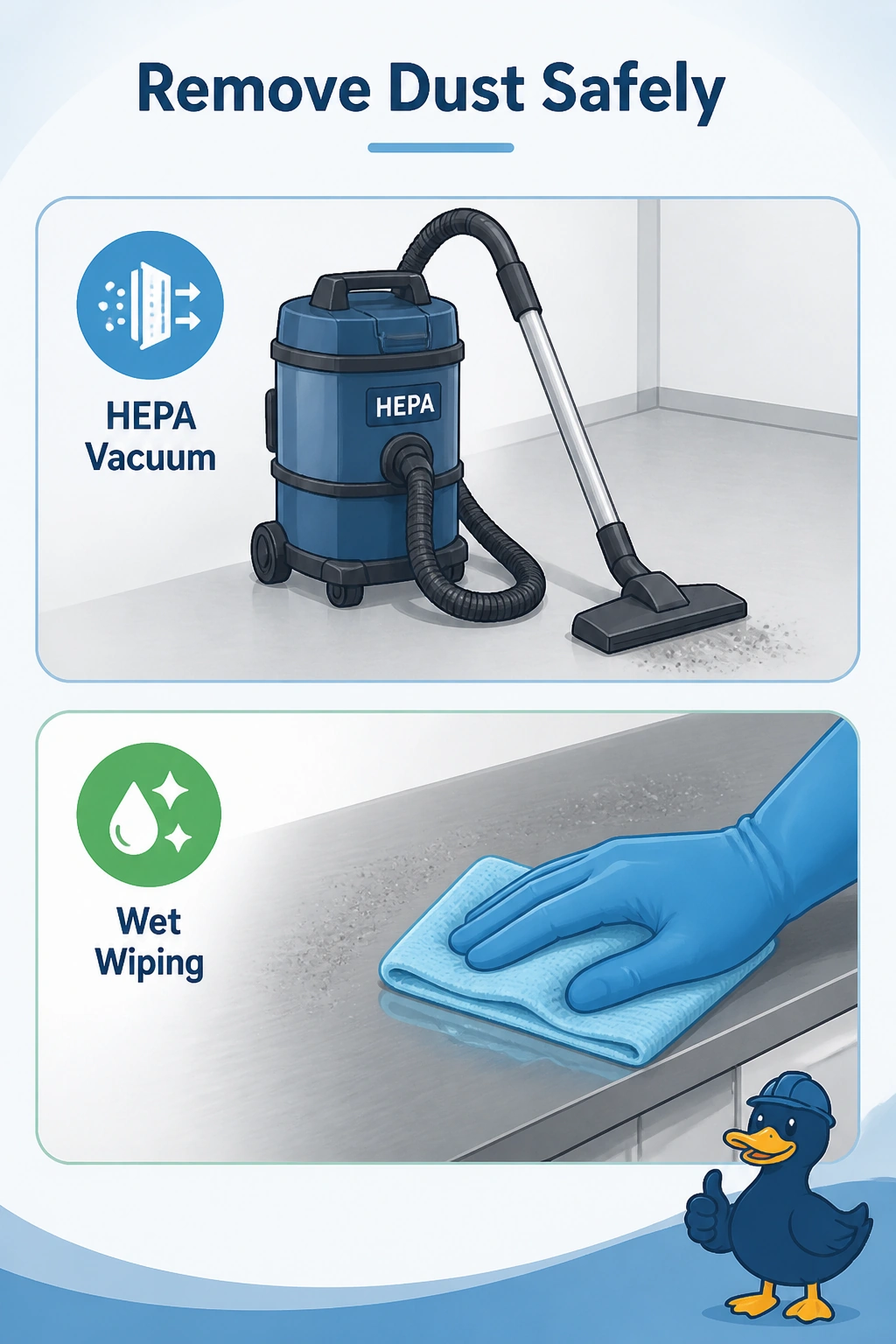
You’re right to avoid disturbing the settled sawdust: blasting it into the air can turn a quiet layer into an explosive fuel cloud beside electrical conduit. HEPA vacuuming or wet wiping captures the dust without lofting it, unlike compressed air or a dry broom.
Full Explanation
Combustible-dust incidents often begin with a small primary deflagration that shakes settled overhead dust into suspension, fueling a far more destructive secondary explosion. Removing the dust with an approved HEPA vacuum system or wet wiping is preferred because it captures fine particulates without lofting them into an ignitable cloud. Blowing the beams clean with regulated compressed air—even at reduced pressure—suspends dense dust clouds near potential ignition sources such as motors or electrical conduit. Sweeping the overhead rafters briskly with dry brooms similarly agitates fine sawdust into an airborne suspension that can ignite. Turning on high-speed floor fans to disperse the layer spreads combustible dust throughout the workroom and can create an explosive atmosphere across a wider area. One caveat: a vacuum used for combustible dust must be properly bonded, grounded, and rated for the hazard class; a standard household shop vacuum can generate static or motor sparks. As a practical check, inspect overhead horizontal surfaces weekly and schedule vacuuming before dust layers reach hazardous thicknesses.
Prefer to study offline? Printable PDF study book + test engine ($7.50, unofficial). These questions stay free here.