
Warehouse workers unload 35-pound cases from floor-level pallets onto a waist-high conveyor, bending deeply at the waist to reach the bottom two layers and reporting frequent lower-back strain. Which engineering control best eliminates this bending hazard?
Select an answer to reveal the explanation.
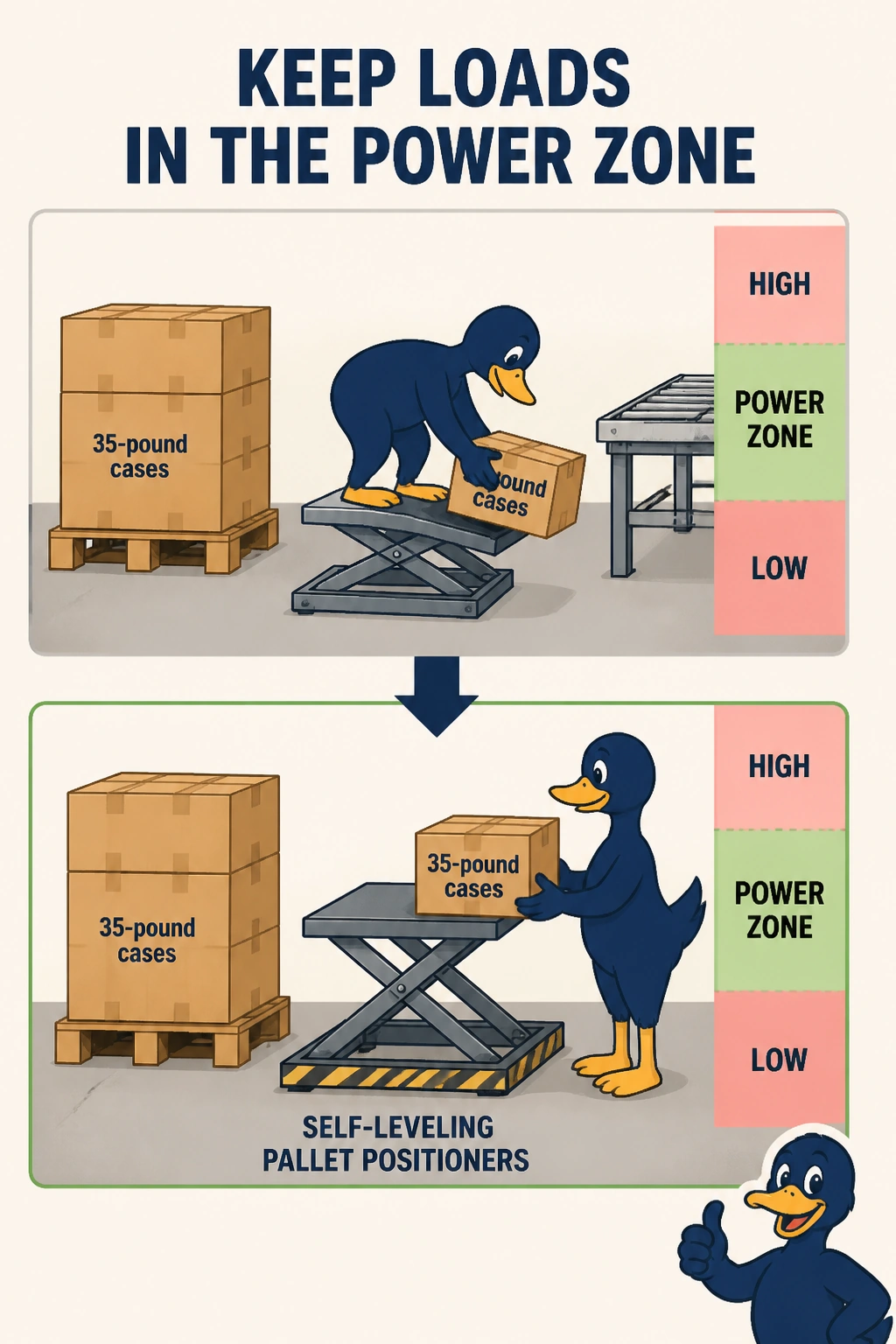
Short Explanation
Telling workers to bend their knees all shift long is like asking someone to do hundreds of weighted squats—fatigue wins every time. The trap is choosing lifting technique or back belts when you can raise the load into the ergonomic power zone.
Full Explanation
Installing self-leveling pallet positioners to keep loads in the power zone is an engineering control that automatically elevates the pallet as cases are removed, keeping each layer between mid-thigh and mid-chest height. Maintaining work in this power zone minimizes trunk flexion and reduces compressive forces on the lumbar spine without relying on worker stamina. Training workers to bend only at the knees and hold every case tightly against the torso is an administrative control that still forces deep squatting on bottom layers, which increases knee stress and energy expenditure. Providing elastic back-support belts to wear during all pallet-unloading shifts does not reduce spinal loading from bending and is not recognized as an effective substitute for ergonomic redesign. Rotating workers to a different pallet-unloading bay every four hours of the shift exposes workers to the exact same bending hazard in another location rather than allowing muscle recovery. As a caveat, spring-loaded positioners must be matched to the pallet's total weight range so light loads do not sit too low or heavy loads bottom out. As an operational check, measure the vertical height of the bottom case layer during unloading to confirm it stays near knuckle-to-waist height.
Prefer to study offline? Printable PDF study book + test engine ($7.50, unofficial). These questions stay free here.