
Bus assembly technicians spend four hours per shift installing ceiling brackets above shoulder height, leading to frequent rotator-cuff soreness and upper-arm fatigue. Which engineering control most effectively reduces this ergonomic risk?
Select an answer to reveal the explanation.
Short Explanation
Try holding a coffee mug above your head for five minutes and you will feel why overhead work wrecks shoulders! The trap here is picking comfort add-ons or end-of-shift breaks instead of bringing the work down into your natural power zone.
Full Explanation
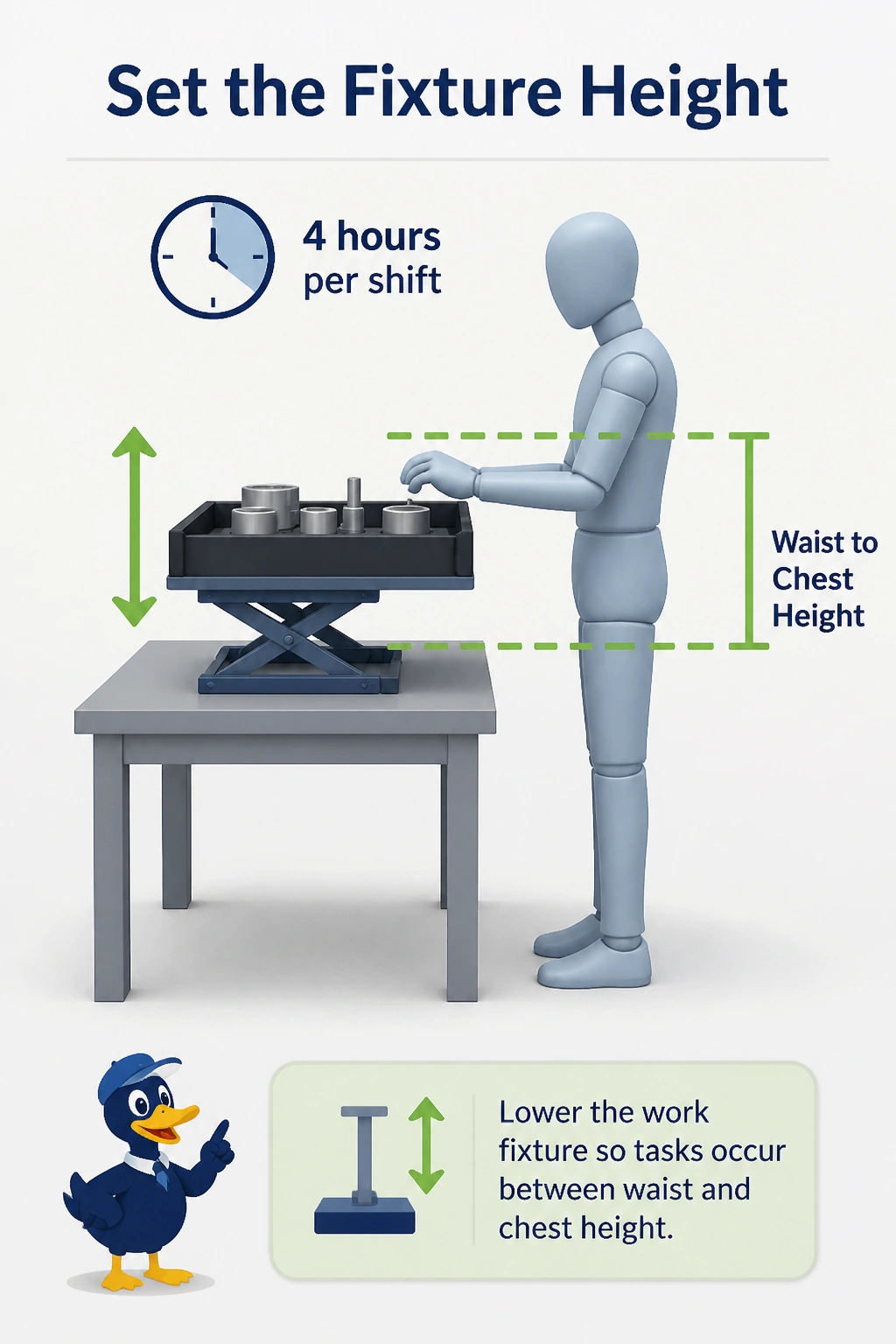
Sustained overhead reaching forces shoulder flexion and abduction above 90 degrees, compressing rotator-cuff tendons and accelerating muscle fatigue. The most effective engineering fix is to Lower the work fixture so tasks occur between waist and chest height—for example, by using adjustable scissor platforms, tilting fixtures, or recessed work pits—so technicians keep their elbows close to their sides in a neutral posture. Choosing to Require workers to wear elastic shoulder compression sleeves during assembly offers no mechanical load reduction and is not an engineering control that removes awkward posture. Choosing to Provide anti-fatigue floor mats beneath the elevated assembly platform relieves lower-extremity standing discomfort but does nothing to reduce overhead arm elevation or shoulder torque. Choosing to Increase daily rest breaks by five minutes at the end of the shift is an administrative measure that fails to interrupt four hours of sustained overhead loading during the task itself. Caveat: when lowering the work zone, ensure the new height does not introduce excessive neck flexion or forward trunk bending. As an operational check, observe technicians at the modified station to confirm upper arms remain within roughly 30 degrees of the torso.
Prefer to study offline? Printable PDF study book + test engine ($7.50, unofficial). These questions stay free here.