
Electronics assemblers rest their forearms directly against the sharp metal front edge of an inspection bench for six hours per shift while soldering circuit boards, leading to localized numbness and soreness. Which ergonomic risk factor is most directly responsible for this symptom pattern?
Select an answer to reveal the explanation.
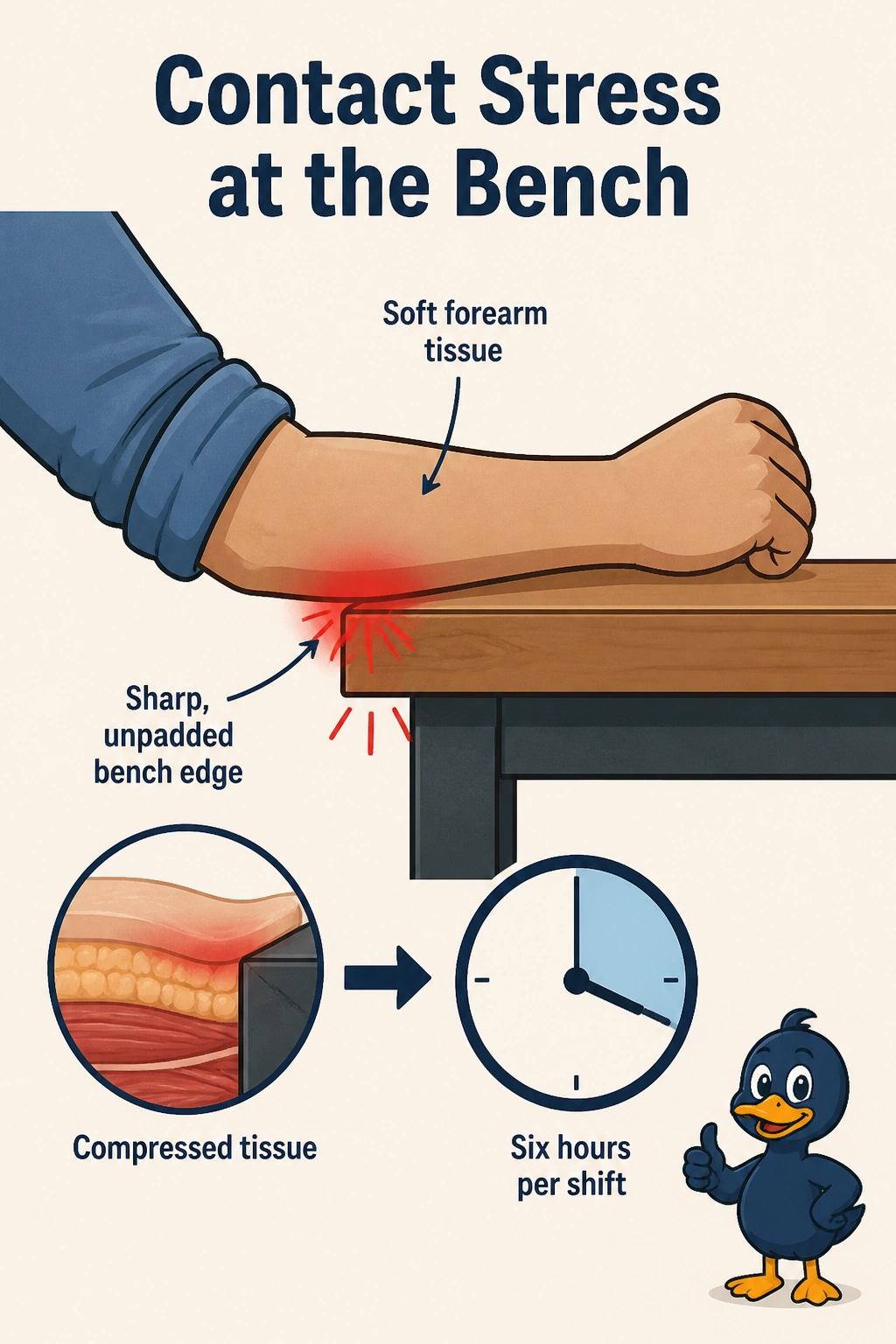
Short Explanation
Ever rest your forearm on a sharp bench edge and feel it go numb? That localized pressure is contact stress—the hard, unpadded edge is the culprit, not vibration, shoulder posture, or grip force.
Full Explanation
Contact stress occurs when soft body tissue, nerves, or blood vessels are compressed against a hard, sharp, or unyielding surface over time. Pressing soft forearm tissue against the sharp, unpadded bench edge directly explains why assemblers develop localized forearm soreness and numbness after six hours of resting on bare metal. Hand-arm vibration from operating low-torque electric drivers during component assembly is typically associated with high-vibration pneumatic or rotary tools, rather than static resting against a stationary edge. Static awkward shoulder posture caused by reaching slightly above waist height to bin parts would produce upper-back or deltoid fatigue rather than localized forearm compression. Repetitive pinch grip force applied while holding lightweight tweezers and solder wire stresses finger tendons and thumb joints instead of compressing the underside of the forearm. Caveat: adding a rounded, padded edge or adjustable forearm support reduces tissue compression, provided it does not force workers into elevated shoulder postures. Practical check: inspect the front edge of every soldering bench for sharp metal lips and verify that soft, beveled edge protectors are installed and intact.
Prefer to study offline? Printable PDF study book + test engine ($7.50, unofficial). These questions stay free here.