
A manufacturing company plans to purchase a neighboring former dry-cleaning property to expand its warehouse and wants to identify potential soil or groundwater contamination liabilities before closing. Which environmental due-diligence step should the company complete first?
Select an answer to reveal the explanation.
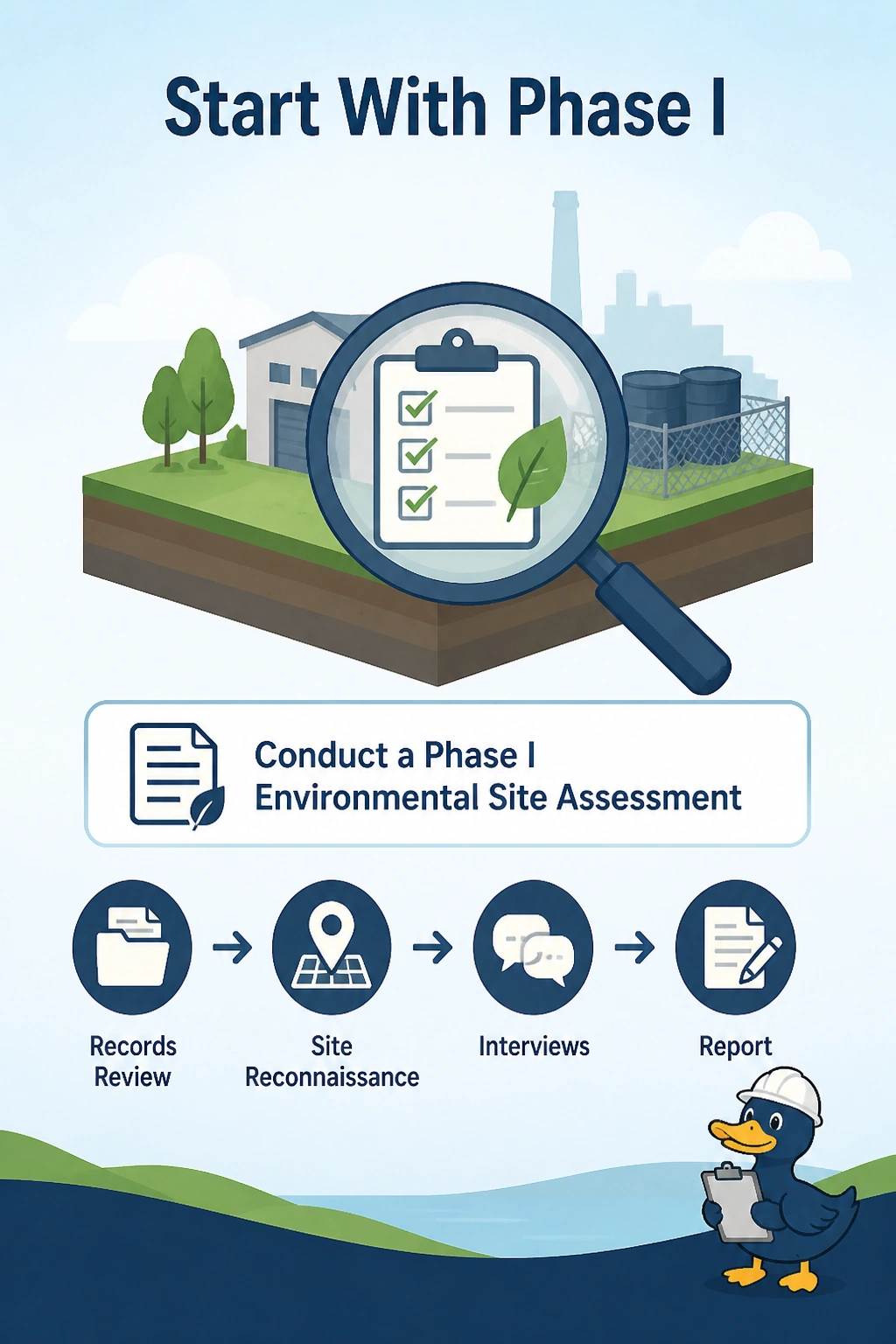
Short Explanation
Buying an old industrial property without checking its history is like buying a used car without looking under the hood—you could inherit someone else's toxic cleanup bill. Watch out for jumping straight into soil drilling; before you dig a single hole, you start with a Phase 1 environmental site assessment to uncover past chemical use.
Full Explanation
Current owners can face CERCLA strict liability for historical contamination; All Appropriate Inquiries before purchase is necessary for the landowner defenses but is not by itself a complete shield. To evaluate a former dry-cleaning site—a high-risk operation often associated with chlorinated solvents—the buyer should first Conduct a Phase I Environmental Site Assessment review, which examines historical aerial photos, regulatory records, and site conditions to identify Recognized Environmental Conditions without disturbing the ground. Choosing to Begin excavating soil borings across the entire parking lot jumps prematurely to intrusive Phase II sampling without a targeted conceptual site model and risks spreading contamination or breaching underground utilities. Opting to Submit an EPA RCRA generator permit application immediately is premature because the buyer is not yet generating hazardous waste on the parcel. Likewise, deciding to File an EPCRA Tier II chemical inventory report for the lot applies to facilities currently storing threshold quantities of hazardous chemicals, not pre-acquisition due diligence. As a caveat, if the Phase I assessment identifies potential solvent releases, the buyer should follow up with a targeted Phase II sampling investigation before closing. For an operational check, engage a qualified environmental professional early in the purchase timeline so findings can inform contract contingencies.
Prefer to study offline? Printable PDF study book + test engine ($7.50, unofficial). These questions stay free here.