
Shipyard metal finishers use high-vibration pneumatic grinders for four hours daily and report tingling, numbness, and white fingertips in cold weather. Which engineering and work-practice combination best reduces hand-arm vibration syndrome risk?
Select an answer to reveal the explanation.
Short Explanation
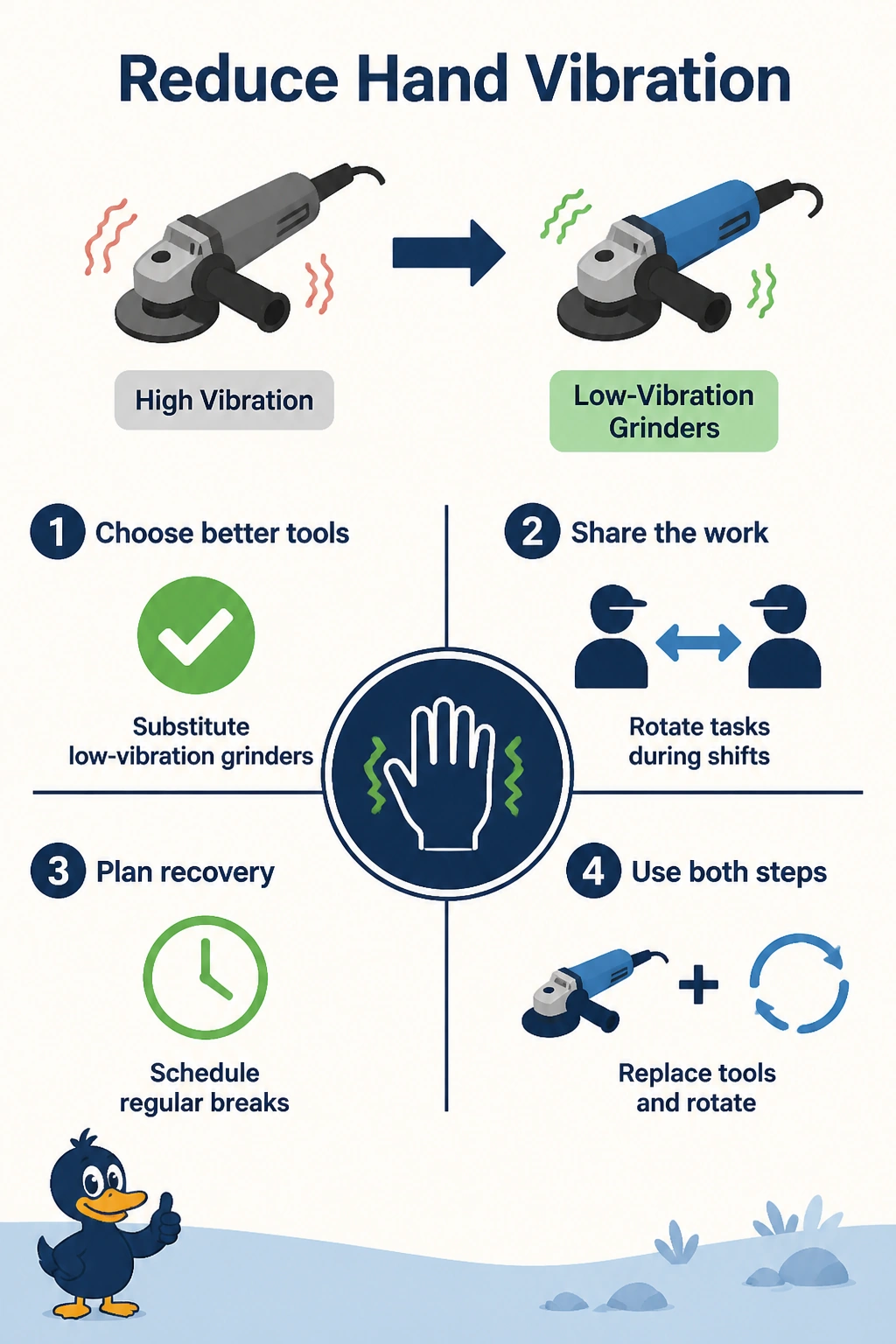
Tingling, numbness, and white fingertips in cold weather are classic warning signs of hand-arm vibration syndrome: the grinder is stressing your blood vessels and nerves. You can reduce your risk by choosing low-vibration grinders and rotating tasks to limit trigger time; gripping harder, lowering shop temperatures, or using heavier wheels won’t solve the exposure.
Full Explanation
Substituting low-vibration grinders and scheduling task rotation breaks directly address both the source of mechanical energy and the daily duration of exposure, which together drive hand-arm vibration syndrome (HAVS). Low-vibration tools reduce acceleration transmitted to the fingers, while rotating workers to non-vibrating tasks gives vascular and nerve tissues recovery time. Increasing grip force to stabilize grinder chatter worsens the hazard: a tighter grip transmits more vibration into the hand and restricts blood flow. Lowering shop temperatures to reduce hand sweating is counterproductive because cold triggers vasoconstriction, accelerating the blanching and numbness characteristic of vibration white finger. Switching to heavier grinding wheels while keeping exposure time unchanged does not reduce daily vibration dose and can increase imbalance and rotational inertia. Caveat: task rotation reduces individual exposure only when alternate tasks are genuinely non-vibrating; it does not make a high-vibration grinder safe during the time it is used. As a practical check, track each worker’s daily trigger time, keep hands warm and dry, and monitor symptoms.
Prefer to study offline? Printable PDF study book + test engine ($7.50, unofficial). These questions stay free here.