
A food manufacturing plant is preparing its annual Environmental, Social, and Governance (ESG) greenhouse gas inventory and measures carbon dioxide released from its on-site natural gas boilers and company-owned delivery trucks. How are these emissions classified?
Select an answer to reveal the explanation.
Short Explanation
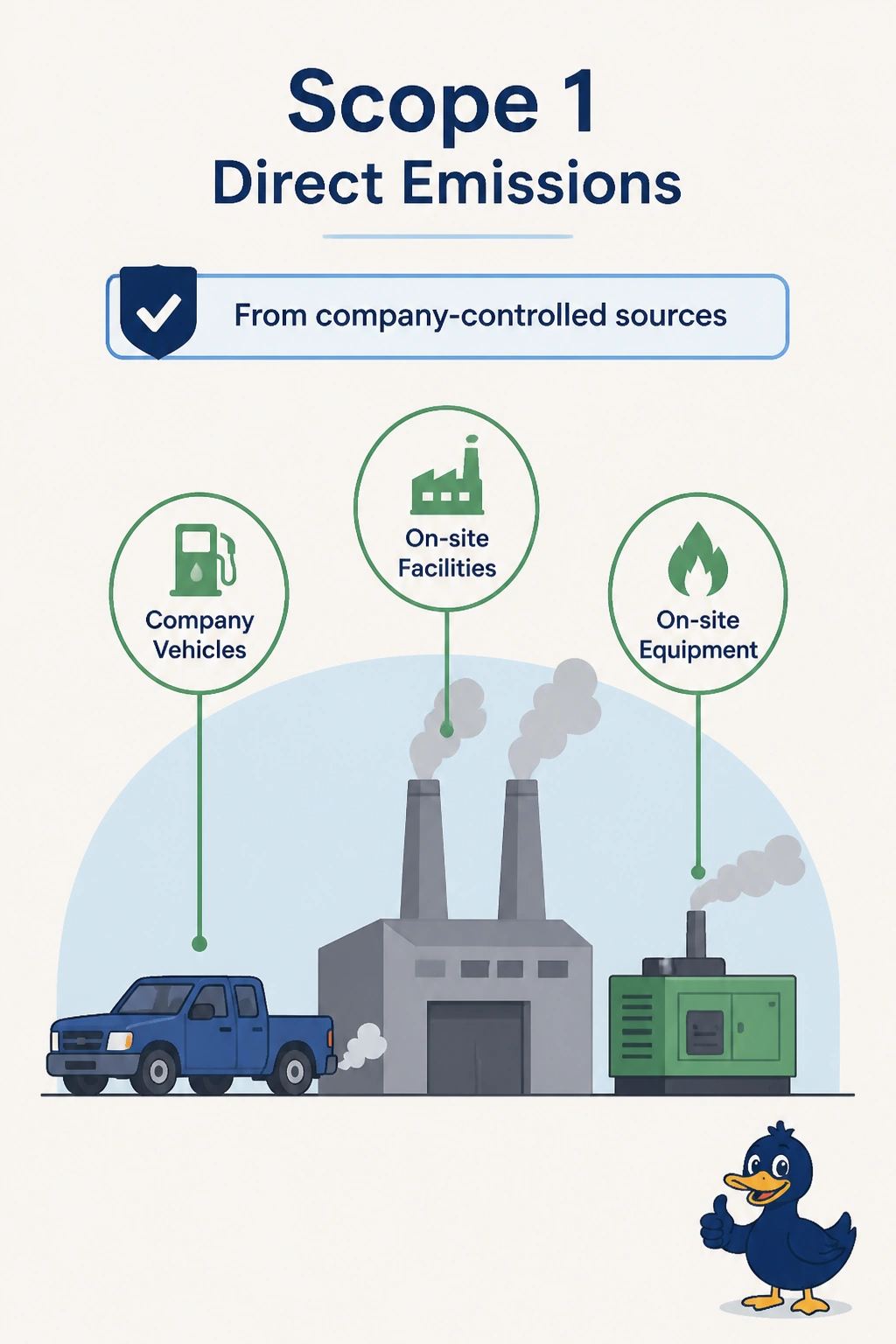
Think of Scope 1 as the exhaust pipe you own and control—if your facility burns the fuel in its own boilers or fleet, those emissions belong directly to you. The trap is confusing on-site fuel combustion with purchased utility power or supplier activity farther up the chain.
Full Explanation
In corporate greenhouse gas accounting and Environmental, Social, and Governance (ESG) reporting. Emissions are grouped into three scopes by the relationship of the source to the company. Organizational boundaries may follow equity share, financial control, or operational control. Scope 1 direct emissions from company-controlled sources covers greenhouse gases released directly from assets the organization owns or controls, such as on-site natural gas boilers, furnaces, and company-owned delivery vehicles. By contrast, Scope 2 indirect emissions from purchased electricity and steam accounts for off-site generation emissions tied to energy the facility buys from a utility provider. Scope 3 indirect emissions from upstream supplier manufacturing captures value-chain emissions outside the company's direct operational control, including raw material extraction, third-party freight, and product end-of-life. Fugitive non-point emissions exempt from corporate ESG tracking is incorrect because fugitive releases such as refrigerant leaks from company-owned chillers are still reportable under Scope 1 rather than excluded. For an operational check, review fuel purchase invoices and fleet mileage logs against utility bills to separate on-site combustion from purchased energy.
Prefer to study offline? Printable PDF study book + test engine ($7.50, unofficial). These questions stay free here.