
A regional distribution warehouse is compiling its annual Environmental, Social, and Governance (ESG) greenhouse gas inventory and calculates emissions associated with the grid electricity it buys from the local utility to power lighting and electric forklifts. How are these emissions classified?
Select an answer to reveal the explanation.
Short Explanation
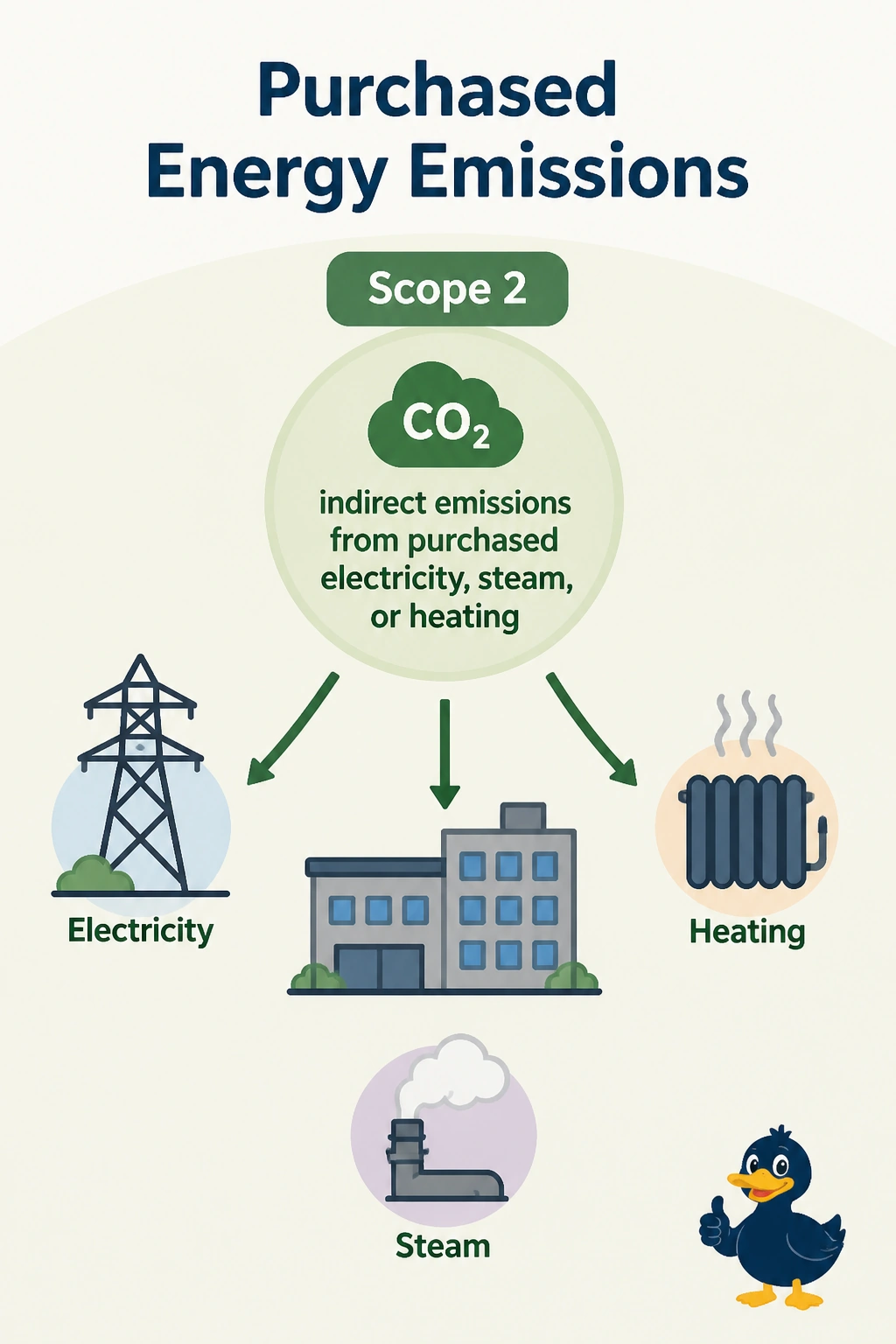
Think of Scope 2 as the emissions tied to the utility meter on your building wall—you didn't burn the coal or gas on site, but you bought the power. The trap is lumping electric forklifts into Scope 1 just because they operate inside your warehouse.
Full Explanation
Under standard greenhouse gas accounting frameworks used in ESG reporting, emissions generated at an off-site power plant to produce energy bought by the facility are classified as Scope 2 indirect emissions from purchased electricity, steam, or heating. Even though the warehouse uses electric forklifts and LED lighting on site without tailpipe exhaust, the organization accounts for the utility emissions tied to its kilowatt-hour consumption. Grouping them as Scope 1 direct emissions from on-site fuel combustion is wrong because Scope 1 covers fuels burned directly in facility-owned boilers, generators, or company vehicles. Labeling them as Scope 3 upstream emissions from vendor raw-material extraction misplaces them into value-chain activities outside purchased energy, such as supplier manufacturing or employee commuting. Calling them Fugitive process emissions from refrigerant line leaks confuses purchased energy with unintentional chemical escapes from HVAC or refrigeration equipment, which are counted under Scope 1. As a caveat, if the warehouse also operates propane-powered forklifts or natural-gas space heaters alongside electric units, those burned fuels remain Scope 1 and must be tracked separately from utility bills. For an operational check, reconcile your facility's twelve monthly utility invoices against the ESG inventory spreadsheet to confirm kilowatt-hours are entered under Scope 2.
Prefer to study offline? Printable PDF study book + test engine ($7.50, unofficial). These questions stay free here.