
A consumer electronics manufacturer is compiling its annual Environmental, Social, and Governance (ESG) greenhouse gas inventory and calculates emissions from raw-material extraction by suppliers and daily employee commuting. How are these emissions classified?
Select an answer to reveal the explanation.
Short Explanation
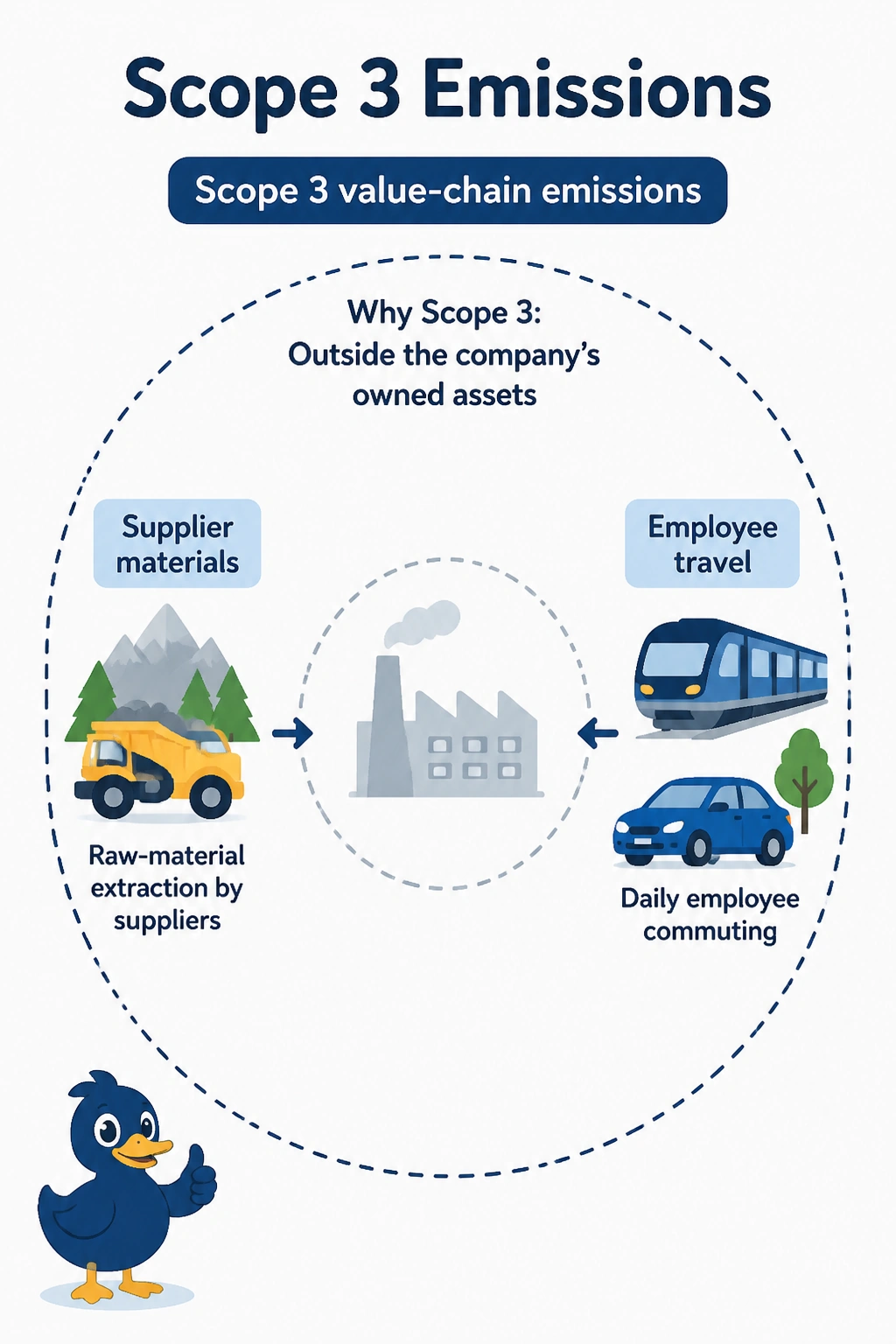
Your carbon footprint does not stop at the factory fence line when suppliers and commuters burn fuel on your behalf. The trap is lumping supplier manufacturing into Scope 2 just because someone used electricity, or writing it off completely. Upstream purchased goods and employee commuting belong in Scope 3 value-chain emissions.
Full Explanation
In corporate Environmental, Social, and Governance (ESG) greenhouse gas accounting, emissions are grouped into three scopes based on operational control and ownership boundaries. Selecting Scope 3 value-chain emissions, because they occur outside the company's owned assets is correct because Scope 3 captures indirect upstream and downstream emissions from sources the reporting organization neither owns nor controls, including purchased raw materials and employee commuting. Selecting Scope 1 direct emissions, because the company's operations generate demand for the goods fails because Scope 1 is restricted to direct combustion from company-owned boilers, furnaces, and fleet vehicles. Selecting Scope 2 indirect emissions, because external utilities power the supplier's manufacturing fails because Scope 2 covers only purchased electricity, steam, heating, or cooling consumed by the reporting company's own facilities. Selecting Non-reportable excluded emissions, because only on-site stack releases require tracking fails because modern ESG inventories specifically track Scope 3 categories to identify supply-chain risks and reduction opportunities. As a caveat, Scope 3 calculations often rely on spend-based or industry-average emission factors until suppliers provide primary data. For an operational check, map your top material suppliers and commuting modes annually to focus data-quality improvements on the largest Scope 3 categories.
Prefer to study offline? Printable PDF study book + test engine ($7.50, unofficial). These questions stay free here.