
During a transfer at a chemical distribution terminal, a ruptured hose releases an EPA-listed hazardous substance onto the ground in an amount exceeding its federal Reportable Quantity. What notification action is required under CERCLA?
Select an answer to reveal the explanation.
Short Explanation
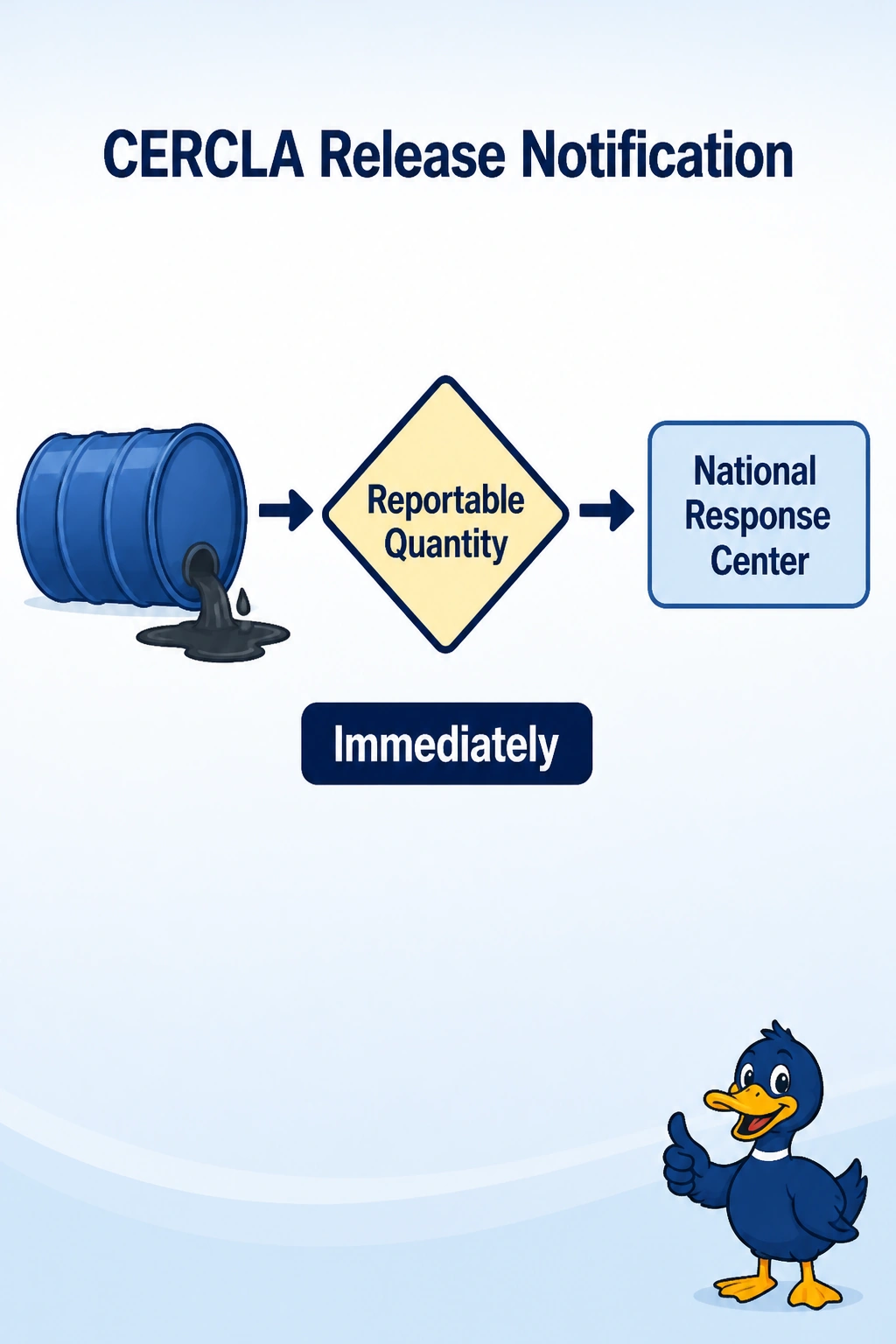
You can treat a spill above its federal threshold like an emergency that needs a prompt call, not a routine filing. Remember that CERCLA requires immediate notification to the National Response Center, rather than a delayed state notice or annual report.
Full Explanation
Under the Comprehensive Environmental Response, Compensation, and Liability Act (CERCLA, 40 CFR Part 302), any person in charge of a facility or vessel must immediately notify the National Response Center as soon as they know that a non-permitted release equals or exceeds the substance’s Reportable Quantity within a 24-hour period. Rapid notification lets federal and local response coordinators evaluate off-site environmental and public health threats immediately. Notifying the state environmental agency within thirty calendar days fails because emergency release reporting is immediate, not monthly; EPCRA also requires prompt notification to state and local emergency commissions. Documenting the spill internally on the facility OSHA Form 300 log addresses occupational injury and illness recordkeeping under 29 CFR Part 1904, not environmental release reporting. Waiting until the annual Toxic Release Inventory report is submitted confuses routine annual emissions tracking under EPCRA Section 313 with acute spill notification. Caveat: certain federally permitted releases are exempt from CERCLA reporting. As an operational check, post the 24-hour National Response Center telephone number and facility chemical Reportable Quantities at all transfer stations.
Prefer to study offline? Printable PDF study book + test engine ($7.50, unofficial). These questions stay free here.