
A fabricated metal plant stores oily scrap bins and bulk coolant drums outdoors on a paved yard that slopes toward municipal storm drains discharging to a local river. Under an EPA Clean Water Act NPDES stormwater permit, which Best Management Practice best prevents stormwater contamination?
Select an answer to reveal the explanation.
Short Explanation
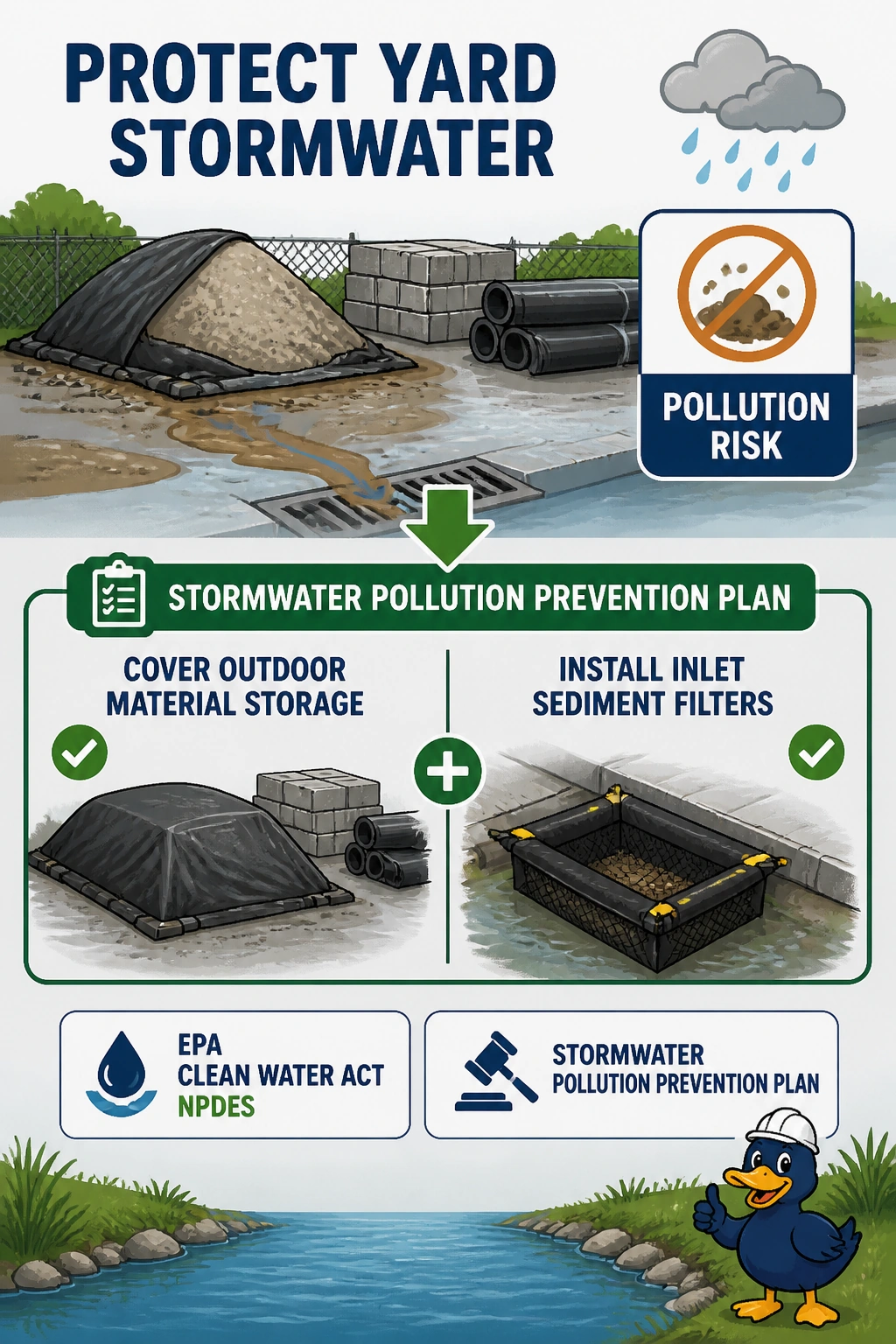
Storm drains are express lanes straight to local rivers and creeks, so anything rain washes off your yard can reach surface water untreated. Under a Stormwater Pollution Prevention Plan, you keep rain and pollutants apart by covering outdoor storage and guarding drain inlets with filters. Hosing spills toward a storm grate or waiting to repair leaks lets contaminants run off-site.
Full Explanation
Under the Clean Water Act National Pollutant Discharge Elimination System (NPDES), industrial facilities must keep rainwater from contacting oils, metals, and process chemicals before it enters storm sewers. Covering outdoor material storage and installing inlet sediment filters under a Stormwater Pollution Prevention Plan addresses both source control, by blocking precipitation from oily scrap and drums, and structural capture at the drain. Flushing spilled cutting oils down the exterior storm grate with high-pressure water hoses fails because intentionally discharging oil and industrial pollutants into a storm sewer is an illegal non-stormwater discharge that violates NPDES permits. Waiting until an annual state water inspection before repairing leaking outdoor drum valves fails because stormwater permits require prompt corrective action and routine inspections whenever leaks are discovered. Routing all municipal roof rainwater directly into the facility hazardous waste holding tank fails because clean roof runoff is not hazardous waste; mixing large rainwater volumes into hazardous waste tanks can cause overflows and unnecessary disposal costs. One caveat is that inlet filters only briefly trap solids and oil sheen; they must be cleaned after storms and cannot replace dry-sweeping and covered containment. For an operational check, walk the yard during a rain event to verify there is no oily sheen at outfalls and confirm spill kits are beside every outdoor loading area.
Prefer to study offline? Printable PDF study book + test engine ($7.50, unofficial). These questions stay free here.