
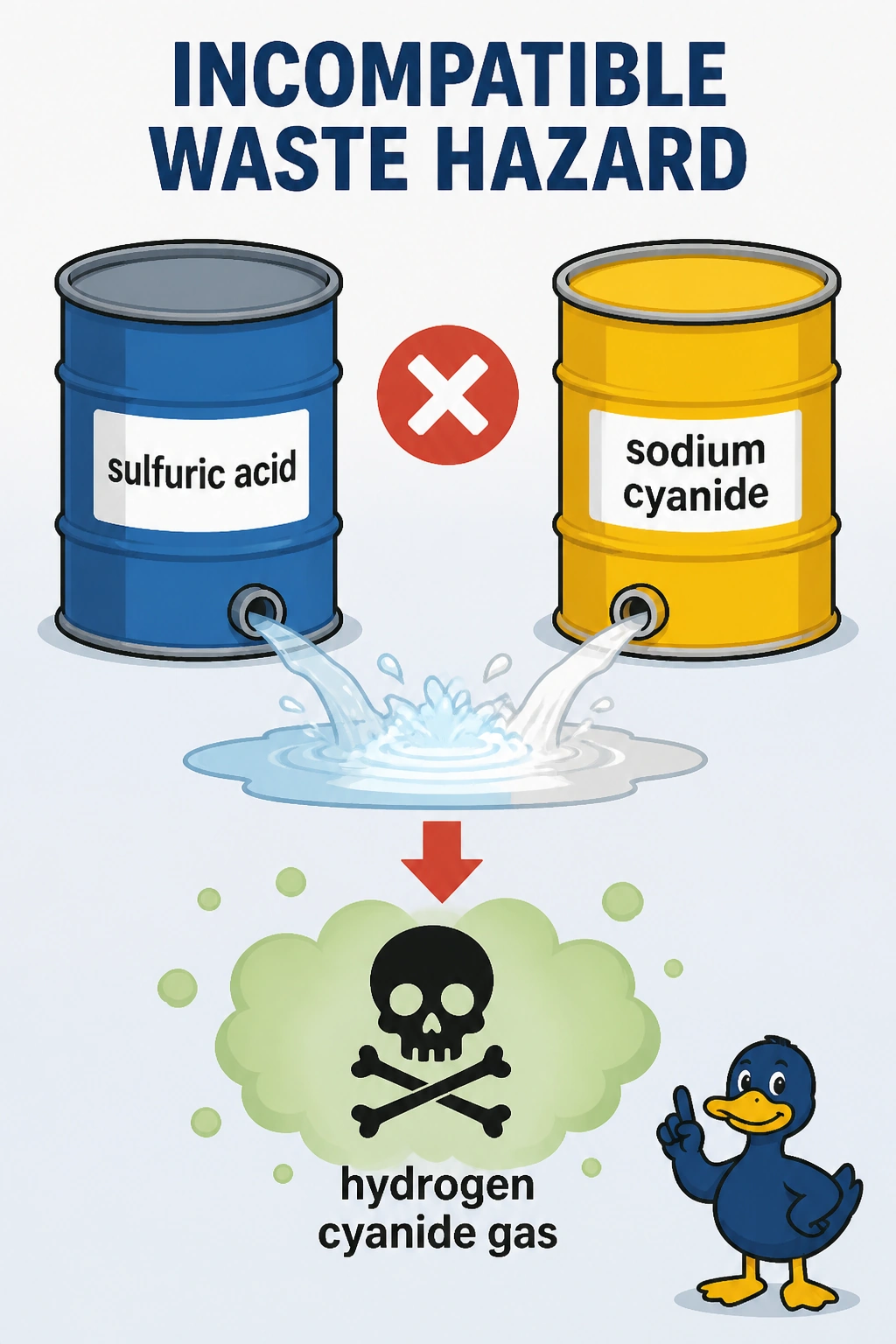
During a hazardous waste storage area inspection at a metal plating facility, an environmental coordinator finds drums of spent sulfuric acid sitting in the same containment pallet as drums of sodium cyanide waste. What is the primary hazard of storing these two waste streams together?
Select an answer to reveal the explanation.
Short Explanation
Putting acid and cyanide on the same spill pallet is like storing a match next to fireworks inside a closed room. Your top concern is immediate chemical incompatibility, not paperwork, because one leaking bung could release deadly gas.
Full Explanation
Under EPA Resource Conservation and Recovery Act storage rules (40 CFR 264.177 and 265.177), incompatible hazardous wastes must be separated by a dike, berm, wall, or other device so accidental leaks cannot commingle. Recognizing that A leak could mix incompatible wastes and generate lethal hydrogen cyanide gas identifies the acute life-safety hazard: when sulfuric acid contacts sodium cyanide, a rapid acid-base reaction releases hydrogen cyanide gas, which can incapacitate workers within seconds. Worrying that The drums will exceed the 90-day large-quantity generator storage time limit focuses on accumulation clock compliance rather than the immediate reactive hazard of co-located drums. Claiming that Mixing the labels will invalidate the facility's EPA identification number is incorrect because an EPA ID number tracks the site, not individual drum placement. Assuming that Co-locating liquid wastes prevents universal waste recycling of spent lamps and batteries confuses RCRA liquid hazardous waste storage with separate universal waste streams. A crucial caveat is that even sealed containers in good condition can fail from forklift impacts, corrosion, or thermal expansion, so physical separation of secondary containment is essential. As an operational check, inspect drum storage bays weekly to verify separate containment pallets and clear incompatibility signage between acids and cyanides.
Prefer to study offline? Printable PDF study book + test engine ($7.50, unofficial). These questions stay free here.