
A manufacturing facility stores diesel fuel and lubricating oil in above-ground storage tanks near a storm drain that discharges to a local creek. Under EPA's Spill Prevention, Control, and Countermeasure (SPCC) rule, what is the primary purpose of secondary containment structures around these tanks?
Select an answer to reveal the explanation.
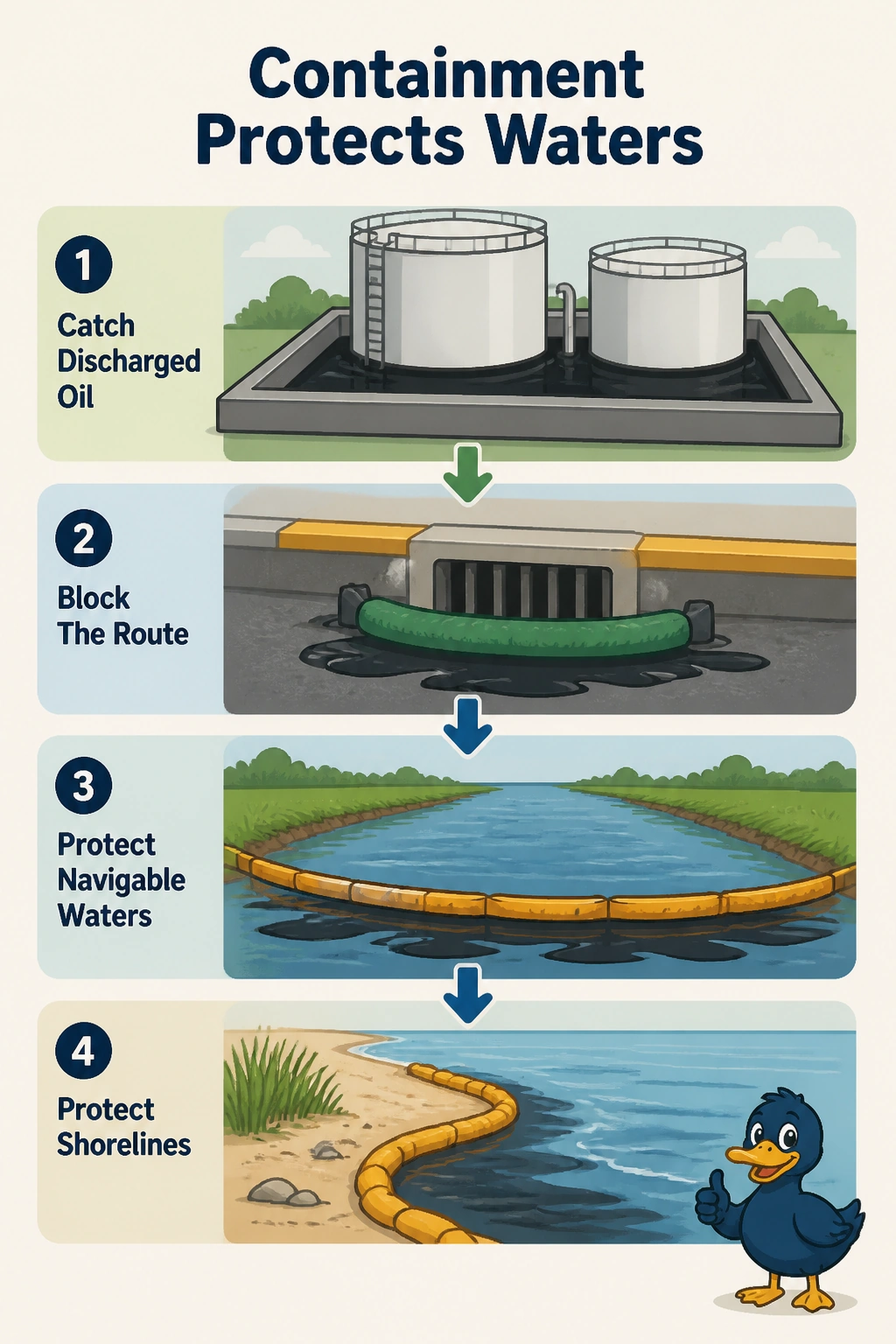
Short Explanation
Think of secondary containment under SPCC as a bathtub around your oil tanks that buys time before a leak hits a creek. The trap is assuming dikes treat the spill chemically or excuse you from inspecting the tanks.
Full Explanation
Under EPA's SPCC rule (40 CFR Part 112), secondary containment structures such as dikes, berms, or retaining walls exist "To prevent discharged oil from reaching navigable waters or shorelines". By holding the volume of the largest container plus sufficient freeboard for precipitation, containment keeps catastrophic tank releases out of storm drains and surface waters. It is not designed "To neutralize petroleum hydrocarbons chemically before they contact soil", because containment is a physical barrier rather than a chemical treatment system. Nor is it intended "To replace routine tank integrity inspections and mechanical leak testing", which remain mandatory preventive controls to detect corrosion early. Finally, containment does not act "To eliminate the requirement for written facility emergency response plans", as SPCC plans and response procedures are still required. As a caveat, stormwater accumulated inside a dike must be inspected for an oil sheen before draining. For an operational check, verify that dike drain valves remain locked closed and confirm containment walls are free of cracks or erosion.
Prefer to study offline? Printable PDF study book + test engine ($7.50, unofficial). These questions stay free here.