
A mid-sized electronics manufacturer is establishing an Environmental Management System aligned with ISO 14001 to manage its facility footprint. During initial planning, how should the environmental team distinguish an environmental aspect from an environmental impact?
Select an answer to reveal the explanation.
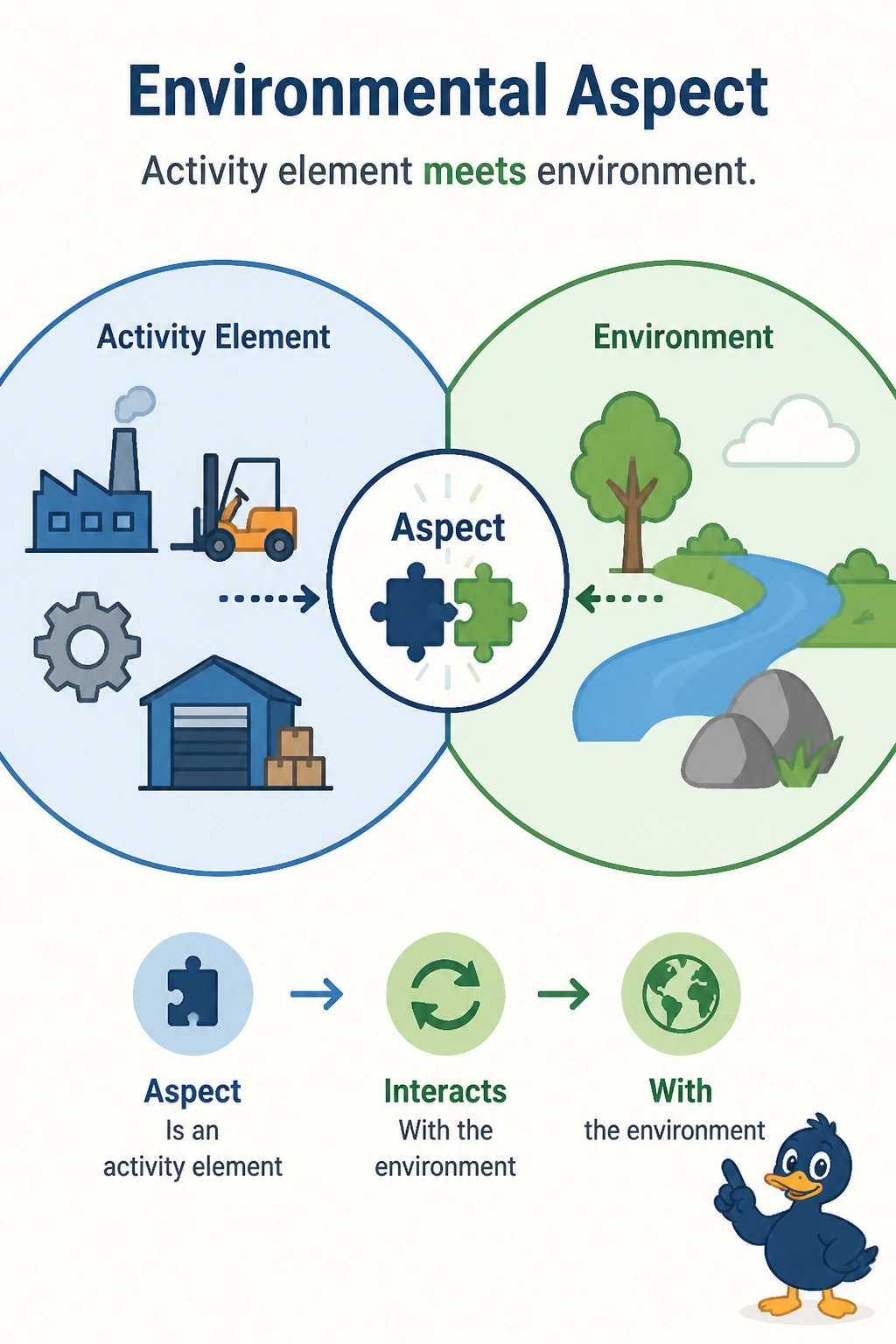
Short Explanation
Cause and effect sit at the heart of every Environmental Management System: one is what your plant does, and the other is what happens to the planet as a result. Keep that cause-and-effect pair straight so you don't mix up routine operational outputs with regulatory reporting.
Full Explanation
Under ISO 14001 principles, An aspect is an activity element that interacts with the environment, whereas an environmental impact is the resulting adverse or beneficial change to air, water, land, or natural resources. For example, discharging solder-wash wastewater or emitting VOCs from a curing oven is an aspect, while aquatic toxicity or degraded local air quality is the impact. An aspect is only a regulated chemical spill reported to federal agencies fails because aspects include normal, abnormal, and emergency interactions, whether regulated or not. An impact is the internal audit schedule used to verify waste manifests is incorrect because audit schedules are management system verification tools rather than physical or ecological changes to the environment. An impact is a voluntary sustainability target set before operations start is wrong because targets are measurable performance objectives established after significant aspects and impacts are evaluated. As an exam caveat, ISO 14001 requires organizations to consider a life-cycle perspective when identifying aspects they can control or influence. For an operational check, map each production step in a register that pairs the specific facility activity element on the left with its resulting environmental change on the right.
Prefer to study offline? Printable PDF study book + test engine ($7.50, unofficial). These questions stay free here.