
A manufacturing plant ships drums of spent chlorinated solvent off-site to a licensed treatment, storage, and disposal facility using a third-party hauler. Under the EPA Resource Conservation and Recovery Act (RCRA) cradle-to-grave framework, who retains ultimate legal responsibility for the proper management of that waste?
Select an answer to reveal the explanation.
Short Explanation
When you hire a hauler to take away hazardous waste, you are handing over the drums, not the legal leash. The trap is assuming a signed manifest or transfer at the gate wipes your hands clean of future cleanup liability.
Full Explanation
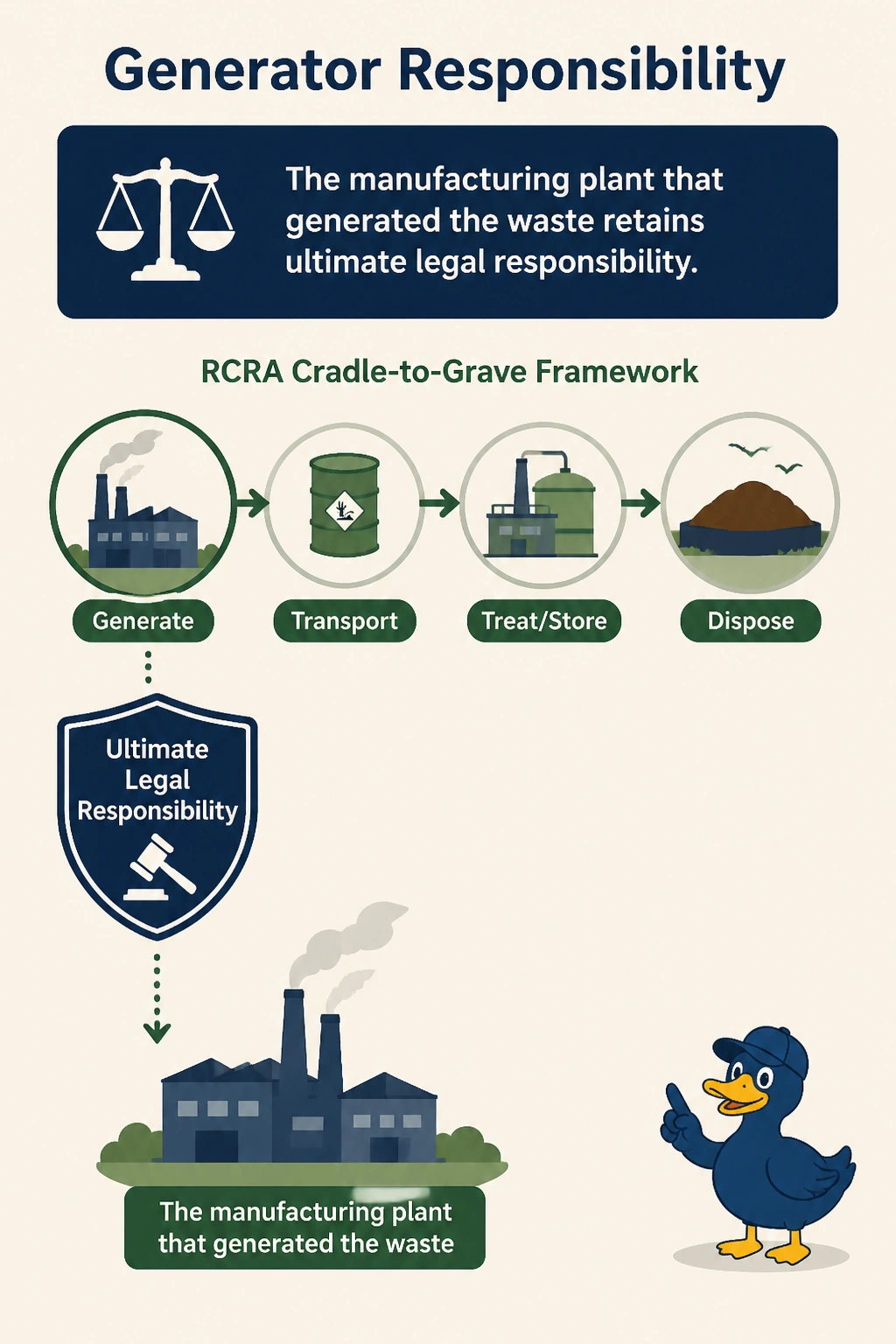
Under RCRA's cradle-to-grave liability principle, The manufacturing plant that generated the waste retains ultimate legal and financial responsibility for its hazardous waste from creation through final disposal. Even after compliant manifesting, the generator can still be held liable under federal environmental law if mismanagement or contamination occurs downstream. The third-party transporter that signs the manifest at pickup assumes chain-of-custody duties while the drums are in transit, but that signature does not extinguish the generator's underlying responsibility. Similarly, The licensed treatment facility once the drums cross its gate takes operational control for treatment or disposal, yet it does not relieve the generator of long-term liability if the site later fails. The state environmental agency that issued the facility ID number acts as a regulator and tracker rather than a liable party. As a caveat, generators cannot contract away statutory liability through vendor indemnification clauses alone. Operationally, audit your disposal vendors and verify signed return manifests within required timeframes.
Prefer to study offline? Printable PDF study book + test engine ($7.50, unofficial). These questions stay free here.