
A regional distribution center completes a full-building evacuation drill and discovers that two exterior gates were locked and radio batteries died mid-drill. Which step should the emergency coordinator take immediately afterward to strengthen preparedness?
Select an answer to reveal the explanation.
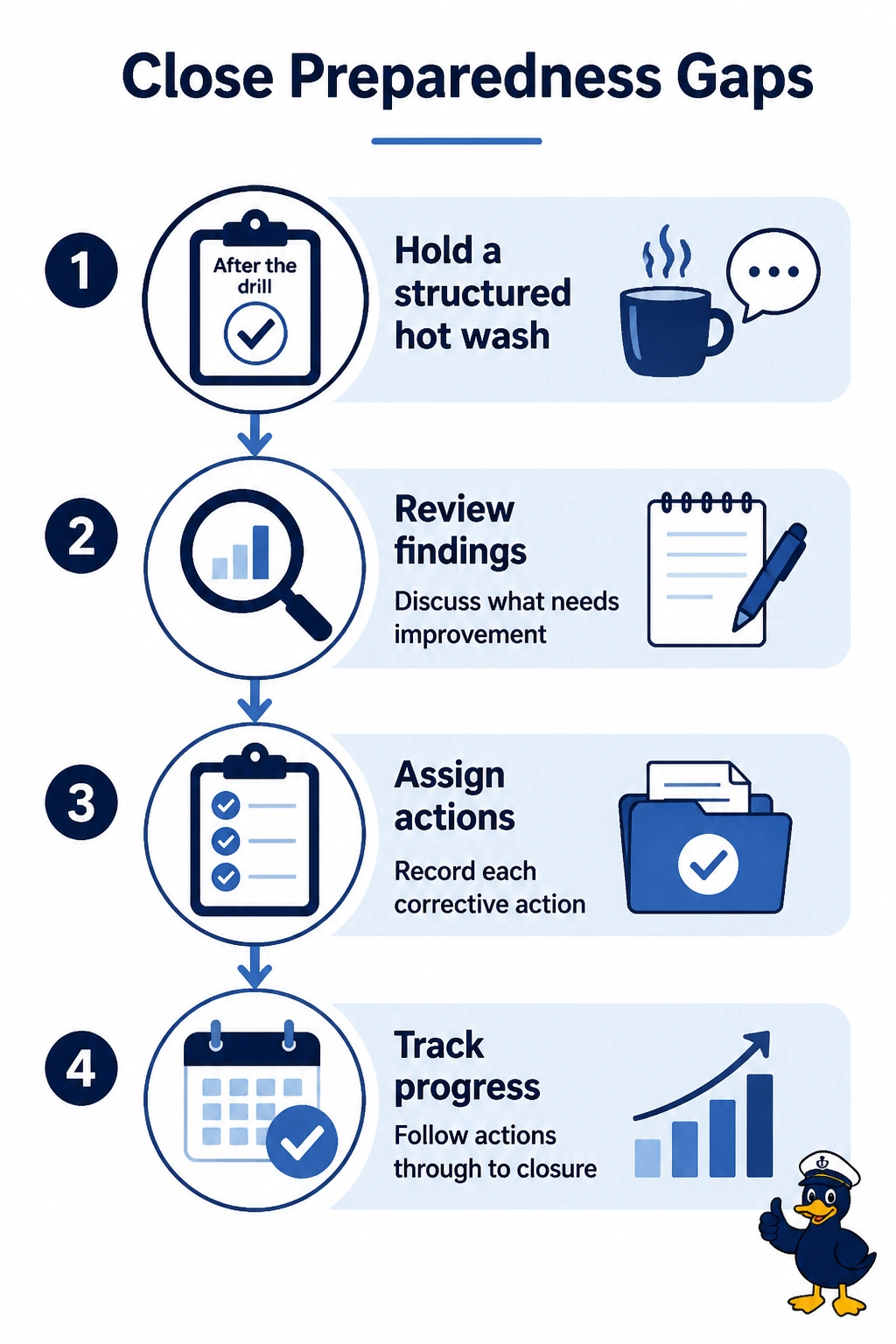
Short Explanation
A drill that uncovers broken gates and dead radios is actually a gift, because you found those flaws before a real emergency struck. Don't fall into the trap of filing the attendance sheet and moving on; capture lessons in a hot wash and fix the gaps.
Full Explanation
After any emergency exercise, the coordinator should Hold a structured hot wash and track corrective actions to closure. A hot wash (immediate debrief) captures candid observations from wardens and evacuees while details are fresh, and an After-Action Report turns those findings into assigned corrective actions with owners and deadlines—such as adding gate-unlocking protocols and scheduled battery checks. Choosing to File the drill attendance sheet and wait until next year's drill to retest leaves known egress and communication failures unresolved during the entire intervening year. Choosing to Discipline the floor wardens for failing to anticipate the dead radio batteries punishes participants for systemic equipment-maintenance gaps and discourages honest feedback in future drills. Choosing to Note the locked gates in the report but assign no owner and no due date records the finding without accountability, so under HSEEP improvement planning nothing is tracked to closure and the same locked-gate failure can recur. As a caveat, a hot wash only improves readiness if leadership funds and verifies the resulting fixes. Operationally, review open drill corrective actions at the next safety committee meeting and run a targeted follow-up check on the exterior gates and radio charging stations.
Prefer to study offline? Printable PDF study book + test engine ($7.50, unofficial). These questions stay free here.