
A rural chemical blending plant has a small internal fire brigade that cannot handle large tank fires or prolonged hazmat releases on its own. Which preparedness step ensures external municipal responders can integrate smoothly during an actual emergency?
Select an answer to reveal the explanation.
Short Explanation
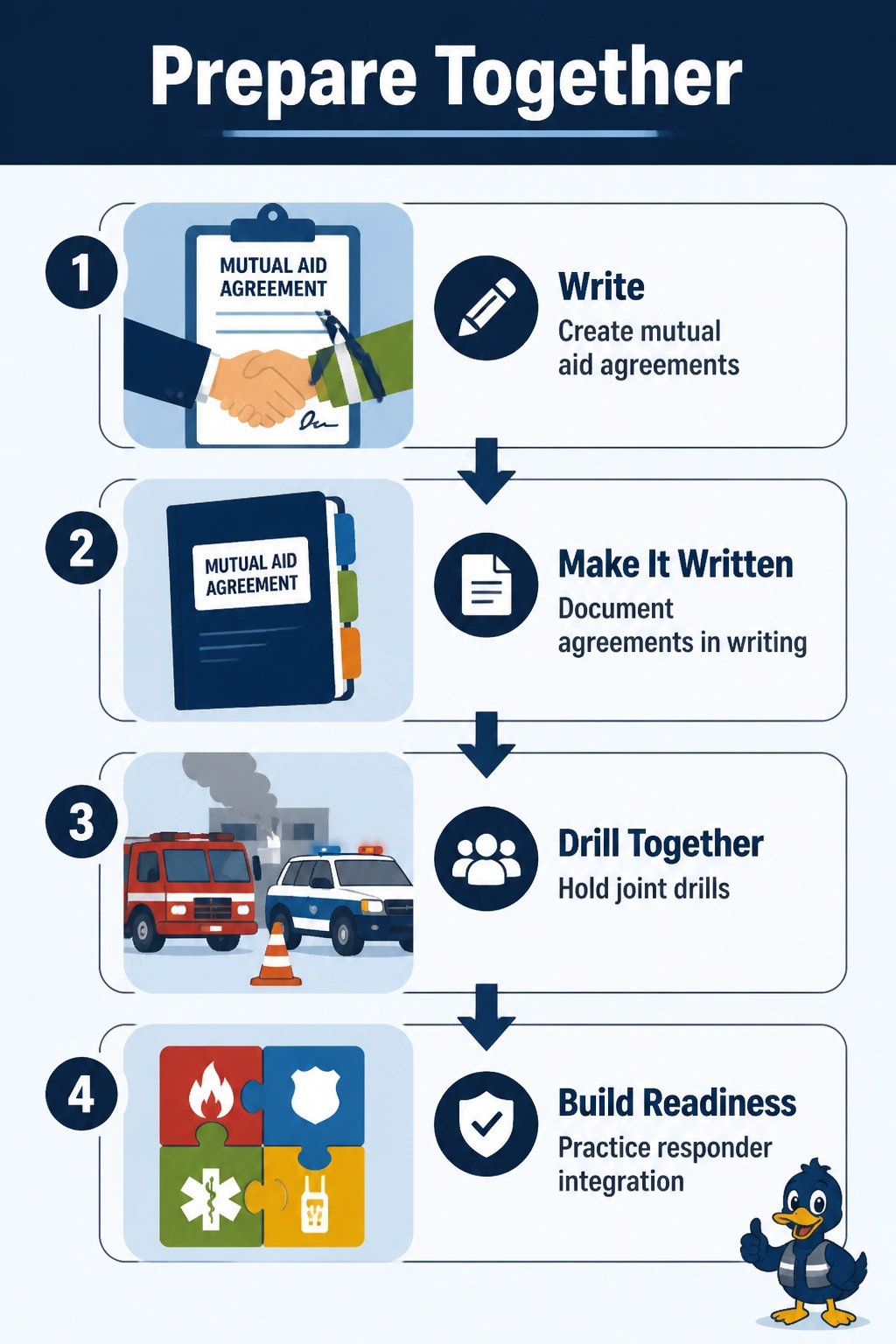
Exchanging business cards during a three-alarm chemical fire is no way to coordinate a response. Before an emergency hits, you need formal written mutual aid agreements and joint drills so outside crews know your site hazards, water supply, and command structure.
Full Explanation
Facilities with hazards exceeding internal response capabilities must coordinate with local fire departments, hazmat teams, and hospitals well before a crisis occurs. The most effective step is to Establish written mutual aid agreements and joint drills that define response roles, equipment compatibility, radio frequencies, and Incident Command integration ahead of time. Choosing to Rely on verbal assurances from the local fire chief leaves critical gaps in liability, resource availability, and command authority when personnel change or multiple emergencies happen at once. Deciding to Wait until an incident occurs to share site chemical inventories delays life-saving tactical decisions and puts arriving firefighters at severe risk from unknown exposures. Similarly, attempting to Transfer all Emergency Action Plan duties to county dispatch is ineffective because the facility remains responsible for employee notification, evacuation, and headcount under 29 CFR 1910.38. As a caveat, mutual aid agreements do not replace mandatory EPCRA community right-to-know chemical reporting to Local Emergency Planning Committees. For an operational check, review mutual aid agreements annually and invite local fire captains on an annual facility walk-through.
Prefer to study offline? Printable PDF study book + test engine ($7.50, unofficial). These questions stay free here.