
A metal finishing shop wants to reduce its environmental compliance burden and hazardous waste volume under the EPA waste management hierarchy. Which action represents the highest-priority approach?
Select an answer to reveal the explanation.
Short Explanation
The smartest way to clean up a spill is never to bring the bucket of paint into the room—that is what source reduction does for your facility. The trap is jumping straight to recycling or treatment when eliminating the hazardous chemical upstream solves the problem first.
Full Explanation
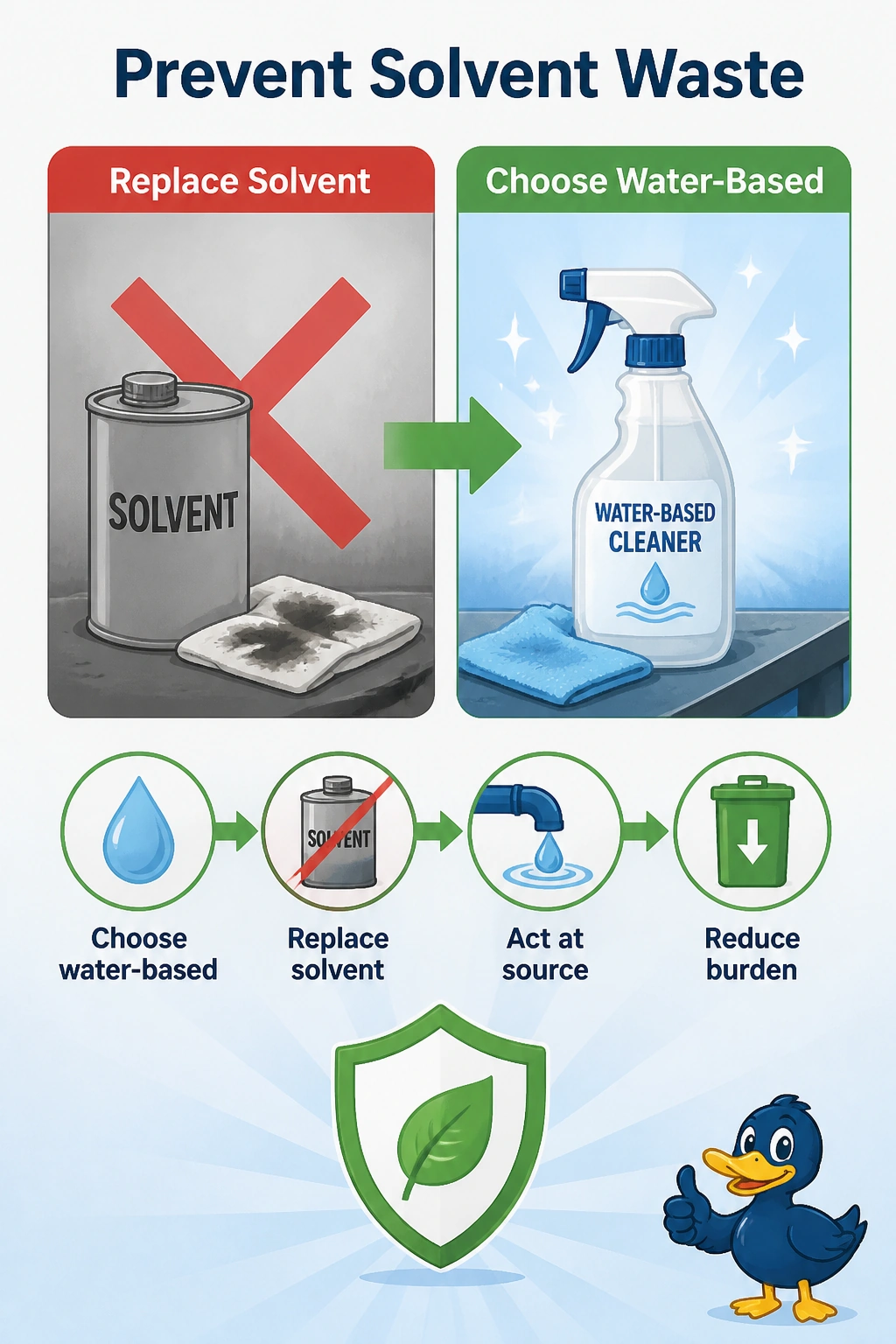
Under the EPA Pollution Prevention hierarchy, the most preferred option is to Substitute a water-based cleaner to eliminate solvent use at the source because it prevents hazardous waste from being generated in the first place. Source reduction removes downstream air emissions, worker chemical exposures, storage hazards, and regulatory disposal costs simultaneously. Choosing to Install a solvent distillation unit to recycle spent cleaner on-site ranks second in the hierarchy because recycling still requires handling, storing, and recovering hazardous material, along with managing still-bottom residues. Choosing to Neutralize and treat spent cleaning solution before municipal sewer discharge falls lower on the hierarchy as treatment, which modifies waste after creation and still requires wastewater permitting. Contracting a licensed off-site incinerator to destroy spent solvent is treatment, not land disposal, and it still ranks below source reduction and on-site recycling. Caveat: before switching to a water-based cleaner, verify that the substitute does not introduce new corrosion, wastewater, or slip hazards. Operational check: review Safety Data Sheets and annual waste generation logs after any process substitution to confirm net hazard and volume reduction.
Prefer to study offline? Printable PDF study book + test engine ($7.50, unofficial). These questions stay free here.