
A food distribution warehouse expands its cold-storage wing, adding two new exterior assembly areas and reassigning three supervisors as evacuation sweep wardens. Under OSHA's Emergency Action Plans standard (29 CFR 1910.38), when must the employer review the updated plan with affected employees?
Select an answer to reveal the explanation.
Short Explanation
Moving an assembly point without telling your crew is like changing the fire escape without unlocking the new door. You have to brief workers right when the plan or their emergency duties shift, not months later. The trap is waiting for an annual refresher cycle while outdated evacuation routes stay posted.
Full Explanation
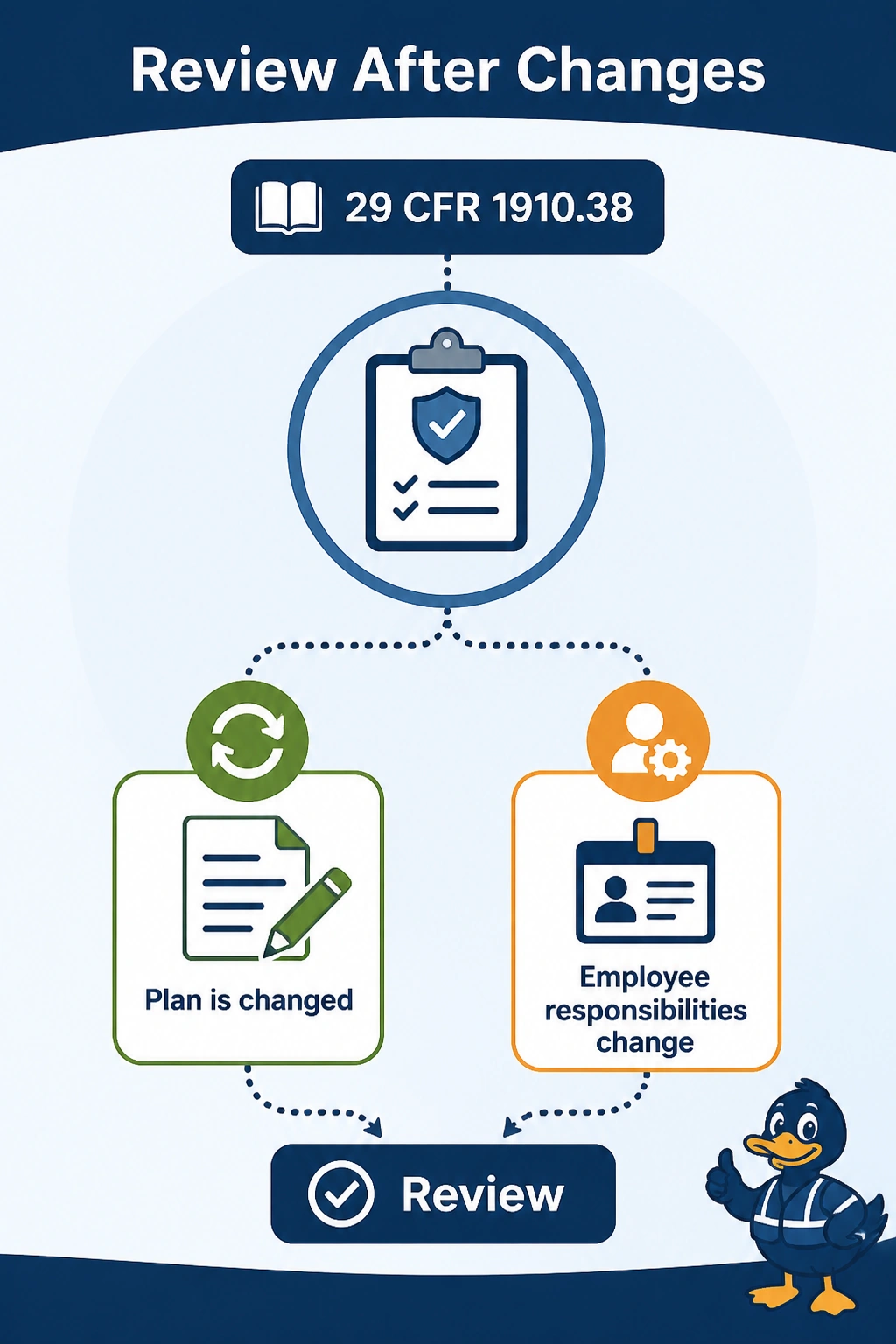
Under OSHA's Emergency Action Plans standard (29 CFR 1910.38(f)), an employer must review the emergency action plan with each employee covered by the plan at initial assignment, whenever the plan is changed or an employee's responsibilities under the plan change. Waiting to brief workers Only during the next scheduled annual all-hands safety refresher meeting in the fourth quarter leaves employees and newly assigned sweep wardens unprepared during an actual fire or ammonia leak in the meantime. Reviewing the plan Only after a real emergency evacuation reveals confusion at the new exterior assembly areas is reactive and violates the preventive training duty in the standard. Waiting Every five years when the facility renews its municipal fire-department occupancy permit confuses local building permit cycles with OSHA's change-driven training requirement. As a caveat, even when no physical layout changes occur, newly hired or transferred employees must still receive plan orientation before starting work in the area. As an operational check, update posted evacuation maps, brief all affected shifts on the new assembly areas and warden duties, and conduct a timed drill to confirm everyone knows the revised routes.
Prefer to study offline? Printable PDF study book + test engine ($7.50, unofficial). These questions stay free here.