
A noisy stamping plant with ambient machinery levels above 90 dBA needs an alarm system to alert workers to evacuate during a chemical release or fire. Under OSHA's Employee Alarm Systems standard (29 CFR 1910.165), what design requirement ensures every worker receives the warning?
Select an answer to reveal the explanation.
Short Explanation
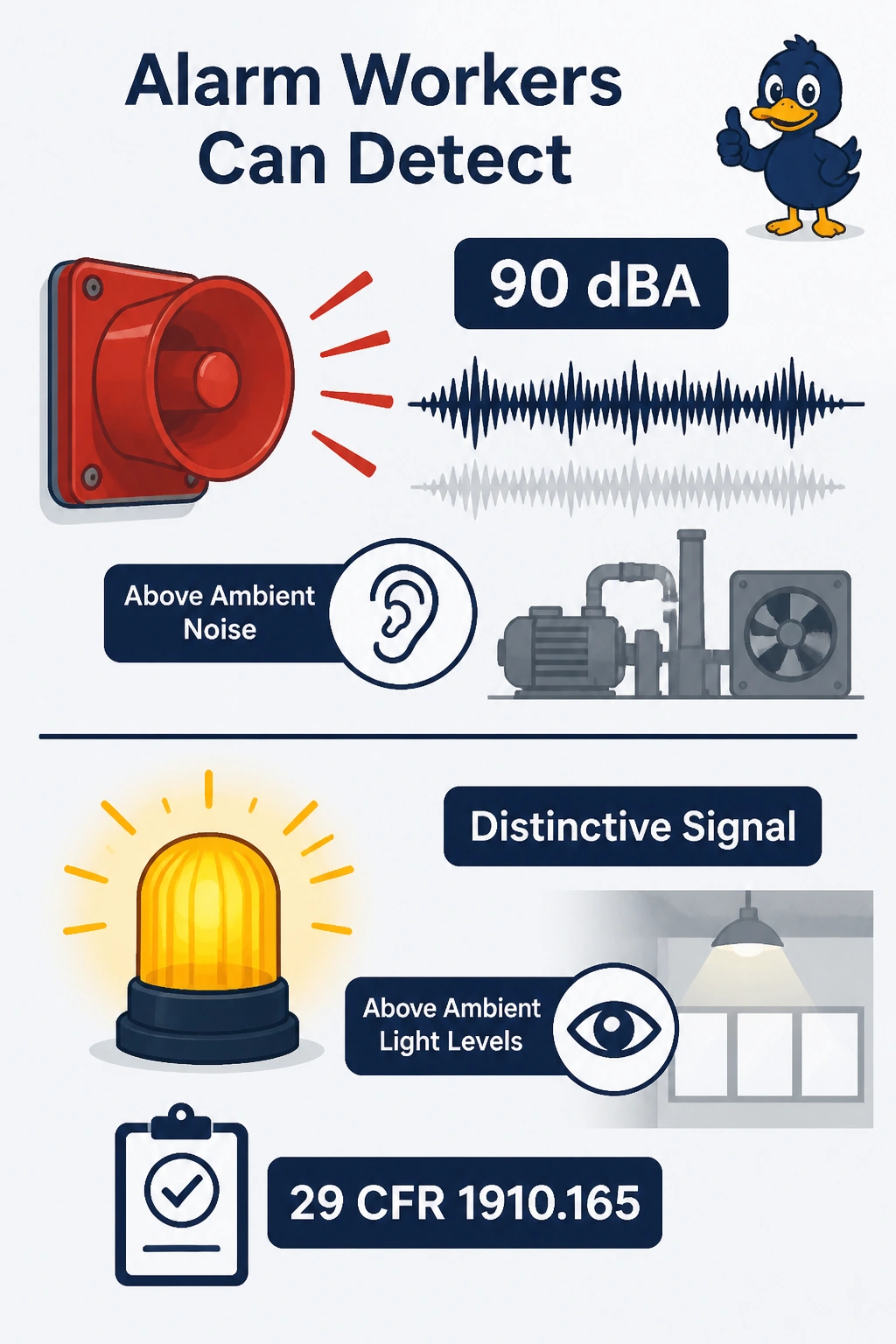
You need an alarm that cuts through stamping-press noise and hearing protection, not one that blends in or sounds like a routine break signal. A distinctive warning that workers can perceive above the ambient noise and light levels helps everyone recognize the emergency and evacuate.
Full Explanation
Under OSHA 29 CFR 1910.165, an employee alarm system must warn workers to take necessary emergency action. Providing a distinctive signal perceived above ambient noise and light levels meets that need in a stamping plant with machinery above 90 dBA: high-output audible horns and synchronized visual strobes can make the warning both heard and seen, including by workers wearing hearing protection. Using a single verbal announcement over the shop intercom without visual strobes can fail because press noise and earplugs may drown out speech, while the lack of visual warning excludes workers who cannot hear it. Relying on the same horn tone used to signal shift changes and lunch breaks risks confusion and delays evacuation because workers may mistake the emergency for a routine signal. Restricting alarm activation solely to the plant manager's locked office makes activation inaccessible to employees who discover an emergency. Workplaces with 10 or fewer employees may use direct voice communication only if every worker can clearly hear the message, which is not feasible in this high-noise plant. Practical check: test audible and visual alarms periodically during normal production noise and verify that every zone sees and hears the warning.
Prefer to study offline? Printable PDF study book + test engine ($7.50, unofficial). These questions stay free here.