
A hospital emergency management coordinator wants to test how department heads communicate, assign Incident Command roles, and follow decision trees during a simulated power outage without disrupting patient care or deploying physical equipment. Which preparedness activity best fits this goal?
Select an answer to reveal the explanation.
Short Explanation
Before you move a single patient or roll out backup generators, you want your leaders to talk through who calls whom when the lights go out. The trap is picking a physical drill when the scenario specifically asks for zero disruption to live operations.
Full Explanation
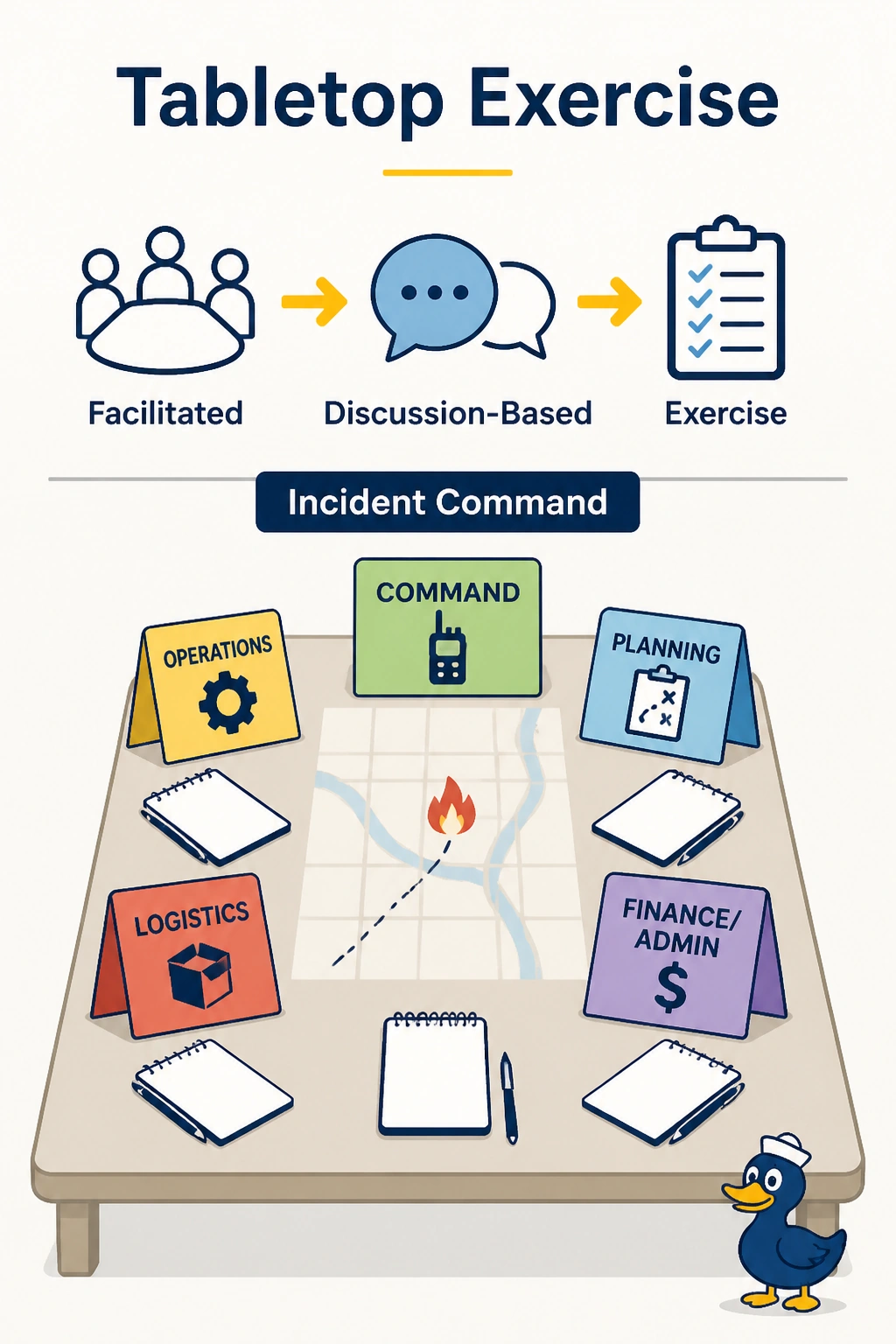
A facilitated tabletop discussion-based exercise brings key leaders together in a low-stress conference setting to walk through a realistic scenario, validate emergency plans, clarify Incident Command roles, and uncover communication gaps without interrupting clinical operations. An unannounced full-scale evacuation drill fails because it physically mobilizes staff, patients, and equipment, causing major operational disruption that the coordinator explicitly wants to avoid. A live field decontamination exercise is incorrect because it tests hands-on hazardous materials setup and physical response rather than executive decision trees during a power outage. A post-incident equipment inventory audit is wrong because checking supply counts after an event verifies logistics readiness rather than testing real-time role assignment and interdepartmental communication. As an exam caveat, tabletop exercises validate plans and coordination on paper, so they should eventually be followed by functional or full-scale drills to test physical execution. For an operational check, document every decision bottleneck and unclear handoff during the tabletop in an After-Action Report with assigned corrective owners and due dates.
Prefer to study offline? Printable PDF study book + test engine ($7.50, unofficial). These questions stay free here.