
A small auto-detailing shop employs 8 full-time workers and has no part-time staff. Under OSHA's Emergency Action Plans standard (29 CFR 1910.38), how may the shop owner legally communicate the facility's emergency action plan to employees?
Select an answer to reveal the explanation.
Short Explanation
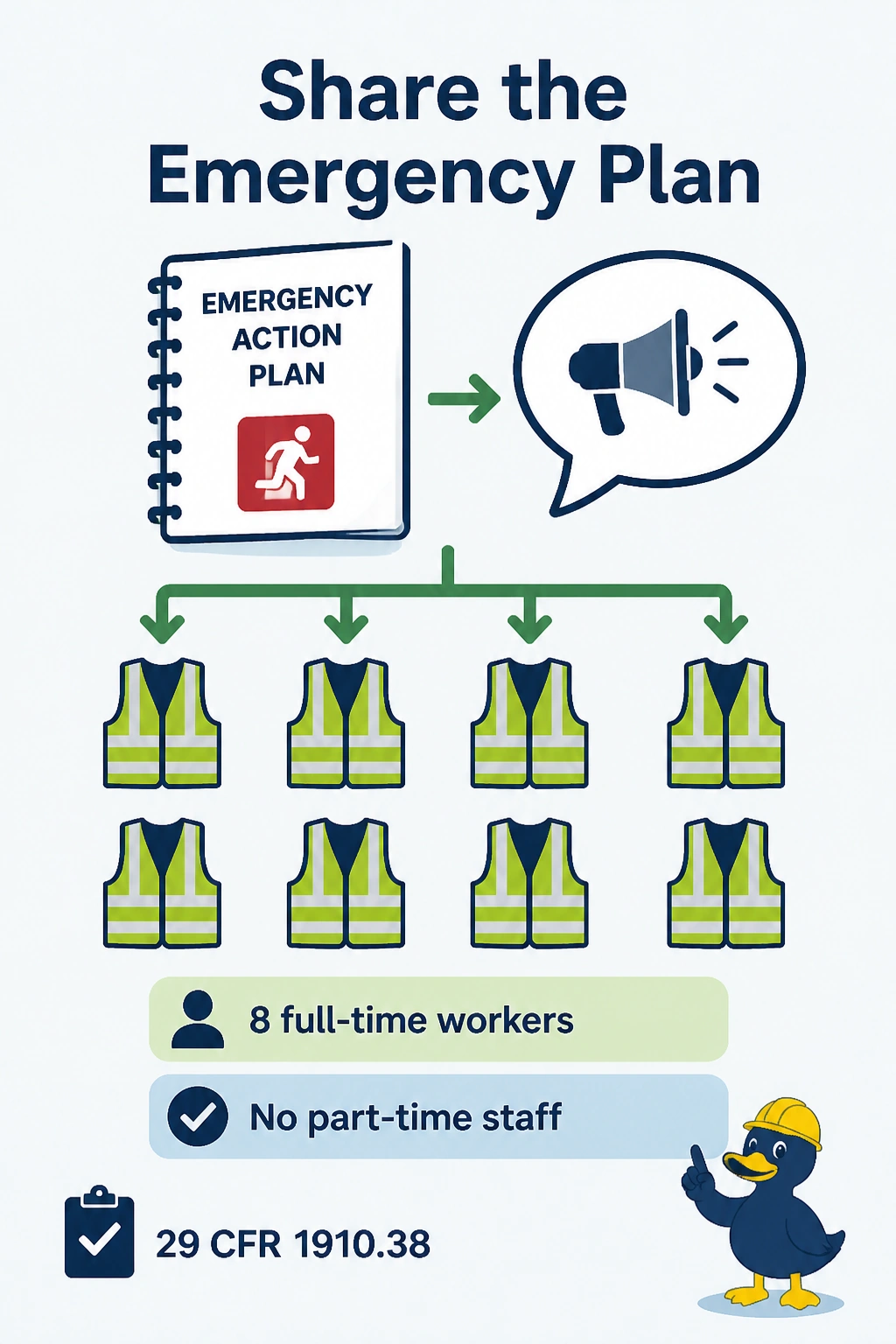
OSHA scales paperwork to headcount so a tiny shop is not buried in binders while larger plants keep formal manuals. The trap is assuming every business must maintain a written plan; with 10 or fewer employees, you may communicate the plan orally.
Full Explanation
Under 29 CFR 1910.38, an emergency action plan normally must be in writing, kept in the workplace, and available for employee review, but an employer with 10 or fewer employees meets the rule by communicating the emergency action plan orally to the eight employees. Even when delivered verbally, the plan still must cover core elements such as reporting fires or emergencies, evacuation routes, assembly points, and how to account for employees. Requiring the owner to prepare by filing a notarized written emergency plan with the local fire marshal before hiring staff invents a filing requirement not found in 29 CFR 1910.38. Keeping procedures hidden by posting a written emergency manual only inside the owner's locked administrative office would violate accessibility rules even for larger employers. Waiting until an incident by relying on municipal 911 dispatchers to direct workers during an alarm abdicates the employer's duty to train staff on internal exits and alarm signals beforehand. As a caveat, if headcount grows to 11 or more total employees, the plan must be converted to a written document. Conduct a quick verbal huddle with all eight employees and verify each person can name the primary exit and outdoor rally point.
Prefer to study offline? Printable PDF study book + test engine ($7.50, unofficial). These questions stay free here.