
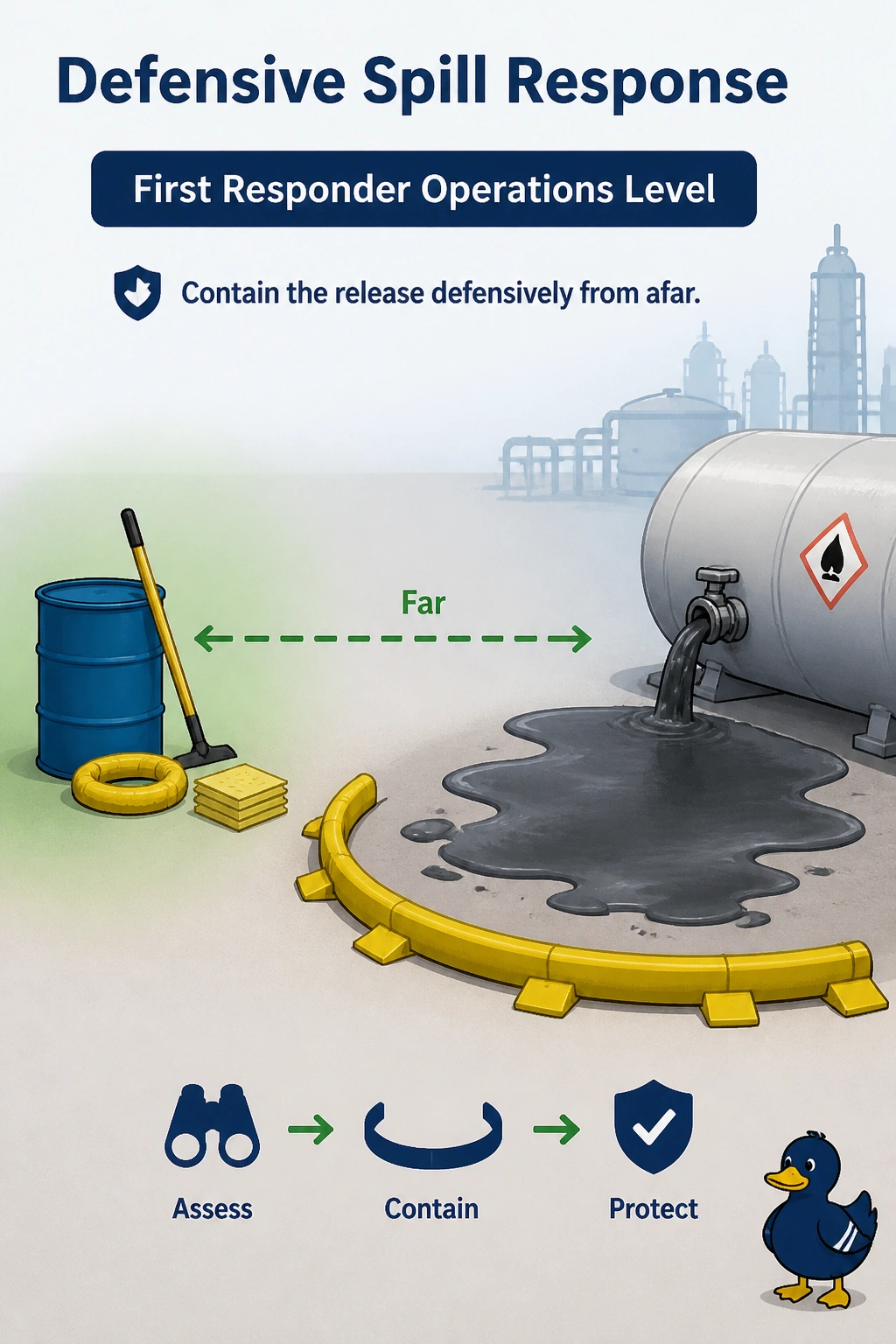
A trained chemical-plant operator responds to a leaking drum of solvent on a loading dock and uses absorbent dikes from a distance to keep the liquid out of a storm drain, without approaching the drum to plug the leak. Which HAZWOPER responder level matches this defensive action?
Select an answer to reveal the explanation.
Short Explanation
Knowing where your HAZWOPER training stops keeps a spill from turning into a rescue! The trap is confusing defensive diking with either pure observation or offensive leak-plugging, when holding the line from a safe distance defines the Operations Level.
Full Explanation
Under 29 CFR 1910.120(q)(6)(ii), responders trained to the operations level are authorized to protect nearby persons, property, or the environment by acting defensively without trying to stop the release at its source. That directly matches "First Responder Operations Level, containing the release defensively from afar" when an operator builds absorbent dikes to block a storm drain without approaching the leaking drum. By contrast, "First Responder Awareness Level, observing from a safe distance" applies to workers who only recognize a release, secure the area, and notify authorities without taking physical containment actions. Choosing "Hazardous Materials Technician, stopping the leak at its source" describes offensive responders trained and equipped to approach the point of release to patch, plug, or close valves. Selecting "On-Scene Incident Commander, directing the overall site response" refers to the leadership role managing the incident command system rather than physically deploying dikes. As a caveat, even defensive operations require appropriate personal protective equipment and verification that the spilled material does not pose an immediate vapor or fire hazard at the diking location. For an operational check, audit your emergency response roster annually to confirm each responder's training hours and equipment match their assigned HAZWOPER tier.
Prefer to study offline? Printable PDF study book + test engine ($7.50, unofficial). These questions stay free here.