
A regional hospital's emergency management team previously held a discussion-based tabletop review of its hurricane plan and now wants to test real-time radio communications, patient-tracking software, and Emergency Operations Center decision-making under time pressure without actually evacuating patients. Which exercise type meets this goal?
Select an answer to reveal the explanation.
Short Explanation
Think of this like a flight simulator for your command staff: the stress and messages are real, but nobody actually moves a patient. The trap is jumping straight to a full-scale field deployment when you only want to pressure-test coordination and software.
Full Explanation
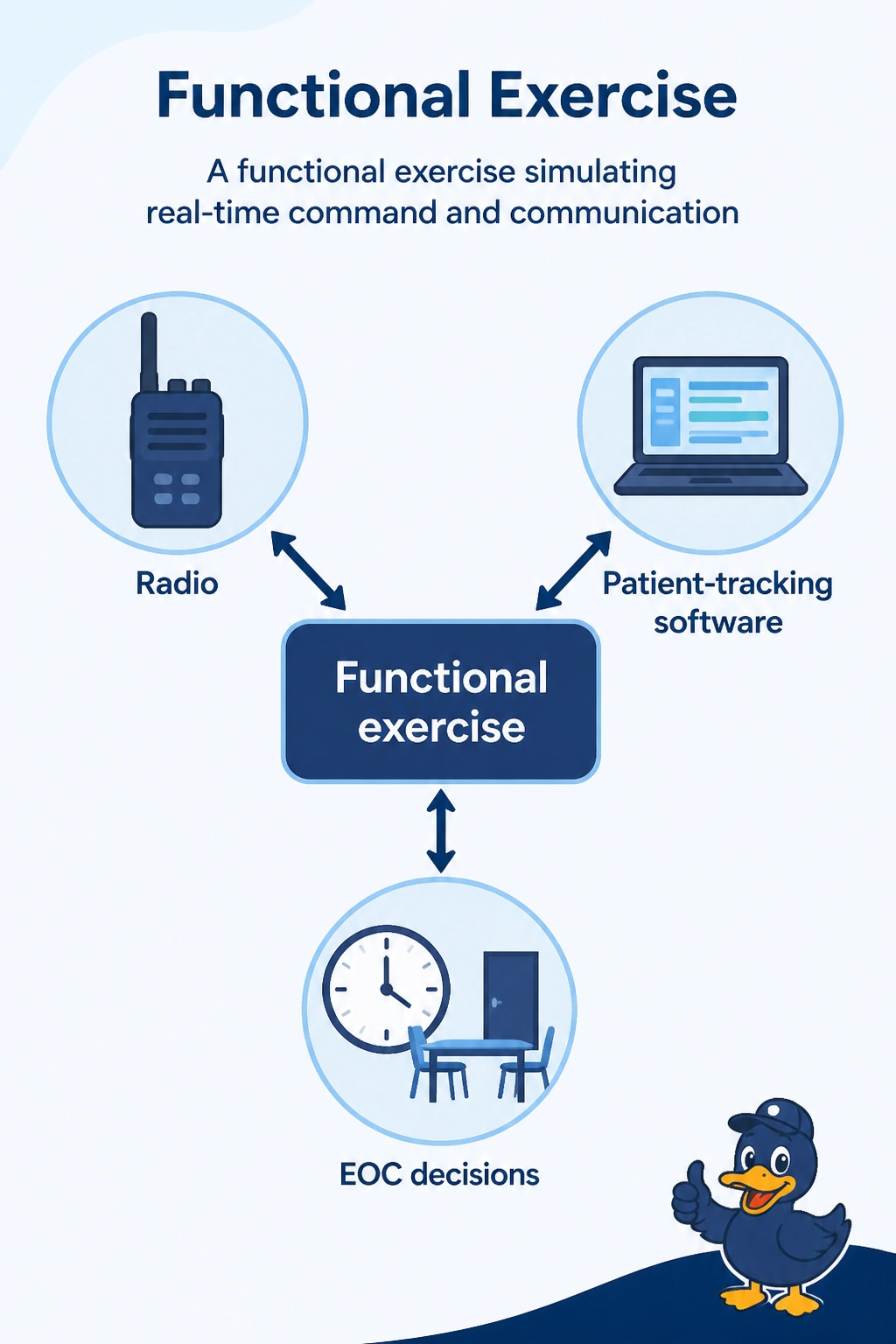
A functional exercise simulating real-time command and communication bridges the gap between low-stress discussion and physical field deployment by challenging Emergency Operations Center staff with live injects, time constraints, and actual communication tools. A seminar introducing staff to updated hurricane policies is a basic orientation session with no real-time pressure or operational testing. A full-scale exercise mobilizing external ambulance fleets involves physical movement of personnel, equipment, and simulated patients across multiple agencies, which exceeds the hospital's goal of avoiding patient disruption. A single-department drill testing backup generator startup evaluates one isolated technical function rather than multi-department command and software coordination. As a caveat, realistic scenarios still require dedicated controllers and evaluators so routine hospital care is never confused with exercise traffic. For an operational check, log message timestamps and software handoffs during the exercise and capture any communication bottlenecks in an after-action report with corrective deadlines.
Prefer to study offline? Printable PDF study book + test engine ($7.50, unofficial). These questions stay free here.