
A shipping clerk at a chemical distribution warehouse notices an unlabeled drum leaking a pungent green vapor onto the loading dock. Trained only to the HAZWOPER First Responder Awareness Level under 29 CFR 1910.120, what is the clerk's proper role?
Select an answer to reveal the explanation.
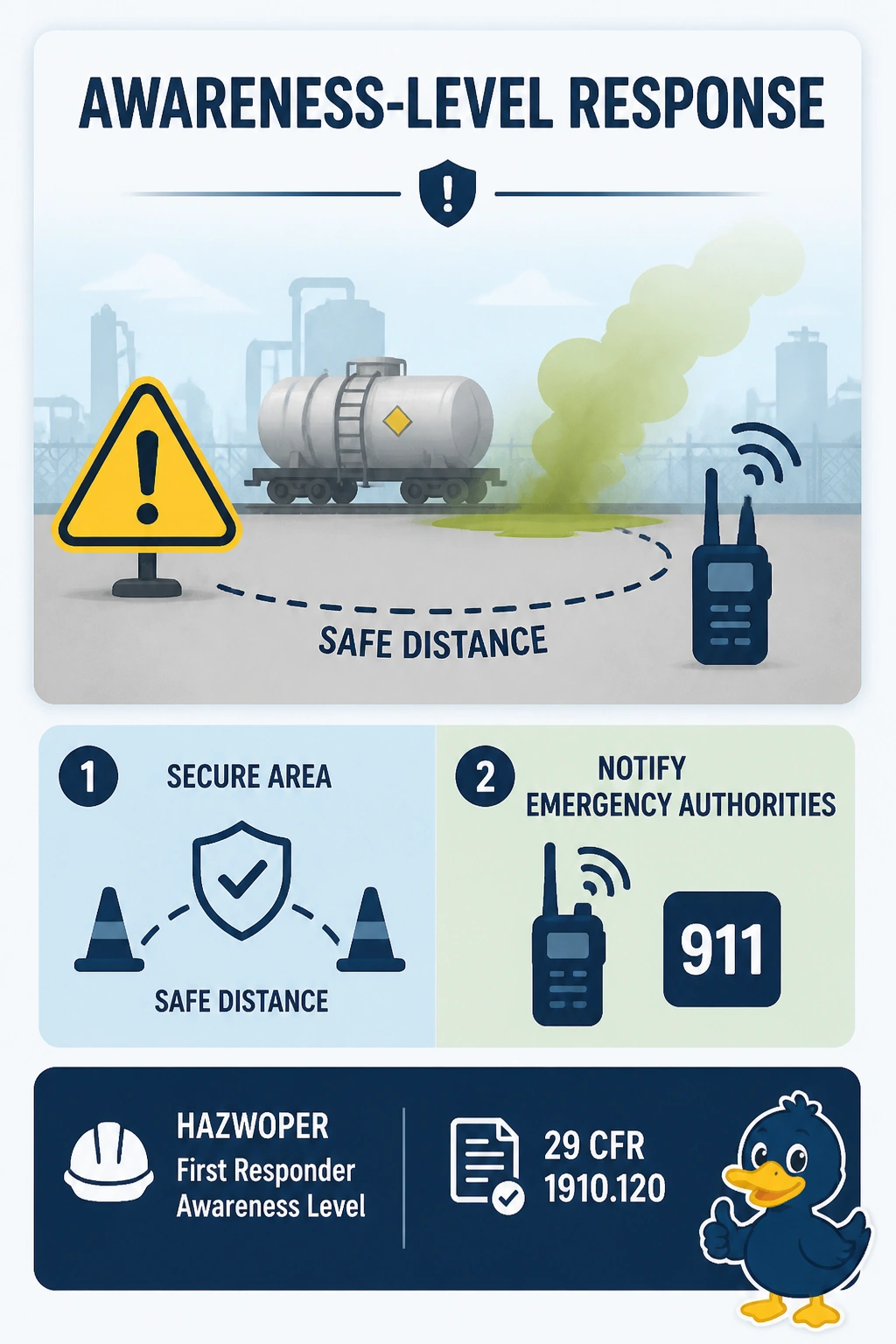
Short Explanation
When an unknown chemical drum starts leaking, your awareness-level training draws a bright boundary between reporting and intervening. The trap is wanting to be a hero by grabbing absorbents or a respirator you are not qualified to use.
Full Explanation
Under OSHA 29 CFR 1910.120(q)(6)(i), a First Responder at the Awareness Level initiates the response sequence by notifying the proper authorities and takes no further action beyond that notification. Awareness-level duty is to notify from a safe distance and not to enter, plug, dike, or assume command. Competency includes an understanding of their role in site security and control and the DOT Emergency Response Guidebook, which supports recognizing a release and isolating the area without entering the hazard zone. Attempting to "Don a self-contained breathing apparatus and plug the drum leak" requires Hazardous Materials Technician training, medical clearance, and fit testing. Attempting to "Deploy absorbent diking socks around the spill to contain runoff" is a defensive control reserved for First Responders at the Operations Level. Attempting to "Take command of the site response and direct arriving fire crews" belongs to an On-Scene Incident Commander rather than a discovering clerk. As a caveat, even well-intentioned defensive actions can expose untrained workers to toxic vapors from an unidentified substance. For an operational check, evacuate upwind, restrict dock access from a safe perimeter, and share the drum's location and visual observations with the responding incident commander.
Prefer to study offline? Printable PDF study book + test engine ($7.50, unofficial). These questions stay free here.