
An overturned railcar 400 yards upwind of an office building begins leaking chlorine gas, and local emergency officials advise occupants to stay indoors. Which emergency response action best protects building occupants?
Select an answer to reveal the explanation.
Short Explanation
When a toxic cloud is drifting toward your building, walking outside turns your parking lot into the danger zone. The trap is treating every emergency alarm like a fire drill where you automatically rush out the front doors.
Full Explanation
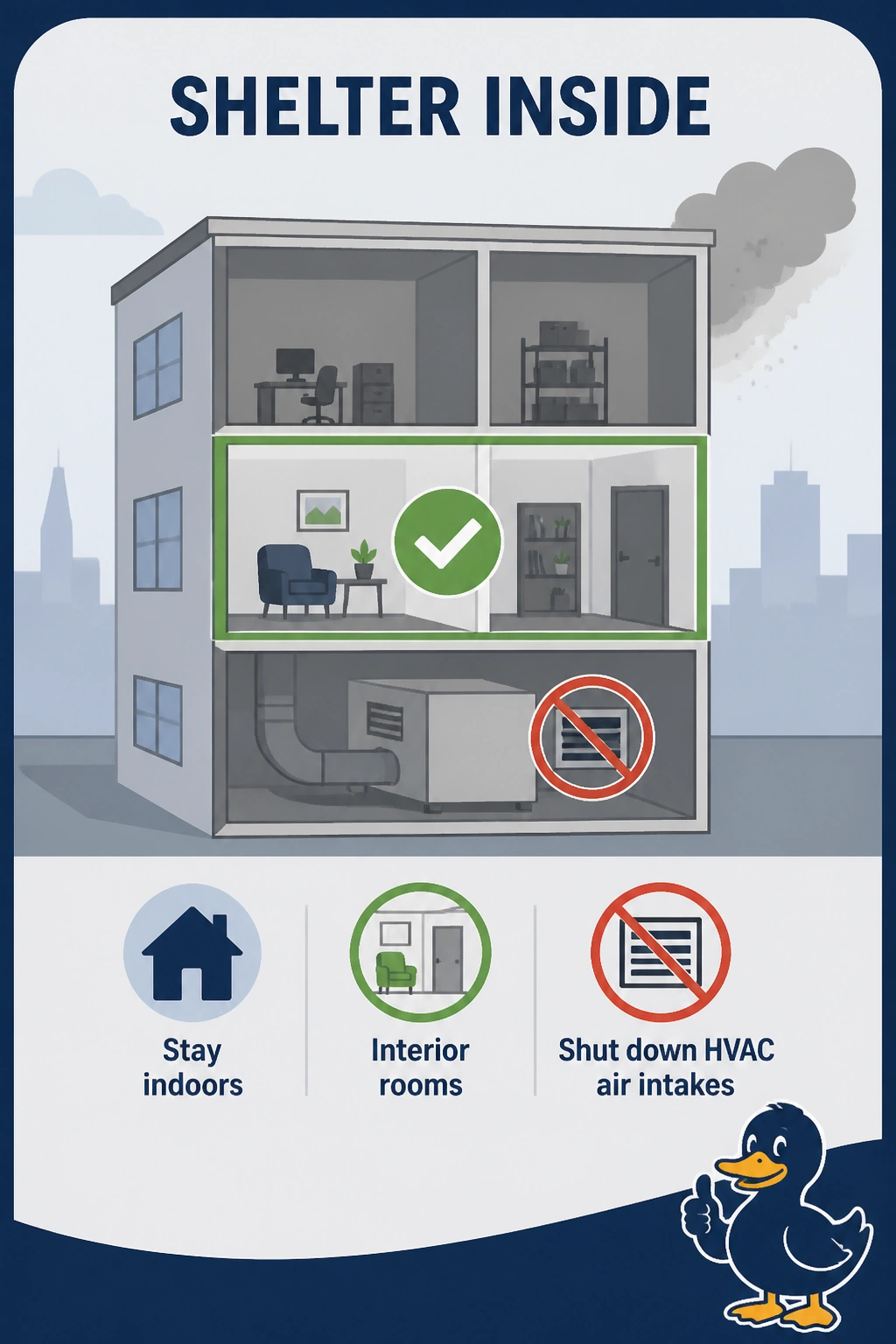
During an external airborne hazardous-material release such as chlorine gas, the building envelope acts as a temporary barrier that reduces vapor infiltration compared with outdoor exposure. The safest action is to Shelter in place inside interior rooms and shut down HVAC air intakes, closing exterior doors and windows and sealing gaps if directed until officials issue an all-clear. Ordering staff to Evacuate all staff immediately to the outdoor parking lot puts occupants directly into the path of the upwind toxic plume. Telling occupants to Open perimeter windows to equalize indoor air pressure actively draws contaminated outside air into the workspace. Choosing to Stage employees at the main loading dock to wait for buses places people in a poorly sealed, high-infiltration perimeter bay near ground level where dense chlorine gas tends to accumulate. One caveat is that shelter-in-place is a short-term protective measure; if the plume persists for hours or infiltrates the building, emergency responders may later direct a controlled evacuation or ventilation. For an operational check, verify that facility emergency teams know the exact location of HVAC emergency shutoff switches and maintain an interior shelter kit with plastic sheeting, duct tape, and two-way radios.
Prefer to study offline? Printable PDF study book + test engine ($7.50, unofficial). These questions stay free here.