
A community clinic's intake receptionists have experienced verbal threats and attempted intrusions from agitated visitors in the main waiting lobby. Which engineering control best reduces the risk of physical assault at the reception desk?
Select an answer to reveal the explanation.
Short Explanation
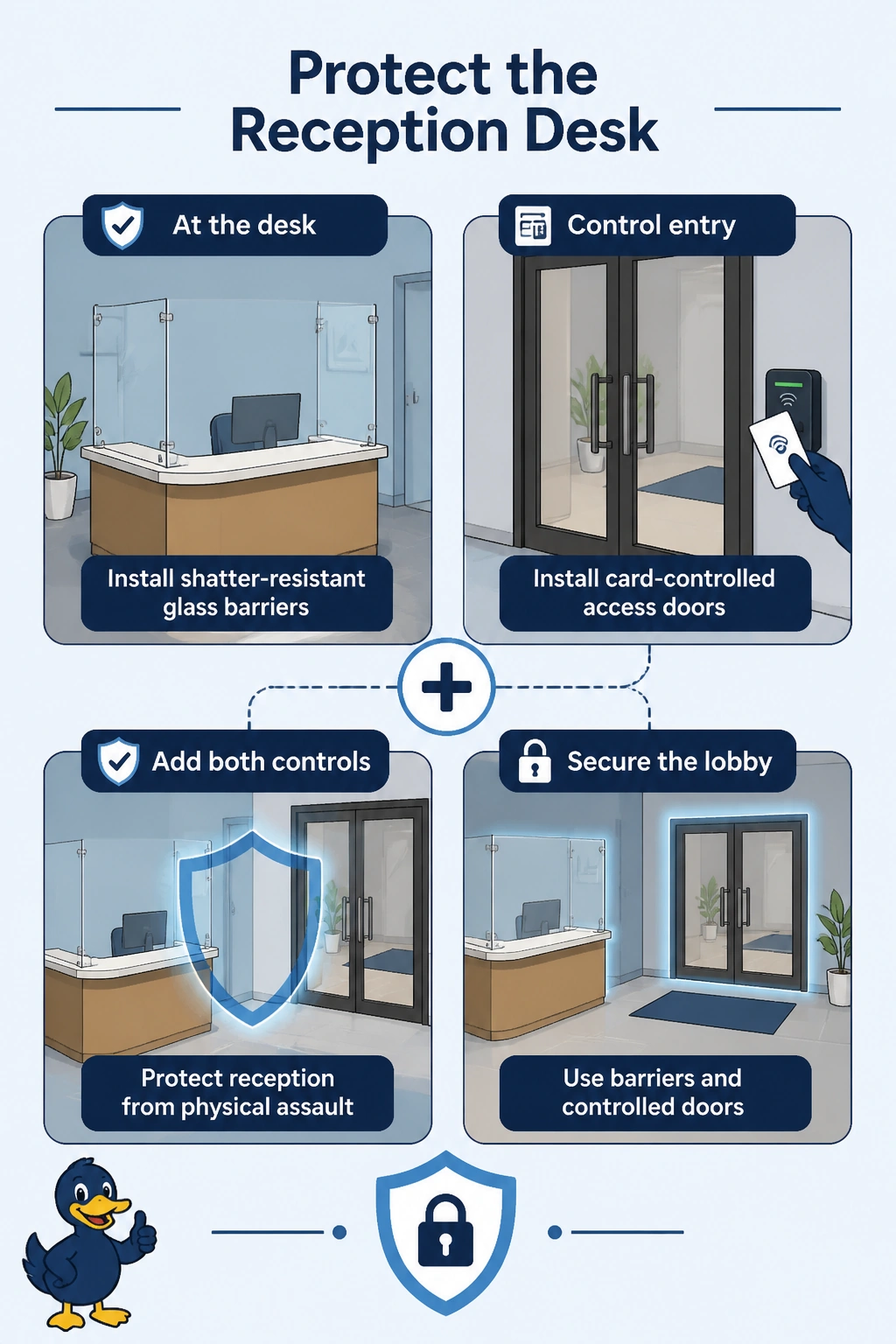
When an agitated visitor crosses the lobby, you want solid physical separation between that person and your staff—not just a polite poster. The trap is leaning on administrative training or manual tasks that fail under sudden stress. Put real barriers and controlled doors between the public and the desk.
Full Explanation
Installing shatter-resistant glass barriers and card-controlled access doors is an effective engineering control because it physically separates staff from potentially violent individuals and prevents unauthorized entry into work areas without relying on human reaction time. In healthcare and public-facing environments, physical barriers, controlled access, and clear sightlines sit higher on the hierarchy of controls than administrative rules. Requiring receptionists to complete an annual online conflict-deescalation quiz is an administrative training measure that builds helpful communication skills but cannot physically stop a determined intruder. Posting a laminated policy sign reminding visitors to remain courteous at all times relies entirely on voluntary compliance from people who may already be impaired or in crisis. Assigning a single receptionist to lock the front doors manually after each visit creates an impractical administrative burden and puts the worker closer to the doorway during a confrontation. Caveat: barriers must still allow clear voice communication and emergency egress so staff are never trapped behind locked doors during a fire. As an operational check, test access-control latches, intercom clarity, and silent panic buttons monthly with reception staff.
Prefer to study offline? Printable PDF study book + test engine ($7.50, unofficial). These questions stay free here.