
A mayor asks what “high availability” means in plain language for the permitting portal. Which explanation is best?
Select an answer to reveal the explanation.
Short Explanation
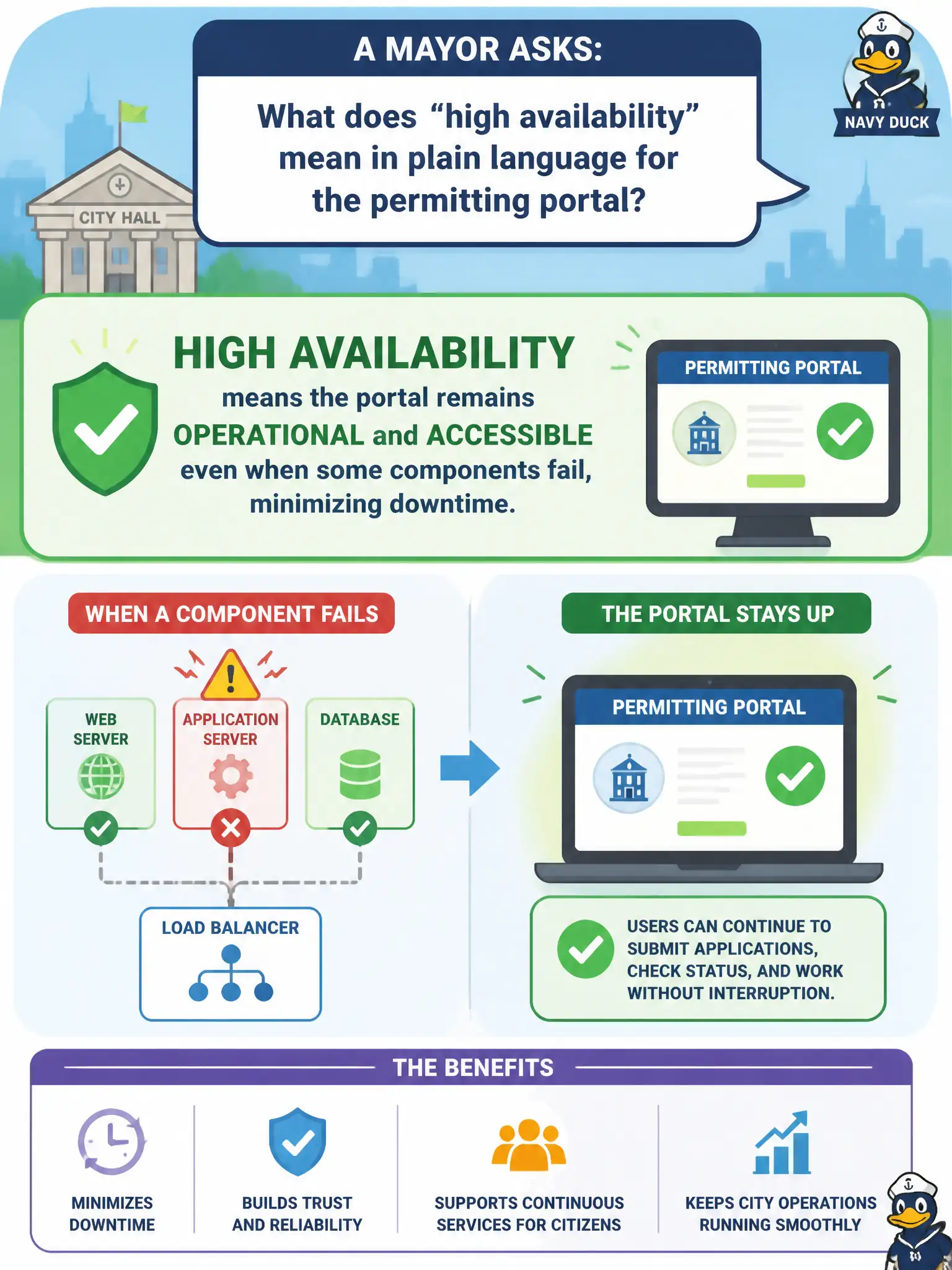
High availability is the opposite of a single point of failure drama. If one piece hiccups, the permitting portal should still answer citizens. Plain language: keep the doors open even when something in the back room breaks.
Full Explanation
In plain language, high availability means the permitting portal remains operational and accessible even when some components fail, minimizing downtime for citizens. It is about designing away from single points of failure so a hiccup does not close the doors on permits. The mayor-facing summary is keep serving citizens when something underneath breaks, not hope the one box never fails.
Defining HA as the portal being offline every night for mandatory CapEx maintenance describes planned downtime, not availability. Restricting HA to only one server with no redundancy allowed contradicts the concept. Publishing citizen data to social media has nothing to do with availability.
Exam caveat: high availability reduces downtime risk; it does not promise absolute zero downtime or replace backups and disaster recovery planning. SLAs express targets; architecture and redundancy deliver toward those targets. Do not equate “highly available” with “never needs a recovery plan.”
Operational check: sketch the permitting portal’s critical path and mark single points of failure; ensure at least one redundancy or failover story exists for each critical tier before calling the design highly available in a mayor briefing, and note residual downtime risk honestly.