
A CIO asks how cloud pricing models relate to the consumption-based idea. Which explanation is accurate at fundamentals depth?
Select an answer to reveal the explanation.
Short Explanation
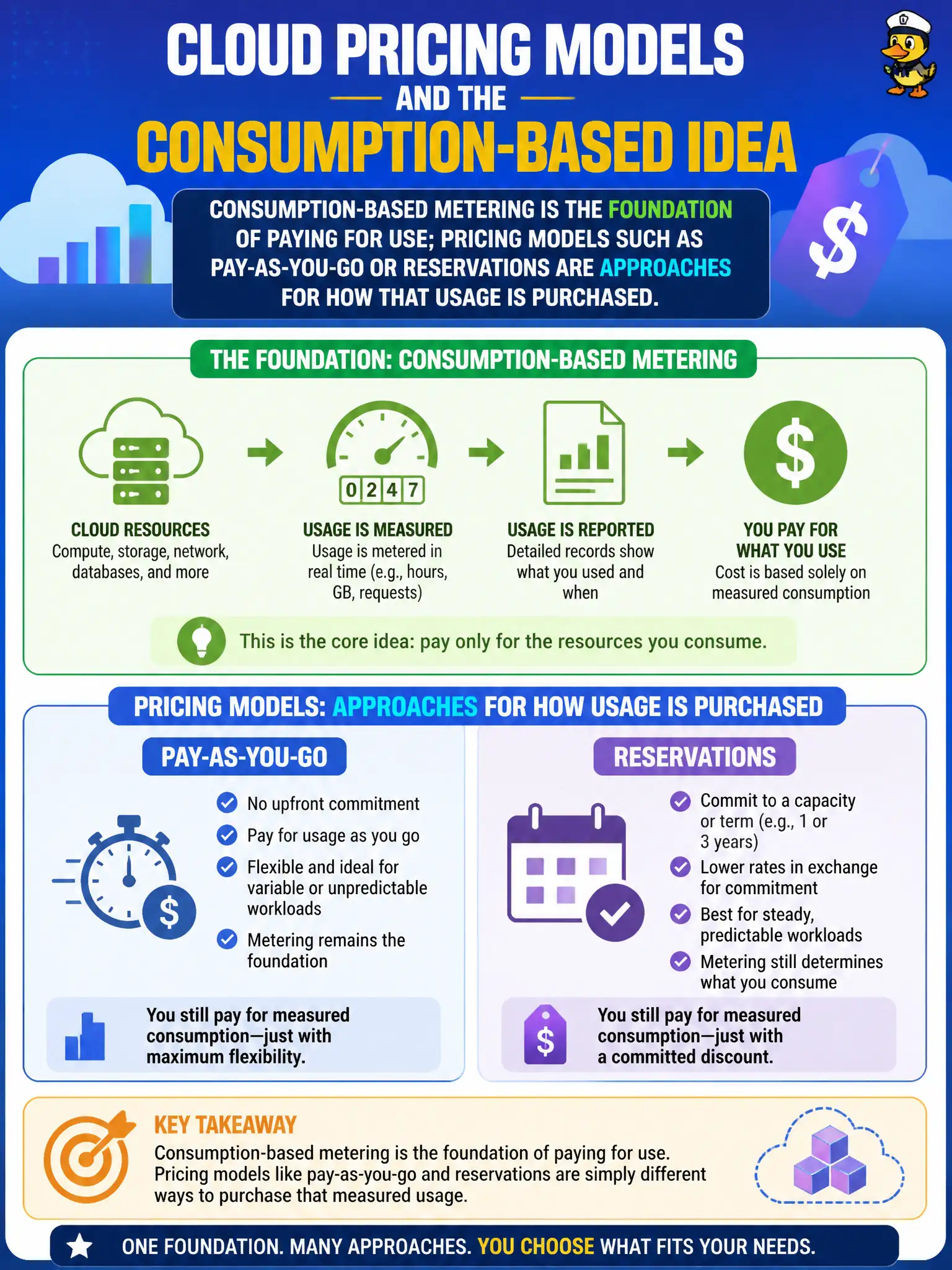
Consumption is the water meter on the building. Pricing models are the rate plans you choose for that meter—month-to-month, or a cheaper plan if you commit. The meter still measures use either way.
Full Explanation
Consumption-based metering is the foundation: you are charged according to what you use. Pricing models such as pay-as-you-go or reservations are approaches for how that usage is purchased—month to month at flexible rates, or with a commitment that typically lowers the rate. They nest together: the meter still measures use; the model changes how you buy the measured capacity.
Saying pricing models replace metered usage so consumption no longer matters severs the relationship AZ-900 wants you to see. Claiming reserved pricing means resources are never metered and never appear on an invoice is false—commitments change rates and terms, they do not erase billing. Calling consumption-based ideas and pricing models unrelated topics ignores that both appear together in the costing fundamentals narrative.
Exam caveat: reserved does not mean unlimited free forever; it means a purchasing commitment tied to specific resource attributes. Overcommitting or committing to the wrong size still shows up as cost risk even though the model is valid.
Operational check: pick one production workload, show its usage meters in Cost Analysis, then annotate whether that usage is bought pay-as-you-go or under a reservation—demonstrating to the CIO that metering and pricing model are complementary layers, not competing definitions.