
A port authority wants gradual cloud adoption: keep cargo systems local and move websites first. Which model describes that pattern?
Select an answer to reveal the explanation.
Short Explanation
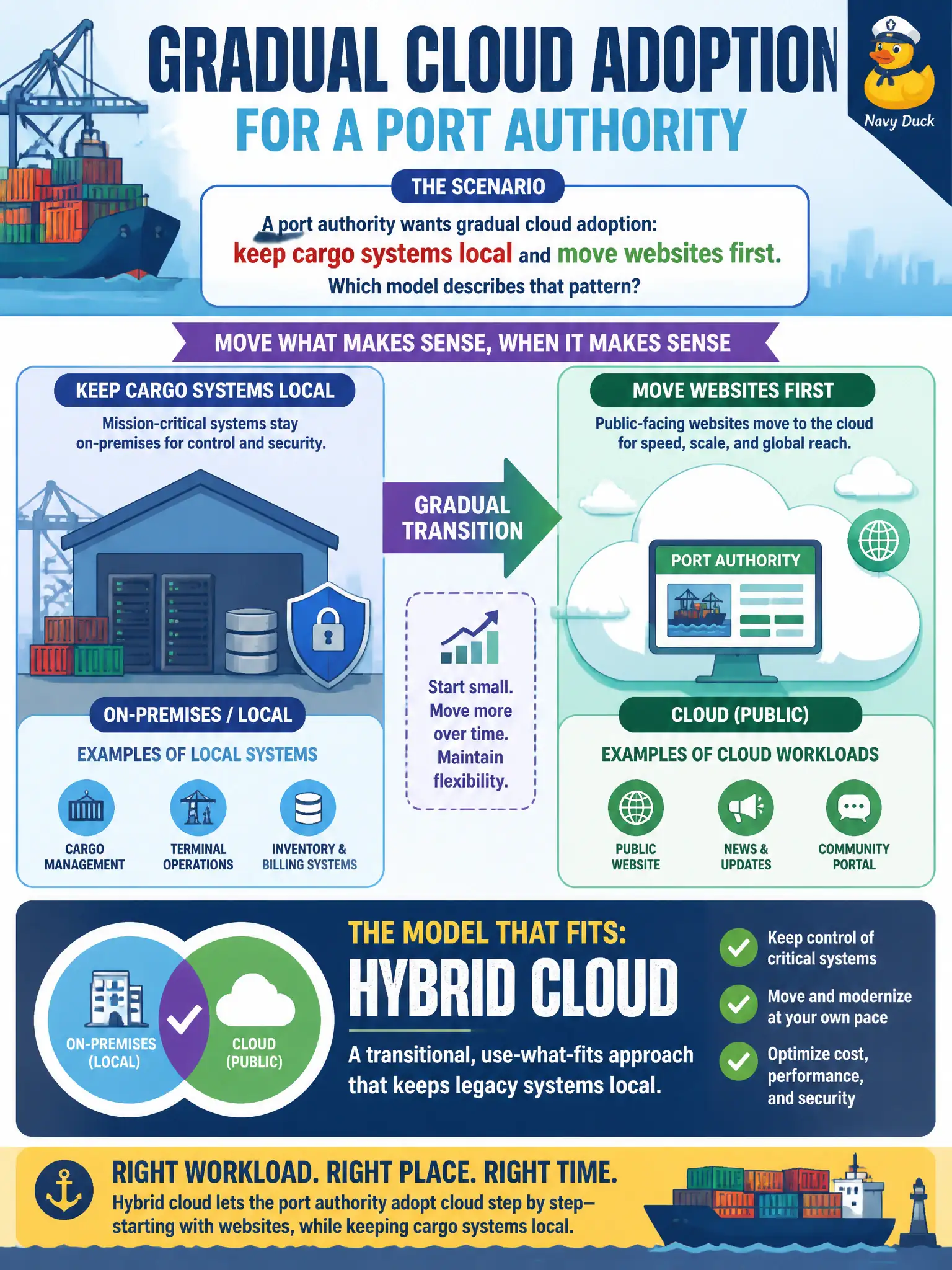
Move the brochure sites first, leave the cargo systems home until they are ready—that is hybrid as a runway. Gradual adoption is a feature, not a bug. You do not have to boil the harbor in one cutover.
Full Explanation
Hybrid cloud commonly supports gradual adoption: keep complex or legacy cargo systems local while moving suitable workloads such as websites to public cloud first. That transitional, use-what-fits pattern lets a port authority realize cloud benefits without a single cutover of every system. Hybrid describes the combined estate during migration.
Demanding public cloud only from day one because gradual migration is “not recognized” contradicts a standard hybrid use case. Claiming websites cannot run in public cloud during a transition is false and blocks the easy early wins. Relabeling the pattern as a “consumption model” that replaces hybrid confuses pricing with deployment models.
Exam caveat: gradual migration still needs governance so shadow IT and duplicate systems do not linger without owners. Operational check: publish a workload wave plan (websites first, cargo later), mark each system public/private/hybrid target, and track dependencies so local cargo systems remain supported while web tiers move. Treat the hybrid transition as intentional coexistence with exit criteria for each local system, not as permanent dual running without owners. Early website moves build operational muscle on identity, networking, and cost while cargo platforms remain stable on familiar infrastructure.