
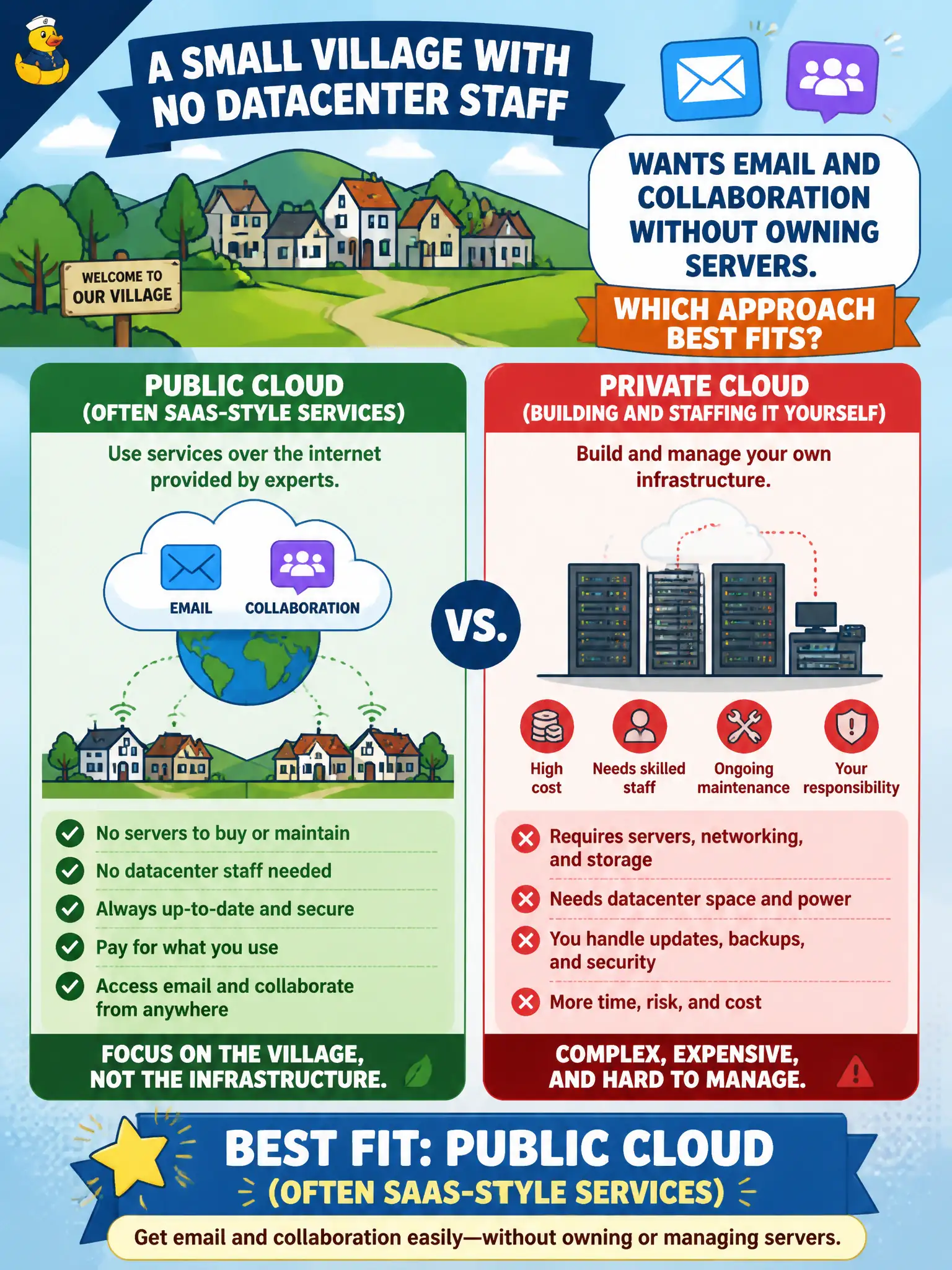
A small village with no datacenter staff wants email and collaboration without owning servers. Which approach best fits?
Select an answer to reveal the explanation.
Short Explanation
No staff, no basement lab, just need mail and docs—that is public SaaS-style cloud. Standing up a private cloud would invent the ops burden they are trying to escape. Start simple and hosted.
Full Explanation
A small village with no datacenter staff that needs email and collaboration without owning servers is a public-cloud fit, often through SaaS-style services. Public cloud avoids standing up and staffing private infrastructure the village cannot operate. The practical approach is consume hosted collaboration, not invent a private cloud operations team.
Building a full private cloud so villagers manage hypervisor clusters creates the exact operational burden they lack staff to carry. Requiring hybrid with on-premises Exchange before any mailbox can be used adds unnecessary local infrastructure. Purchasing colocation racks and hiring 24/7 operations as a first step maximizes cost and staffing for a simple collaboration need.
Exam caveat: even SaaS customers retain identity, access, and data-governance duties under shared responsibility. Operational check: choose a public SaaS collaboration path, assign who administers accounts and retention, and confirm there is no hidden requirement to run village-owned mail servers. Public SaaS collaboration also shortens time-to-value for elected officials and clerks who need shared calendars and documents immediately. Pair that choice with basic tenant hardening—admin MFA, least-privilege roles, and external sharing defaults—so lack of datacenter staff does not become lack of identity hygiene.