
Which statement best describes Azure Monitor at a fundamentals level for a municipal IT audience?
Select an answer to reveal the explanation.
Short Explanation
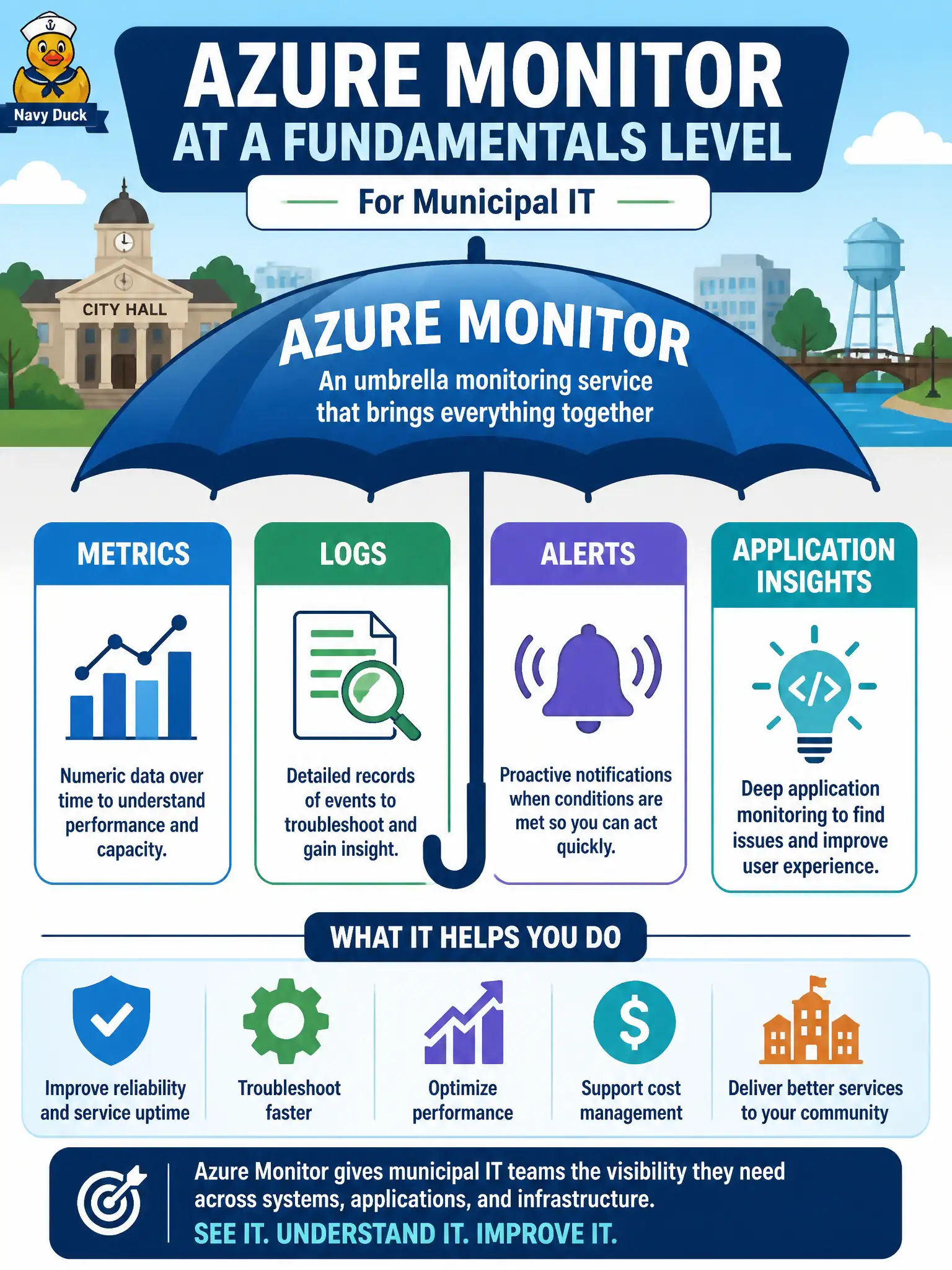
Picture Azure Monitor as the umbrella: metrics, logs, alerts, Application Insights—all under one monitoring roof. It is not the deployment engine and not just a public outage webpage.
Full Explanation
At fundamentals level, Azure Monitor is best described as an umbrella monitoring service for metrics, logs, and related tools such as alerts and Application Insights. For a municipal IT audience, that means one platform family covers resource telemetry, log analysis patterns, notification rules, and application performance monitoring rather than a single narrow webpage. That umbrella framing is the AZ-900 mental model.
Calling it only a public status website with no customer telemetry features fails because that description fits public status misconceptions or Service Health themes, not Monitor's customer metrics and logs role. Calling it only a cost forecasting spreadsheet exported from invoices fails because cost forecasting belongs to Cost Management and pricing tools, not Monitor. Saying it replaces Azure Resource Manager as the deployment control plane fails because ARM remains the deployment and management control plane; Monitor observes—it does not deploy resources.
Exam caveat: "umbrella" does not mean Monitor replaces Service Health or Advisor; those remain separate for platform incidents and best-practice recommendations even while Monitor owns telemetry.
Operational check: from Azure Monitor in the portal, navigate metrics, logs/Alerts, and Application Insights entry points for a sample municipal app to see how the umbrella surfaces distinct but related monitoring capabilities.