
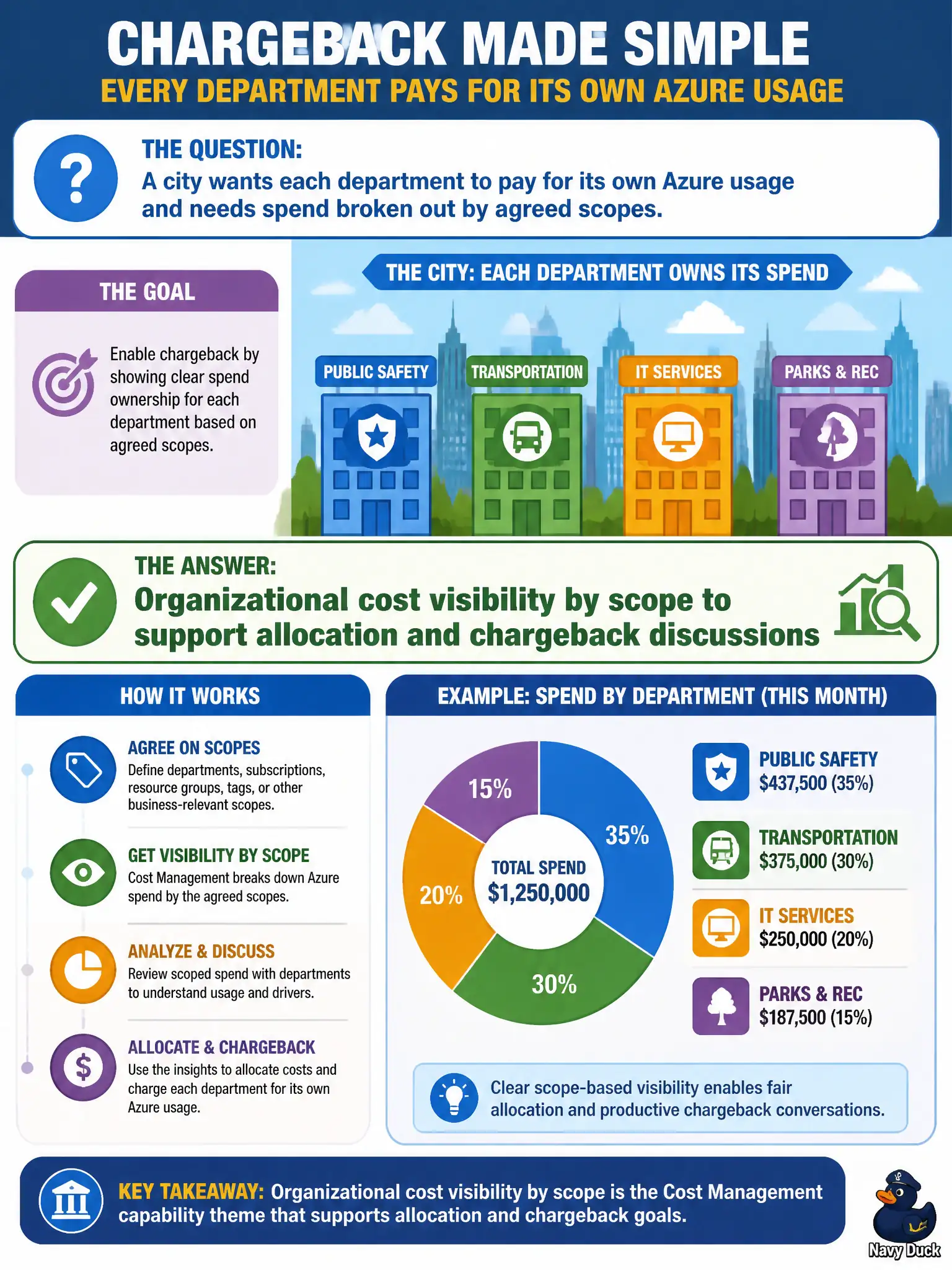
A city wants each department to pay for its own Azure usage and needs spend broken out by agreed scopes. Which Cost Management capability theme supports that chargeback goal?
Select an answer to reveal the explanation.
Short Explanation
Chargeback needs a clear scoreboard per team. Cost Management visibility by subscription, resource group, or similar scope gives finance the slices to allocate. Without that organizational view, "who owes what" stays guesswork.
Full Explanation
Chargeback and showback depend on organizational cost visibility by scope—subscriptions, resource groups, and related dimensions—so each department can see and fund its own Azure usage. Azure Cost Management analysis and reporting support allocation discussions when the estate is structured and labeled so spend can be attributed. A city that wants departments to pay for their own usage is asking for that visibility theme, not for unattended destructive automation or platform health notices used as invoices. Clear scopes make "who owes what" defensible.
Automatic deletion of every untagged resource without review is a risky governance action, not a chargeback report, and can destroy needed workloads. Azure Arc alone does not replace departmental budgets or chargeback processes for Azure-native spend. Service Health notices communicate platform incidents; they are not chargeback invoices for departmental cloud consumption.
Exam caveat: visibility enables allocation, but finance still needs agreed rules—what scope maps to which department and how shared platforms are split—because tools do not invent the chargeback policy by themselves. Operational check: align resource groups or subscriptions to departments, use cost analysis grouped by those scopes, and publish a monthly showback pack that finance can turn into internal billings with traceable totals.