
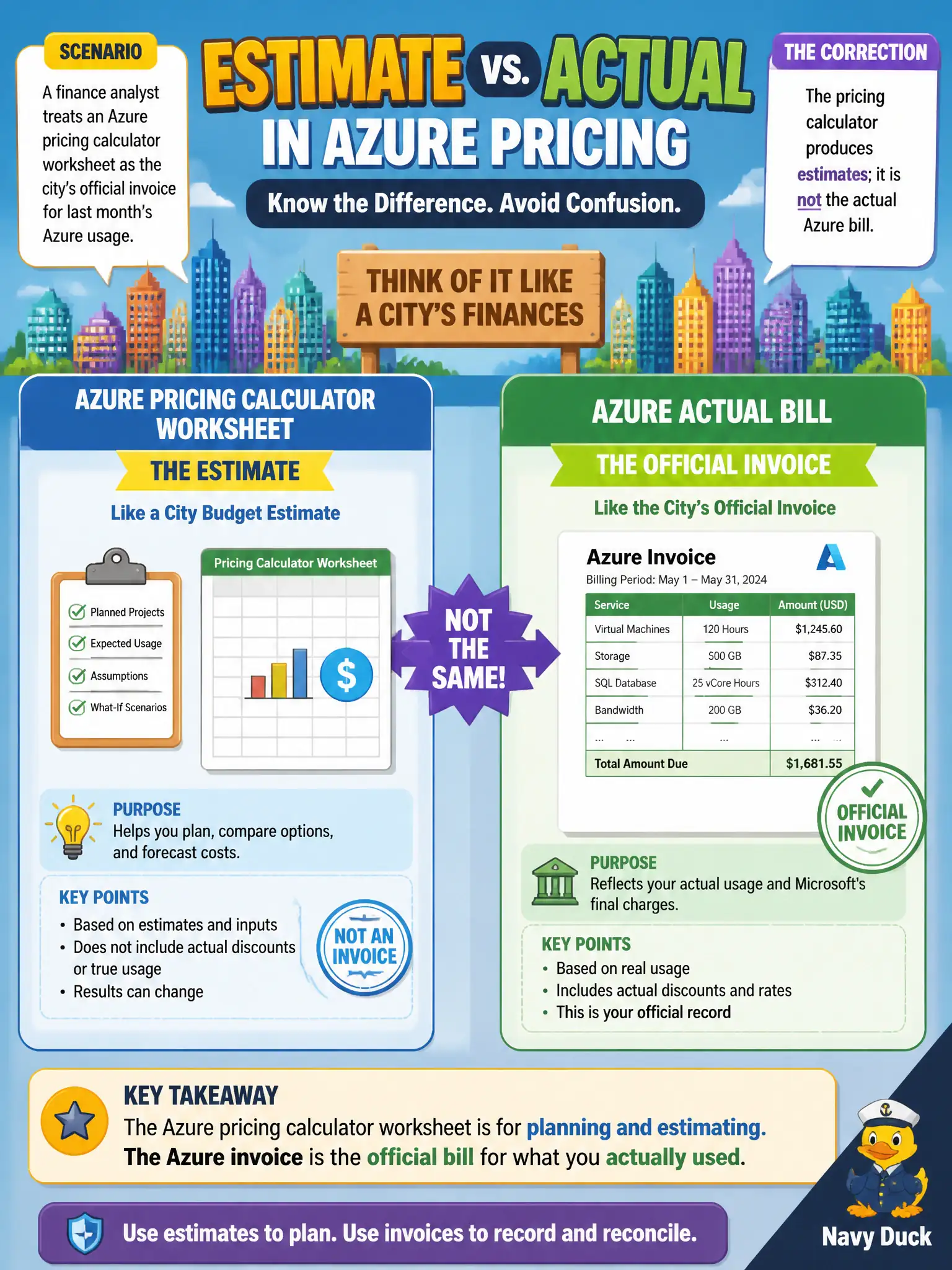
A finance analyst treats an Azure pricing calculator worksheet as the city's official invoice for last month's Azure usage. What distinction should the cloud lead correct?
Select an answer to reveal the explanation.
Short Explanation
A construction estimate is not the final contractor invoice. The pricing calculator sketches what something might cost; the real bill reflects what actually ran. Do not hand council a calculator sheet and call it last month's invoice.
Full Explanation
The Azure pricing calculator produces estimates for planning; it is not the city's official invoice for last month's Azure usage. Actual charges reflect what ran in the subscription—meters, reservations, credits, taxes, and negotiated terms—surfaced through Microsoft billing and Azure Cost Management, not through a what-if worksheet. A finance analyst who treats the calculator sheet as last month's bill confuses forecast tooling with financial actuals, which undermines audits and council reporting.
The calculator does not automatically become an invoice after thirty days. It is not limited to working only after resources are deleted; it is used primarily before and during planning. Calculator estimates also do not replace Cost Management actuals for auditing—auditors need billed and accrued figures, not planning scenarios.
Exam caveat: estimates can be close when assumptions match reality, but variance is normal; fundamentals questions test the distinction between estimate and invoice more than the size of the variance. Operational check: pull last month's costs from Cost Management or the billing account invoice export, reconcile major meters to deployed resources, and keep calculator worksheets labeled as forecasts only in the municipal finance repository.