
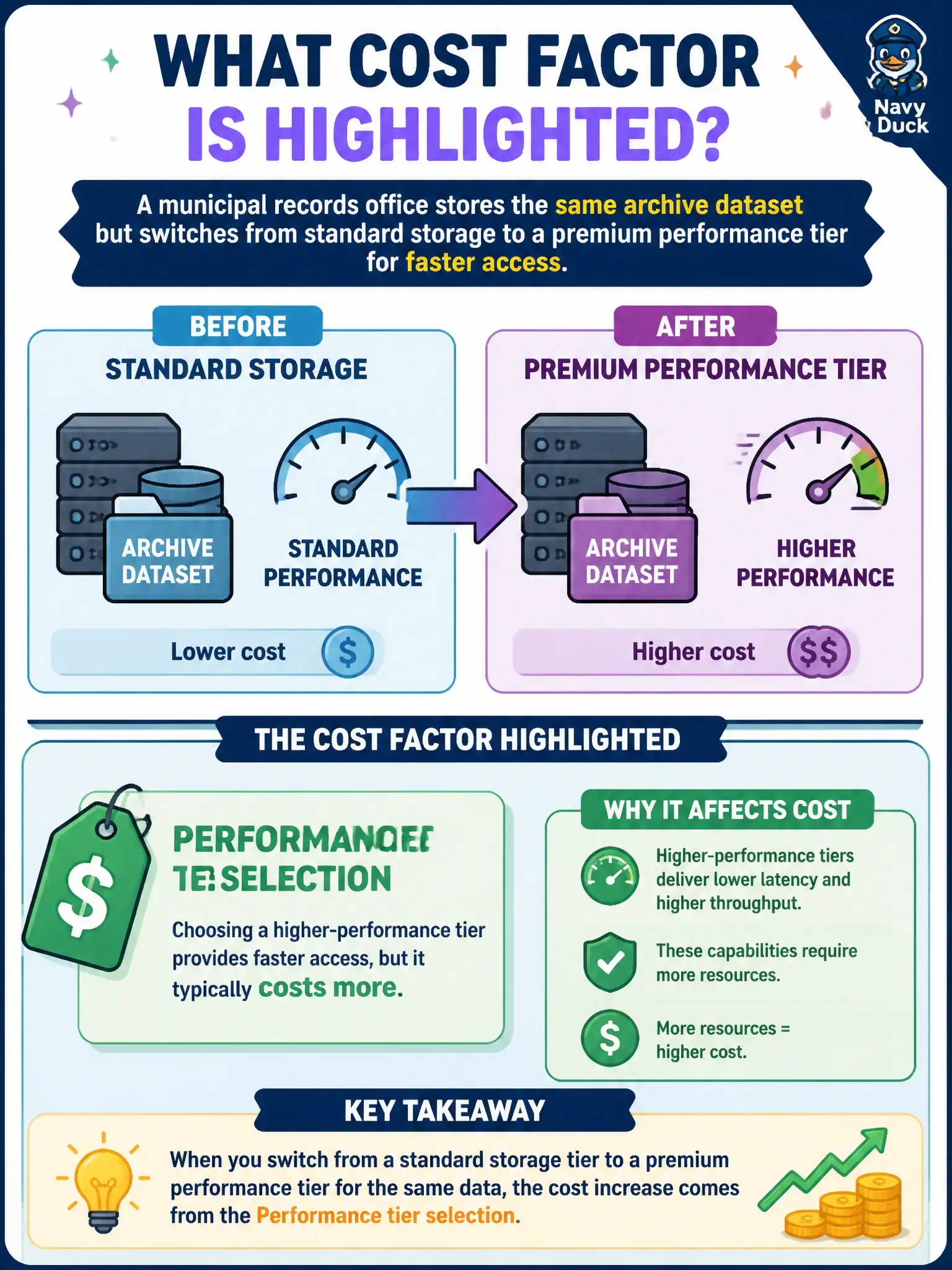
A municipal records office stores the same archive dataset but switches from standard storage to a premium performance tier for faster access. Which cost factor does that change highlight?
Select an answer to reveal the explanation.
Short Explanation
Faster lanes usually cost more tolls. Premium storage delivers higher performance than standard for the same data footprint, and that tier choice shows up on the bill. Performance and tier selections are real Azure cost factors.
Full Explanation
Performance tier selection is an Azure cost factor because higher-performance options typically price above standard tiers for comparable capacity. A municipal records office that keeps the same archive dataset but moves from standard storage to a premium performance tier is trading money for better IOPS, latency, or throughput characteristics. The logical data footprint may be unchanged; the bill still rises because the service tier changed. Candidates should separate "same data" from "same price."
Azure AD Privileged Identity Management license count concerns privileged access governance, not storage performance tier pricing. Whether Cloud Shell uses Bash or PowerShell is an interactive shell preference with no effect on storage SKU cost. Subscription display name length is cosmetic metadata and does not alter performance-tier rates.
Exam caveat: premium is not always required—match tier to access patterns; cold or infrequently accessed archives often waste money on premium if latency SLAs do not demand it. Conversely, under-tiering a hot path can create operational pain that also has civic cost. Operational check: document the access profile (IOPS, latency targets) for the archive, estimate standard versus premium in the pricing calculator for the same capacity, and re-check after change in Cost Management that the storage meter moved as expected without unexplained egress or transaction spikes.