
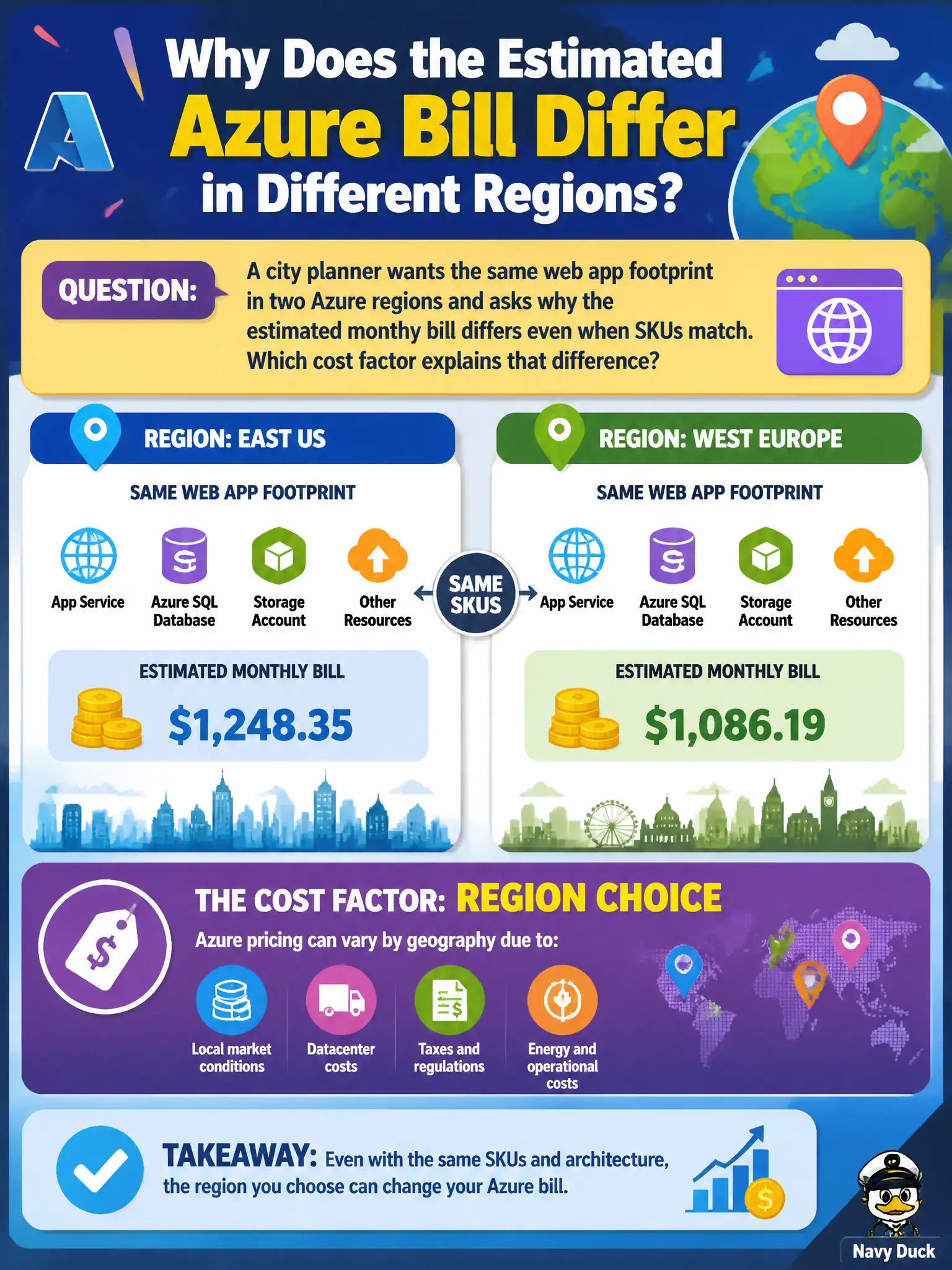
A city planner wants the same web app footprint in two Azure regions and asks why the estimated monthly bill differs even when SKUs match. Which cost factor explains that difference?
Select an answer to reveal the explanation.
Short Explanation
Same pizza, different city — the price tag can still change. Azure often prices the same SKU differently by region. So picking an expensive geography versus a cheaper one is a real cost factor for municipal budgets.
Full Explanation
Azure publishes list prices that can differ by geography. Deploying the same web app footprint—matching SKUs, capacity, and expected usage—in two regions can still produce different monthly estimates because regional price lists, currency, and local market conditions are not identical. For a city planner comparing regions, region choice is therefore a first-class cost factor alongside size, usage quantity, and purchasing model. Fundamentals scenarios often pair "same configuration, different bill" with regional pricing variation so candidates do not assume a single global rate card.
Resource locks protect resources from accidental change or deletion; they do not alter Azure list pricing by region. Azure Advisor recommendation counts reflect optimization and reliability guidance, not the geographic price table that drives the estimate difference. Whether operators use Cloud Shell or the portal is an access preference and has no bearing on regional SKU pricing.
Exam caveat: latency, data residency, and availability requirements may force a higher-priced region even when a cheaper region exists—cost is one input, not the only decision criterion for civic workloads. Operational check: rebuild the estimate in the Azure pricing calculator twice with identical services and only the region changed, then document the delta for council so the geography decision is explicit rather than assumed.