
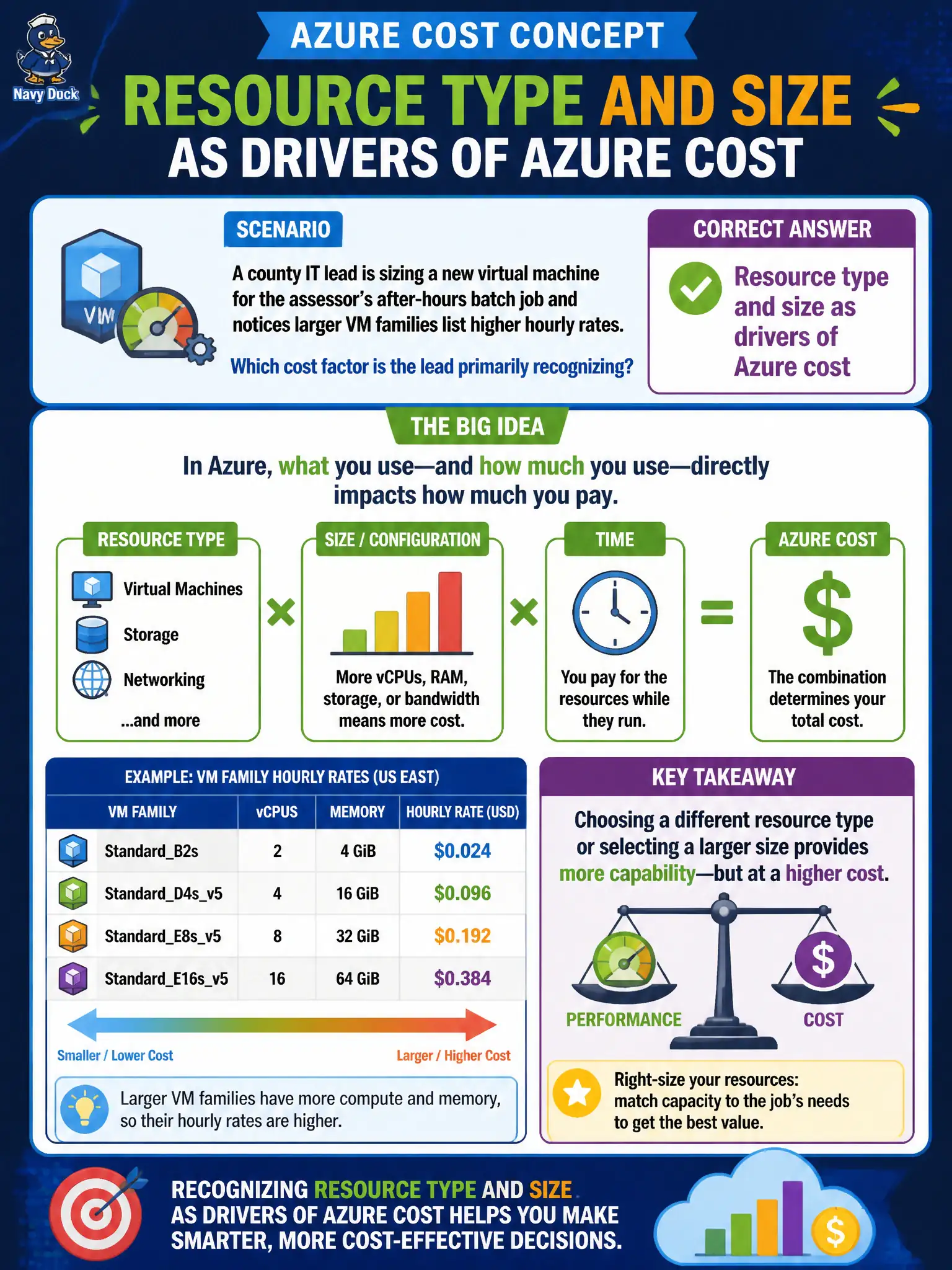
A county IT lead is sizing a new virtual machine for the assessor's after-hours batch job and notices larger VM families list higher hourly rates. Which cost factor is the lead primarily recognizing?
Select an answer to reveal the explanation.
Short Explanation
Bigger engines cost more per hour — same idea in Azure. Pick a larger VM size or a pricier resource type and the meter ticks faster. Size and type are front-and-center cost factors before you even talk regions or tags.
Full Explanation
Azure cost for compute starts with what you provision: the resource type and the size (SKU) you select. Virtual machine families and sizes publish different hourly rates, so sizing up for the assessor's batch job raises the meter even before region, reservations, or usage hours enter the discussion. The same principle applies across services—App Service plans, managed disks, and database tiers each price by capacity class. Recognizing type and size as primary cost drivers is foundational Azure Fundamentals cost-management knowledge for municipal IT leads who must justify capacity choices to finance.
Azure Policy assignment count does not set VM hourly rates; policy evaluates compliance and can enforce standards, but it is not a pricing SKU. Microsoft Entra ID tenant edition affects identity licensing and feature availability, not the list price of a chosen virtual machine size. Management group hierarchy organizes subscriptions for governance and policy inheritance; nesting more groups does not change the compute meter for a single VM.
Exam caveat: size and type interact with other factors—region and purchasing model still matter—but when the scenario highlights larger families listing higher hourly rates, the concept under test is resource type and size, not governance topology. Operational check: in Cost Management cost analysis or the pricing calculator, compare the selected VM series and size side by side for the same region and runtime, then confirm the assessor's workload cannot meet SLAs on a smaller SKU before approving the higher rate.