
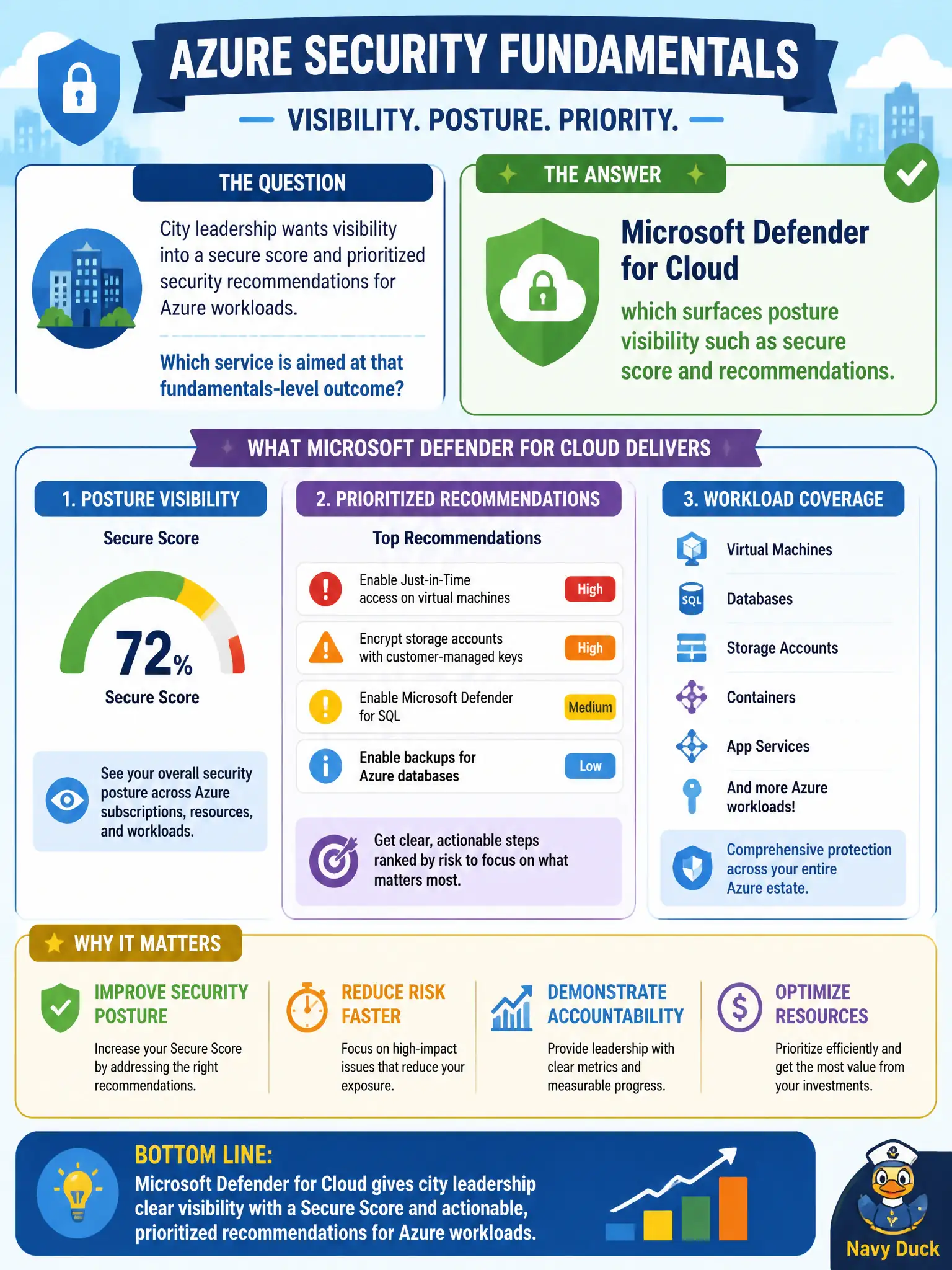
City leadership wants visibility into a secure score and prioritized security recommendations for Azure workloads. Which service is aimed at that fundamentals-level outcome?
Select an answer to reveal the explanation.
Short Explanation
Secure score and "fix these things" lists are classic Defender for Cloud value. Leaders want a readable posture picture, not a private circuit or a reserved-instance discount. Visibility first—that is the Fundamentals ask.
Full Explanation
Microsoft Defender for Cloud surfaces posture visibility for Azure workloads, including secure score and prioritized security recommendations. City leadership asking for that fundamentals-level outcome is asking for a posture management service, not a connectivity, purchasing, or CLI feature. Secure score communicates relative improvement opportunity; recommendations translate findings into actionable hardening steps municipal teams can track.
ExpressRoute provides private connectivity between on-premises networks and Azure but does not produce a secure score. Azure Reservations discount committed compute or related capacity and are a cost tool, not a posture dashboard. Azure Cloud Shell offers a browser-based shell experience for managing Azure; helpful for operations, but it is not the posture recommendations console leadership is requesting.
Exam caveat: you do not need to memorize every Defender plan meter for AZ-900—recognize the service purpose (posture and recommendations) and leave deep plan tuning to security operations exams.
Operational check: enable or confirm Defender for Cloud on the leadership-visible subscription, export or screenshot the current secure score and top recommendations, and schedule a recurring review so score movement is reported with remediation owners.