
When explaining hosting options to a county board, how should Azure web apps and virtual machines be tied to service types?
Select an answer to reveal the explanation.
Short Explanation
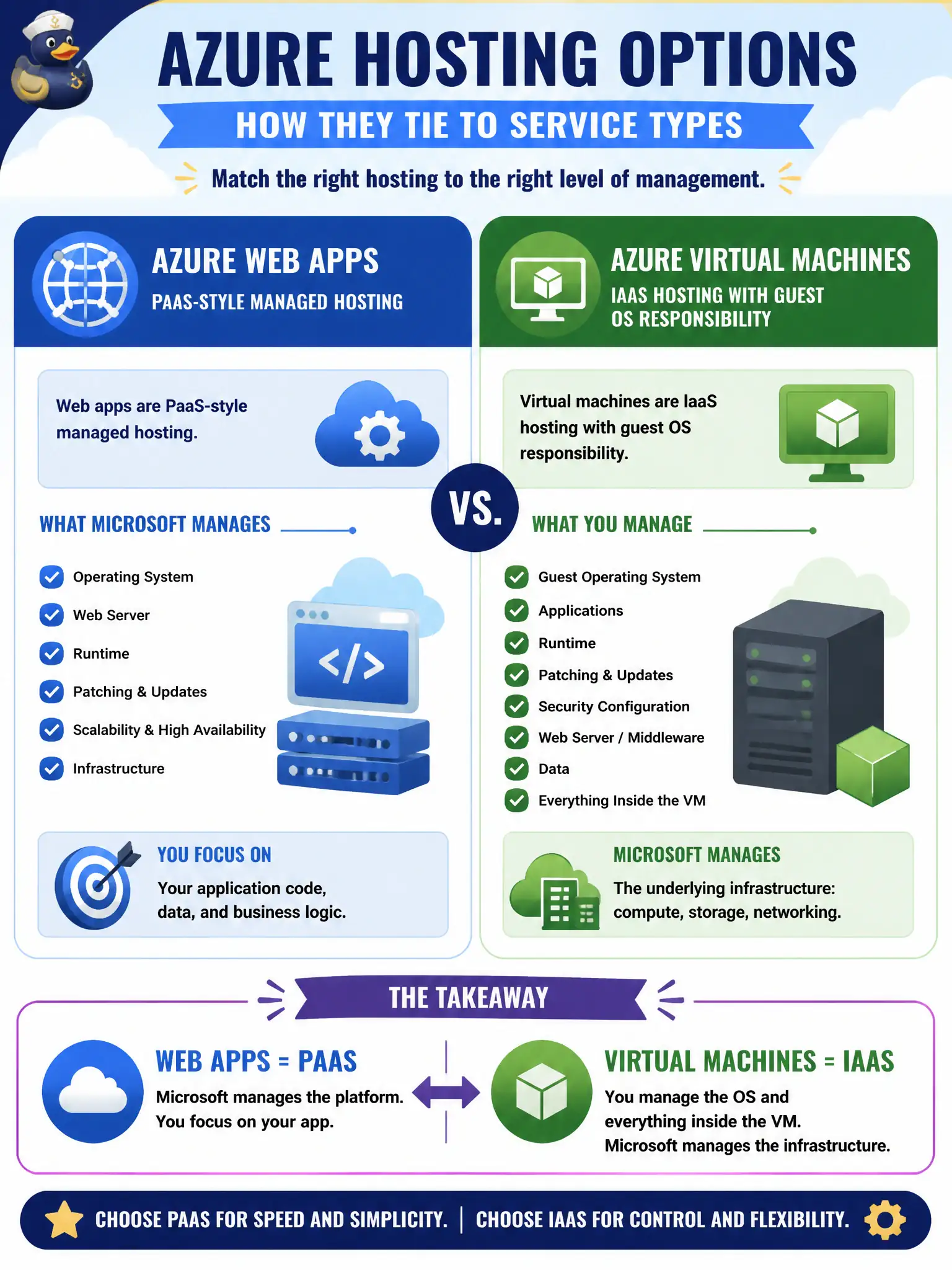
Web apps sit in the managed PaaS lane; VMs sit in the IaaS lane where you still own the guest OS chores. Flip those labels and the board gets the wrong picture. Service type follows who patches what.
Full Explanation
Service-type framing helps non-technical boards understand who owns which layer. Azure web apps align with PaaS-style managed hosting: the platform abstracts much of the infrastructure and guest OS operations while the customer owns the application and its configuration. Virtual machines are IaaS: Microsoft supplies the virtualization fabric, and the customer retains responsibility for the guest OS, middleware, and much of the runtime hardening. Saying web apps are always IaaS and VMs are SaaS identity products mislabels both categories and misleads budgeting conversations. Neither option is merely a storage redundancy mode; redundancy settings describe data durability, not compute hosting models. VMs do not remove all customer responsibility, and web apps do not require the city to own datacenter hardware. Clear PaaS-versus-IaaS language keeps the county board aligned with real operational duties. Exam caveat: PaaS versus IaaS is a spectrum of responsibility, not a claim that PaaS needs zero security work—identity, data protection, and app configuration remain customer duties. Operational check: in an architecture briefing, list patch and backup owners for a web app versus a VM hosting the same municipal site so the board sees why the service-type labels matter for staffing.