
A city finance clerk asks whether creating a new resource group automatically creates a separate Azure bill for that group. What should the cloud lead explain?
Select an answer to reveal the explanation.
Short Explanation
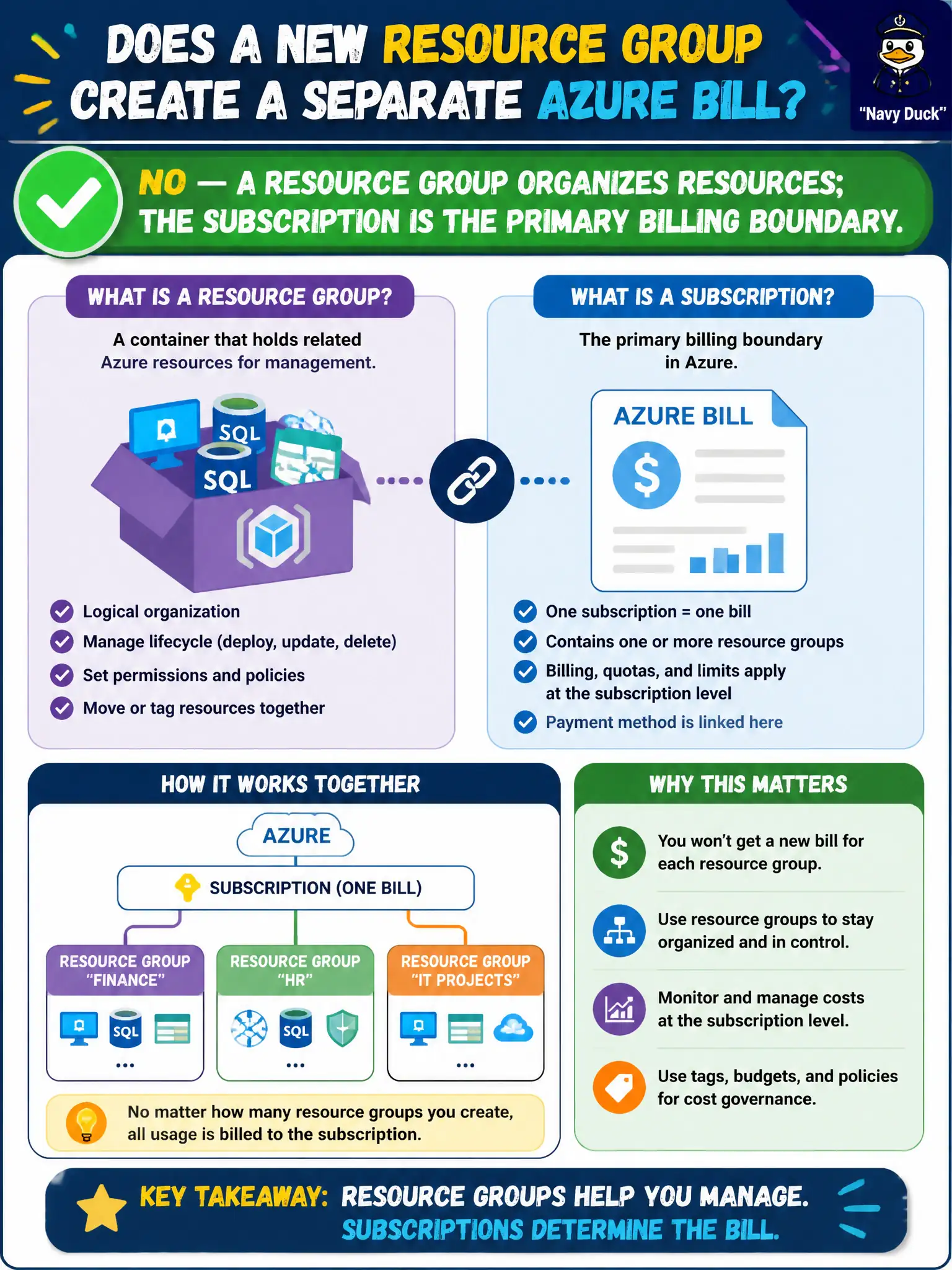
A resource group is a folder for related resources, not a second bank account. The subscription is where Azure rolls up charges. Use groups to organize and delete cleanly — use subscriptions when you need a real billing wall.
Full Explanation
A resource group organizes related Azure resources and gives them a shared management and lifecycle boundary, but it is not a separate payment account. When a city finance clerk asks whether creating a new resource group automatically creates a separate Azure bill, the accurate Fundamentals answer is no: the subscription remains the primary billing boundary where charges roll up for the resources that subscription contains. Resource groups help operators inventorie, permission, and delete cleanly; they do not mint a second invoice by themselves.
Claiming each resource group is always its own invoice and payment account confuses organization with commercial account structure. Saying Azure bills only at resource-group scope and never at subscription scope reverses the standard billing story taught at AZ-900 depth. Saying Azure never bills anything and that resource groups replace invoices is simply false—Azure usage still generates charges against a subscription-linked billing relationship.
Exam caveat: teams often use resource-group tags and Cost Management views to allocate spend inside a subscription, which can look like “group billing” in reports without changing the actual commercial boundary. Operational check: show finance the Cost Management blade filtered by subscription first, then demonstrate tag or resource-group cost breakdowns as allocation aids—not as proof that each group is a separate payer—so municipal budget conversations stay aligned with how Azure actually invoices.