
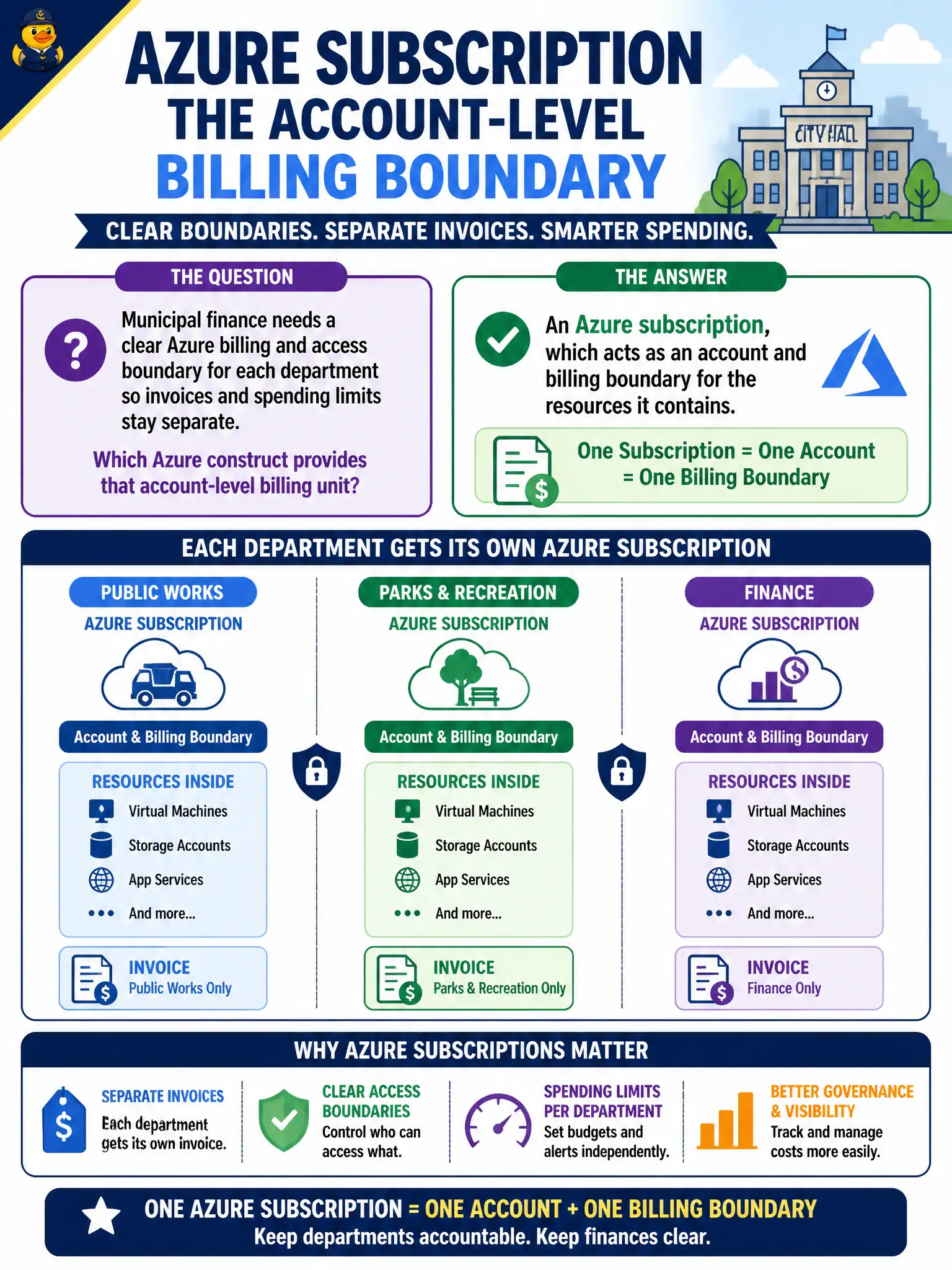
Municipal finance needs a clear Azure billing and access boundary for each department so invoices and spending limits stay separate. Which Azure construct provides that account-level billing unit?
Select an answer to reveal the explanation.
Short Explanation
When finance wants a hard wall between department bills, reach for a subscription. Resource groups tidy resources; they do not replace the invoice boundary. One subscription per department keeps spending and access scoped where the ledger expects it.
Full Explanation
When municipal finance needs a clear Azure billing and access boundary per department so invoices and spending limits stay separate, the construct that acts as the account-level billing unit is the Azure subscription. Each subscription provides an enrollment-style boundary for charges, quotas, and commonly for access and policy scoping across the resource groups and resources it contains. Mapping departments to subscriptions matches the ledger expectation of hard walls between departmental spend.
A single shared resource group renamed for every department fails because a resource group is an organization and lifecycle container inside a subscription, not a substitute invoice boundary. Availability zones improve resiliency inside a region; they do not split invoices by department. Storage account Hot and Cool tiers change data-access cost characteristics for blobs; they do not create separate departmental bills based on an org chart.
Exam caveat: large enterprises may also use billing accounts, profiles, and invoices above subscriptions in Microsoft Customer Agreement style arrangements, but at AZ-900 describe depth the subscription is still the primary unit candidates should name for departmental billing isolation. Operational check: for each department subscription, verify the correct billing owner or EA/MCA association, apply spending budgets and alerts at subscription scope, and confirm RBAC so finance and department admins see only the intended charge scope before workloads land.