
Council members use "region" and "availability zone" as if they mean the same thing. Which distinction is correct?
Select an answer to reveal the explanation.
Short Explanation
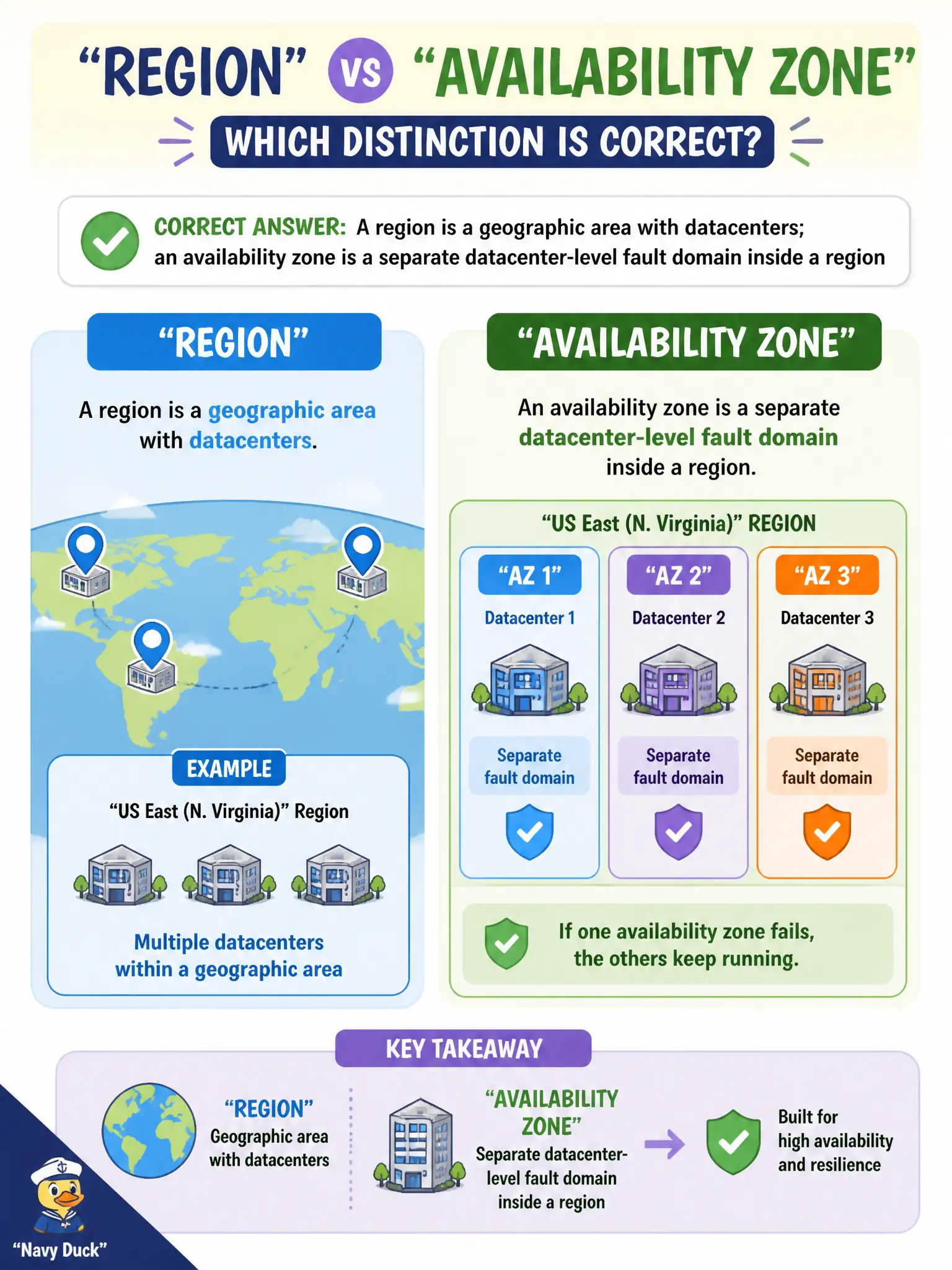
Region is the city on the map; availability zone is a separate fortified building inside that city. Mixing them up makes disaster slides nonsense. Geo versus in-region fault isolation — keep those layers straight.
Full Explanation
A region is a geographic area containing datacenters; an availability zone is a separate datacenter-level fault domain inside a region. Regions answer "where on the map," while availability zones answer "which isolated facility within that regional footprint." Council materials that treat the terms as synonyms blur geographic placement with in-region high availability and produce weak disaster-planning language.
Saying a region is one rack and a zone is an entire continent reverses scale and mis-teaches both concepts. Claiming zones span multiple continents while regions exist only inside one virtual machine is equally inverted. Microsoft does not treat regions and availability zones as identical interchangeable labels on architecture diagrams—they are nested but distinct layers.
Exam caveat: not every region offers availability zones, and not every service is zone-redundant by default; choosing a region and enabling zone resiliency are related but separate decisions.
Operational check: for each critical municipal app, record both the deployed region and whether resources are zone-redundant or pinned to a single zone, then verify portal configuration matches the HA claims used in council briefings.