
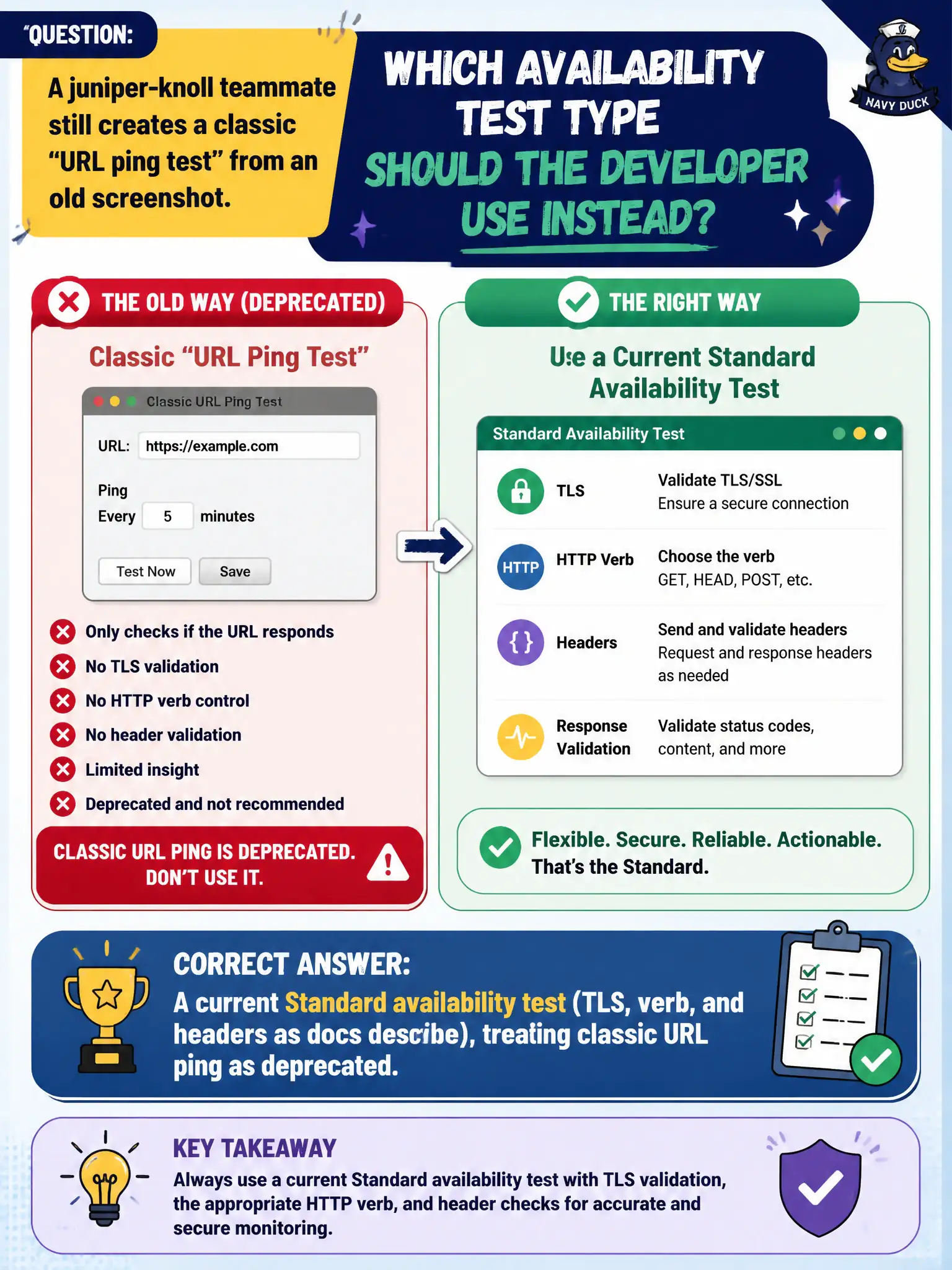
A juniper-knoll teammate still creates a classic “URL ping test” from an old screenshot. Which availability test type should the developer use instead?
Select an answer to reveal the explanation.
Short Explanation
URL ping tests are on the retirement clock. Create a Standard availability test now. VS multi-step web tests and Redis watches are not the modern Insights path.
Full Explanation
Classic “URL ping test” language comes from older portal screenshots. Current guidance for the juniper-knoll teammate is to create a Standard availability test with the TLS, HTTP verb, and header options docs describe, and to treat classic URL ping as deprecated. Standard tests are the supported Application Insights availability test type for this skill.
A retired Visual Studio multi-step web test as the only supported option forever fails because that classic path is not the current default recommendation; teams should not standardize on retired VS web tests when Standard (and custom TrackAvailability where needed) cover modern scenarios.
Skipping availability tests in favor of Azure Cache for Redis key expiry watches fails because Redis TTL watches do not probe the public HTTP endpoint’s availability from Azure test locations.
A Traffic Manager endpoint probe configured as Application Insights instrumentation fails the product boundary: Traffic Manager health probes belong to traffic routing, not Application Insights availability tests and availabilityResults telemetry.
Exam caveat: migrate lingering classic tests deliberately—do not assume every old screenshot still matches the portal; verify the test type name in current docs. Operational check: replace the classic ping with a Standard test on the same URL, compare success percentage for a day, then retire the deprecated test once parity is confirmed.