
A bank wants a service name to hand clients several healthy endpoints so a client can try more than one address. A simple record containing only the primary address was proposed. Which Route 53 policy fits?
Select an answer to reveal the explanation.
Short Explanation
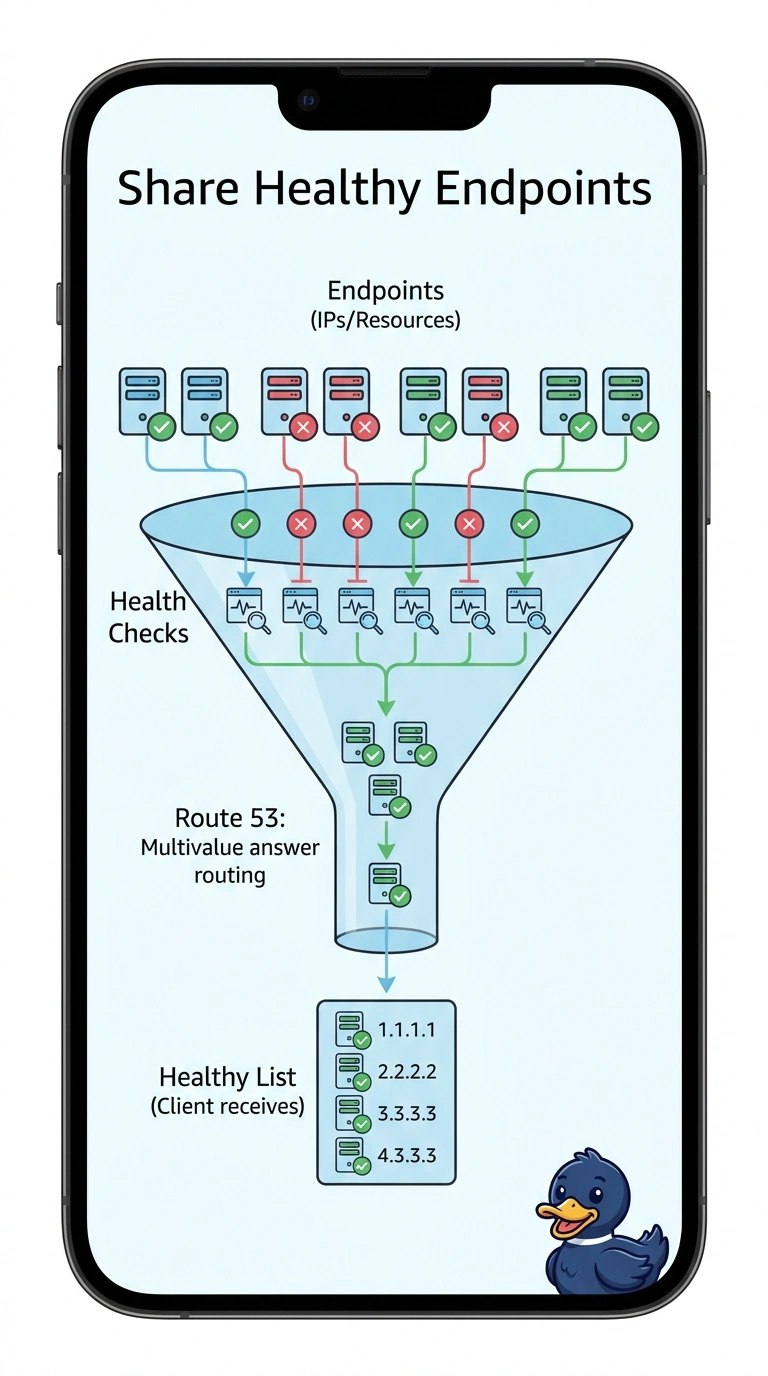
Hand the caller a short list of open branches, not one address and a wish. You want several healthy endpoints in the answer, and multivalue answer routing can return them when their health checks pass. The trap is failover, which hides the second address until the first is already down.
Full Explanation
Multivalue answer routing returns multiple records for one name, and with health checks attached Route 53 answers with records that are healthy rather than with one fixed address. Clients can then try more than one endpoint. A simple record that contains only the primary address returns that address, and simple routing does not use health checks to filter answers down to healthy endpoints. Failover routing returns one active endpoint and withholds the secondary until the primary fails, so a normal query does not include several healthy endpoints. Latency routing selects one preferred endpoint for the resolver and does not build a set of healthy answers. Resolvers and clients still decide how to use multiple answers, and a client that always tries only one address will not gain a retry from the extra records. Query the name while one endpoint is unhealthy and confirm the answer includes other healthy endpoints and omits the failing one. Health checks have to be associated with the multivalue records, or the answer can include endpoints that are not actually healthy.