
A factory license name must be returned only to resolvers in one country. Resolvers in other countries must not receive that address. Latency-based routing across the factory Regions was proposed. Which policy enforces the country limit?
Select an answer to reveal the explanation.
Short Explanation
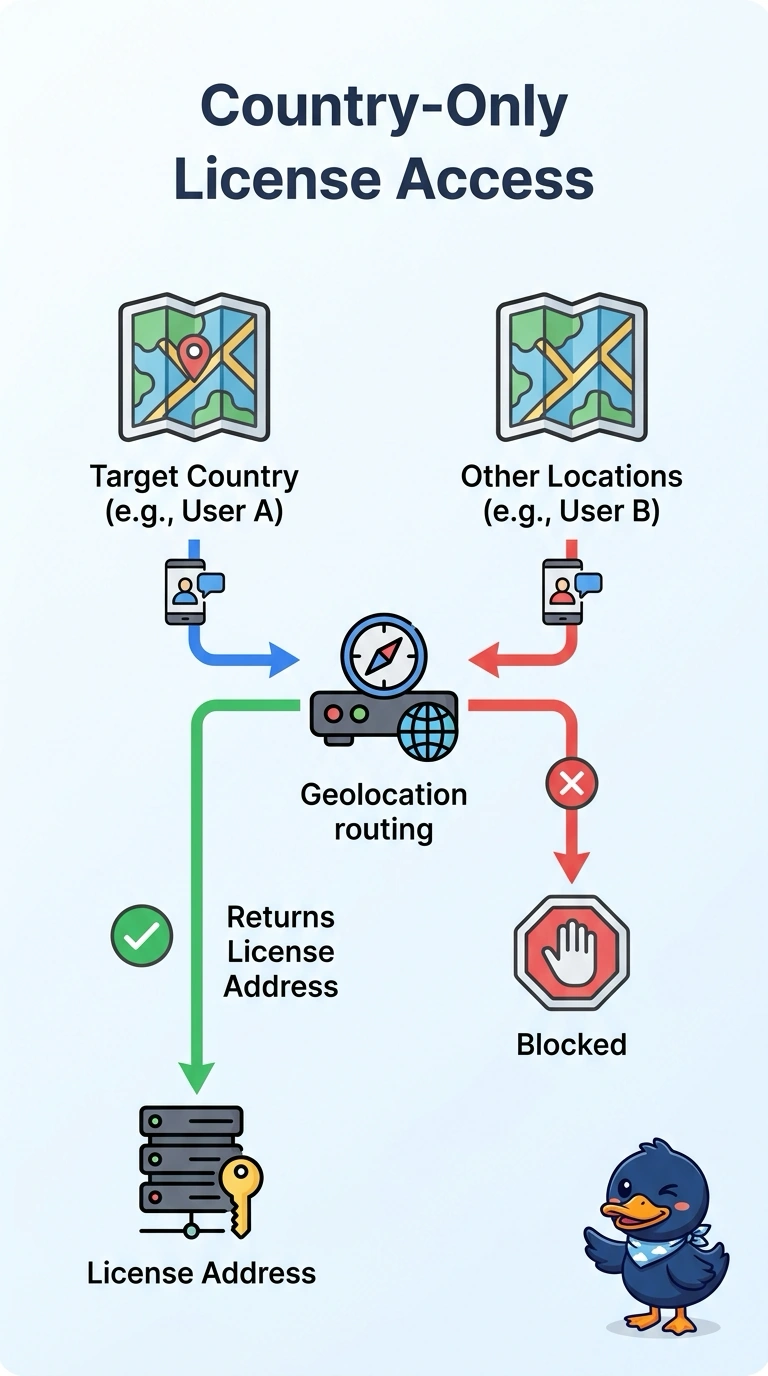
A border is not the same thing as a shorter road. You need the name answered only in one country, which is what geolocation routing does, and latency routing will still answer in other countries when a factory Region is closer. The trap is optimizing distance when the rule is a country boundary.
Full Explanation
Geolocation routing maps the resolver's location to the record configured for that place. A record created for one country is returned to queries Route 53 locates in that country, and locations with no record do not receive the license address. Latency-based routing ignores the country limit and returns the lowest-latency Region that was published, including for resolvers outside that country. Weighted routing splits answers by weight and does not confine a record to a country. Failover routing returns the primary record from anywhere while the primary is healthy, so the license address would not stay inside one country. Geolocation classifies the DNS resolver, not a client that uses a resolver in some other country, and a default record answers locations that were not given their own record. Query from inside the country and from outside it, and confirm only the in-country query receives the license address. Omit a default geolocation record when other countries must get no answer, or that default will hand them the license address anyway.