
A retailer needs static anycast IP addresses that accept TCP and forward it to Application Load Balancers in two Regions. A CloudFront distribution in front of those balancers was proposed for the same TCP flows. Which service fits?
Select an answer to reveal the explanation.
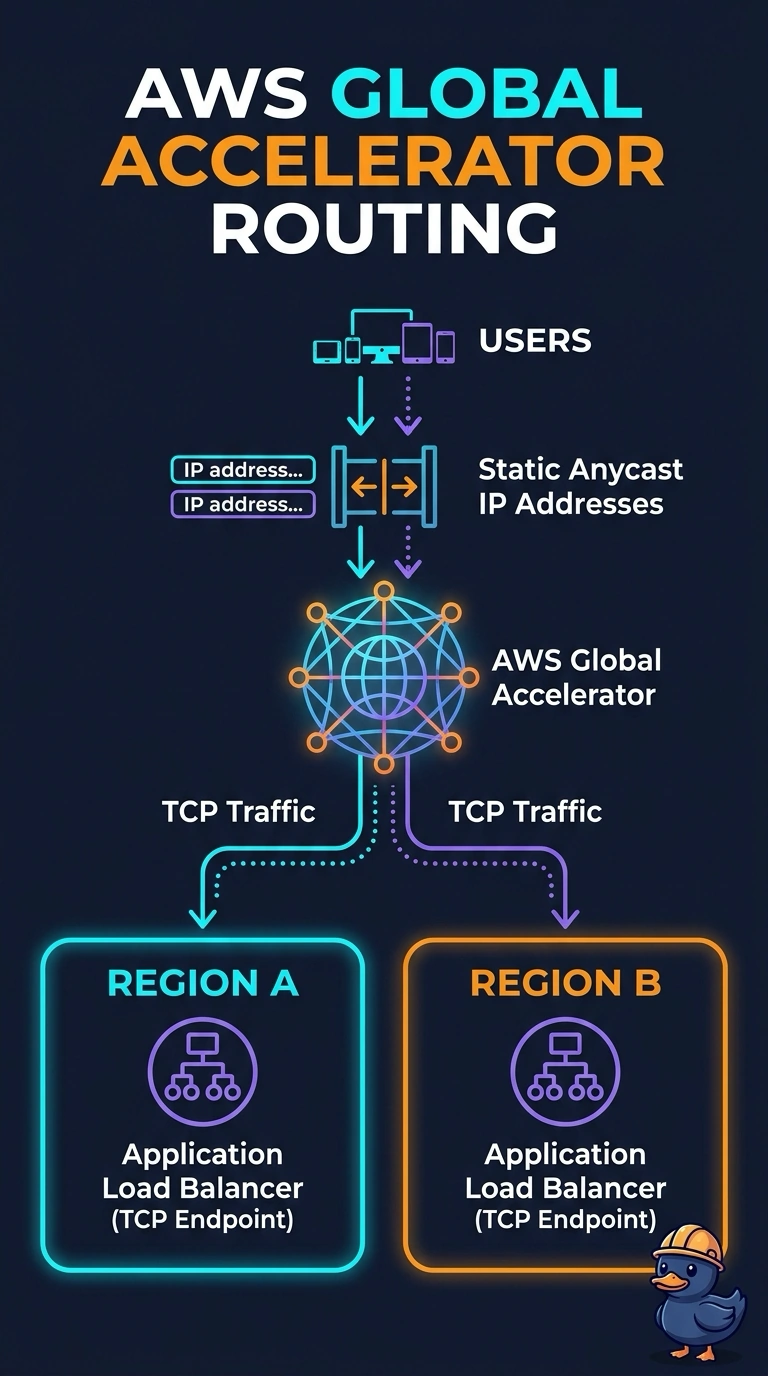
Short Explanation
You need a fixed front door for TCP, not a cache for web pages. Global Accelerator gives static anycast addresses and forwards TCP to the Regional load balancers. The trap is CloudFront, which does not turn those balancers into an anycast TCP entry.
Full Explanation
Global Accelerator allocates static anycast IP addresses and routes TCP through the AWS global network to endpoints in the Regions you choose, including Application Load Balancers. Clients can allow-list those addresses while Regional failover stays on the accelerator. CloudFront distributes HTTP and HTTPS content and does not provide a TCP behavior that forwards arbitrary TCP to an Application Load Balancer. One Regional balancer address is not an anycast global entry and does not by itself forward TCP to balancers in two Regions. Geolocation DNS returns different answers by location and does not give the client a static anycast IP. The accelerator listener and endpoint groups have to include the ports and Regions in use, and an endpoint-group health check is what shifts traffic off an unhealthy balancer. Connect to a static address on the TCP port, confirm the request lands on a healthy Regional balancer, and repeat while one Region's endpoint is unhealthy. Register both Regional load balancers in endpoint groups, or the anycast addresses have only one Region to forward TCP toward.