
A bank runs core ledgers on an on-premises mainframe with COBOL and VSAM plus Oracle databases. It must reduce data-center exit risk, unlock agile releases, and retain auditability during phased modernization with minimal downtime. Which legacy modernization path fits mainframe and database needs?
Select an answer to reveal the explanation.
Short Explanation
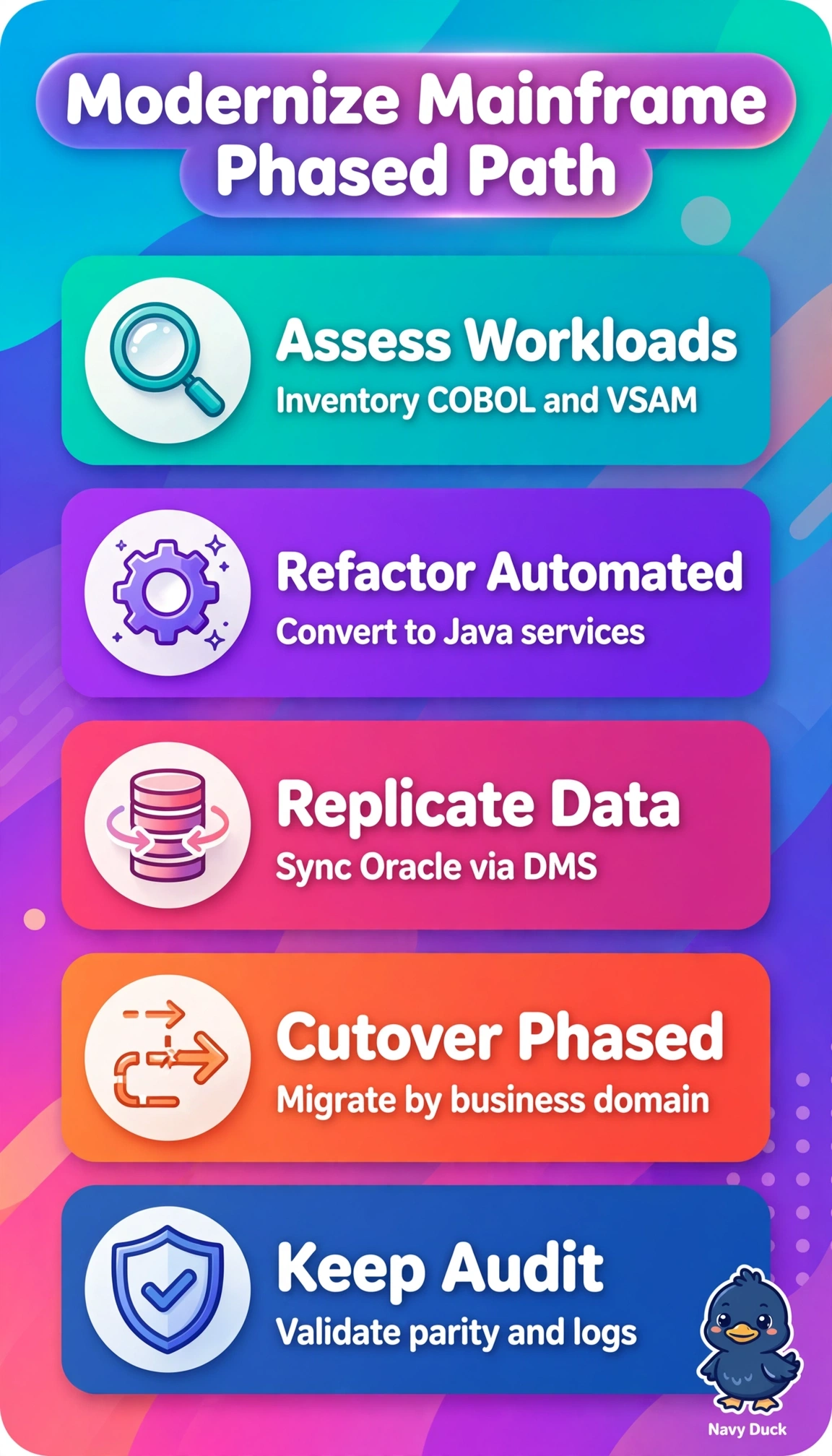
You're moving a museum vault without closing the exhibit. Automated refactoring plus DMS replication lets you modernize ledgers in phases while auditors still see every transaction trail.
Full Explanation
The correct path pairs automated COBOL refactoring with managed replication because it addresses both halves together under the stated constraints. AWS Transform for mainframe analyzes COBOL and VSAM assets and automatically refactors them into maintainable Java-based applications while preserving business logic, with testing support and wave-based phased cutover (the older AWS Mainframe Modernization managed runtime service is closed to new customers), which reduces data-center dependency while enabling iterative agile releases rather than frozen monoliths, and DMS with ongoing CDC moves Oracle schemas to AWS with validation and minimal downtime while preserving consistency for auditability. The emulation rehosting approach fails on agility by concept because rehosting without code transformation preserves procedural structure and batch dependencies, so even with successful RDS migration release velocity and testability remain largely unchanged. The offline-export refactoring approach fails on continuity by concept because a single export forces an extended freeze window and full cutover risk, violating the minimal-downtime phased requirement despite achieving modernization. The alongside-build with on-premises Oracle retained as record fails on exit by concept because the strangler pattern delivers new services quickly but retains footprint, licensing and resilience risk for the system of record, so exit is deferred. Exam caveat: distinguish rehost, refactor and retain decisions separately for compute versus data, because a path can be correct for Oracle yet wrong for the mainframe goal. Practical check: confirm VSAM mapping, compiler dependencies and audit log retention in pilot, then confirm DMS CDC lag, validation and rollback window meet the ledger downtime budget before cutover.