
A media startup saw a 300% overnight cost spike from a runaway transcoding job and finance now requires immediate alerts on budget thresholds plus detection of unusual spend without static limits. Which cost monitoring and alerting design meets both threshold and anomaly requirements?
Select an answer to reveal the explanation.
Short Explanation
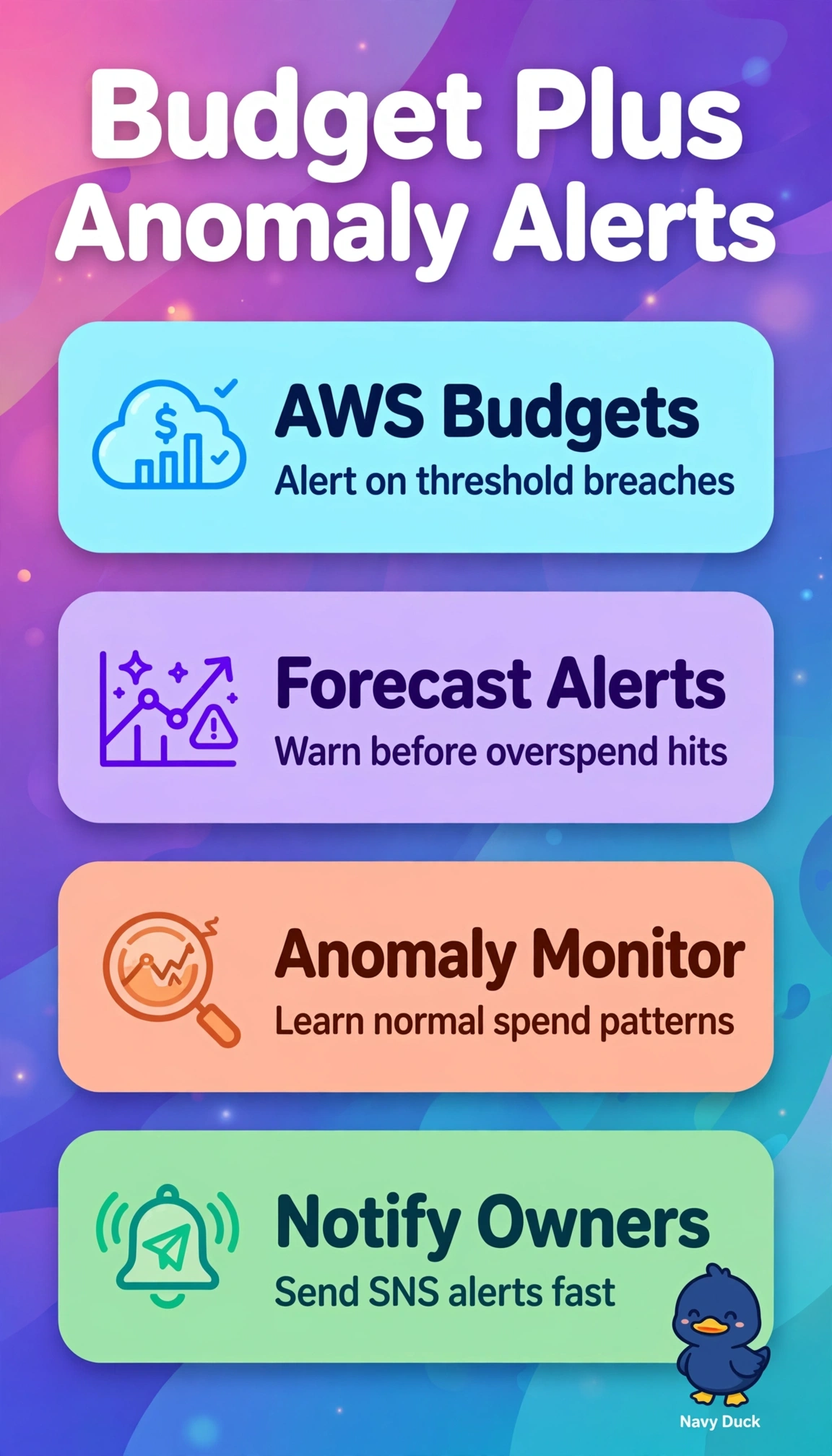
Fixed limits catch what you expect, surprises need a nose for weird. Anomaly detection spots odd spend while budgets guard your planned thresholds.
Full Explanation
AWS Budgets monitors actual and forecasted spend against user-defined thresholds for accounts, services, or cost categories with SNS and chat notifications, while Cost Anomaly Detection uses machine learning to identify unusual patterns without static limits and routes alerts to owners for investigation. Cost Explorer with CUR reports fails by concept because retrospective analysis lacks real-time threshold alerting and automated anomaly detection. SCPs with tagging fails by concept because preventive governance improves future attribution but does not alert on budget breaches or detect anomalies. CloudWatch billing alarms fail by concept because single-metric EstimatedCharges alerts lack dimension-level ML detection and full budget forecasting across services. Exam caveat: Budgets enforce expected limits, Anomaly Detection finds unexpected behavior. Practical check: tune anomaly monitors by service and link, and set budget actions for forecast breaches.