
A retail team deploys a payment API on ECS with ALB that must shift production traffic gradually, monitor errors, and instantly revert to the prior version without DNS changes or redeploys if health fails. Releases run weekly with automated pipeline approvals. Which deployment strategy provides controlled traffic shifting with rapid rollback?
Select an answer to reveal the explanation.
Short Explanation
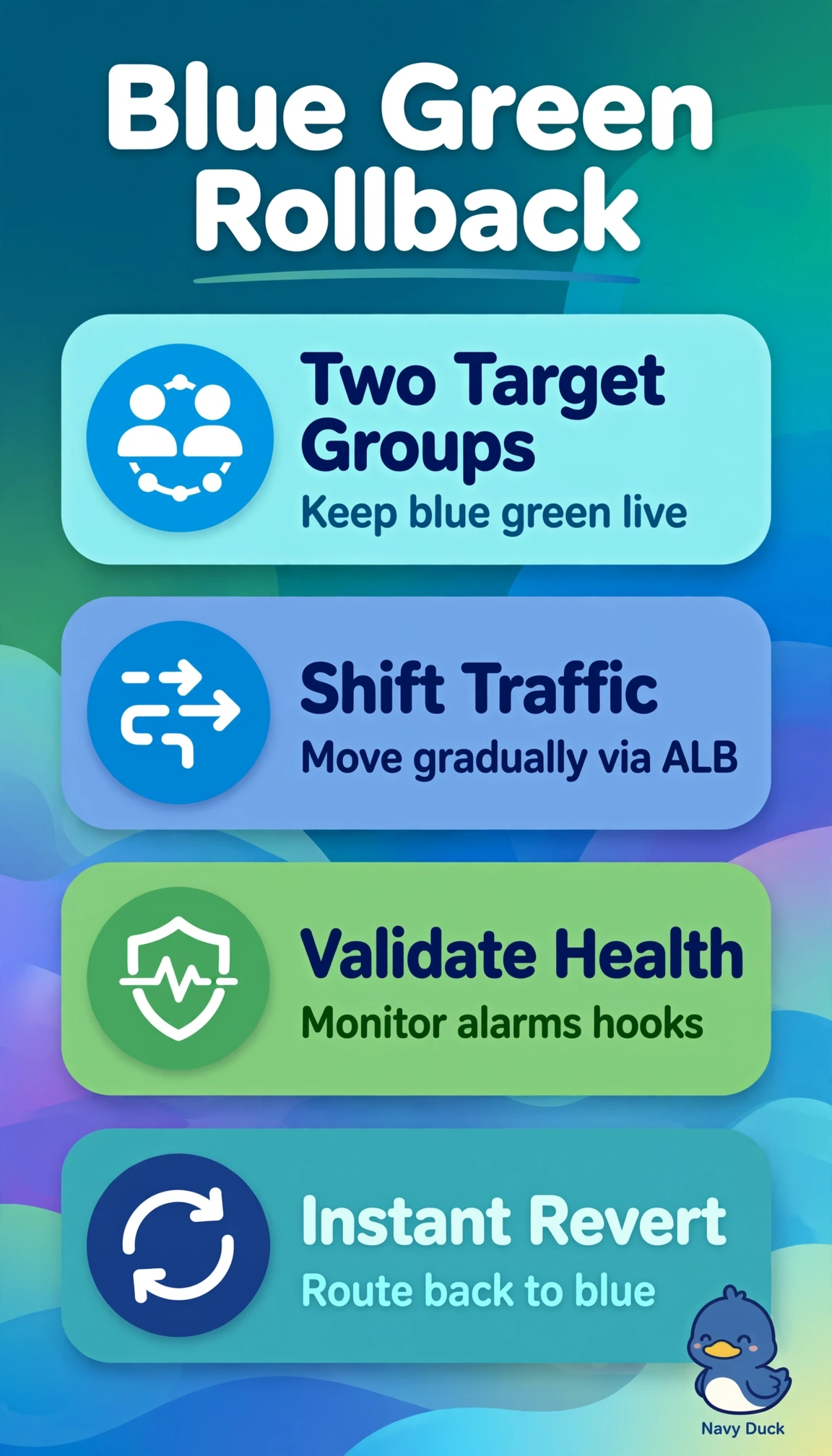
Releases shouldn't feel like cliff jumps. CodeDeploy keeps old and new environments alive letting you dial traffic like a dimmer using blue/green swaps. A one-click revert sends shoppers back to the stable version instantly.
Full Explanation
ECS blue/green via AWS CodeDeploy provisions a green task set and uses the ALB to shift production traffic linearly or in canary increments between blue and green target groups with lifecycle hooks and automatic rollback on CloudWatch alarms, enabling instant revert without DNS propagation or redeploy. Rolling updates replace tasks incrementally but lack a retained standby environment and instant traffic reversal, making rollback slower and less controlled. In-place simultaneous updates cause downtime and no traffic control or safe revert. Route 53 weighted DNS shifting suffers caching and TTL delays and does not provide ECS-integrated health validation and automatic rollback. Exam caveat: for ALB-based ECS, blue/green means two target groups, while canary is a traffic-shift pattern within it. Practical check: confirm CodeDeploy AppSpec hooks, ALB test listener, and automatic rollback alarms are configured in the pipeline.